Key Notes
- Cubic³ proposes a physical AI stack in which shared frontier models coordinate tasks across different machines while hardware-specific interfaces and controllers execute them.
- Anthropic’s robotics tests show that control interfaces strongly affect performance, with pretrained policies enabling capabilities that direct joint control generally fails to deliver.
- Fleet connectivity can support updates, coordination and telemetry, but responsive physical execution and enforceable operating limits remain requirements of each robot system.
A general-purpose AI model could eventually coordinate different kinds of robots without developers training a complete intelligence stack for each machine. That is the argument advanced by connectivity company Cubic³ in a new analysis of physical AI, with important qualifications around real-time control and reliability.
In its October 15 analysis, author Snehal Bhavsar describes a layered system in which a frontier model plans work while hardware interfaces and specialized controllers translate that intent into physical action. It is an architectural proposition, not the announcement of a universal robot controller ready for unrestricted deployment.
Using a Robot as a Tool
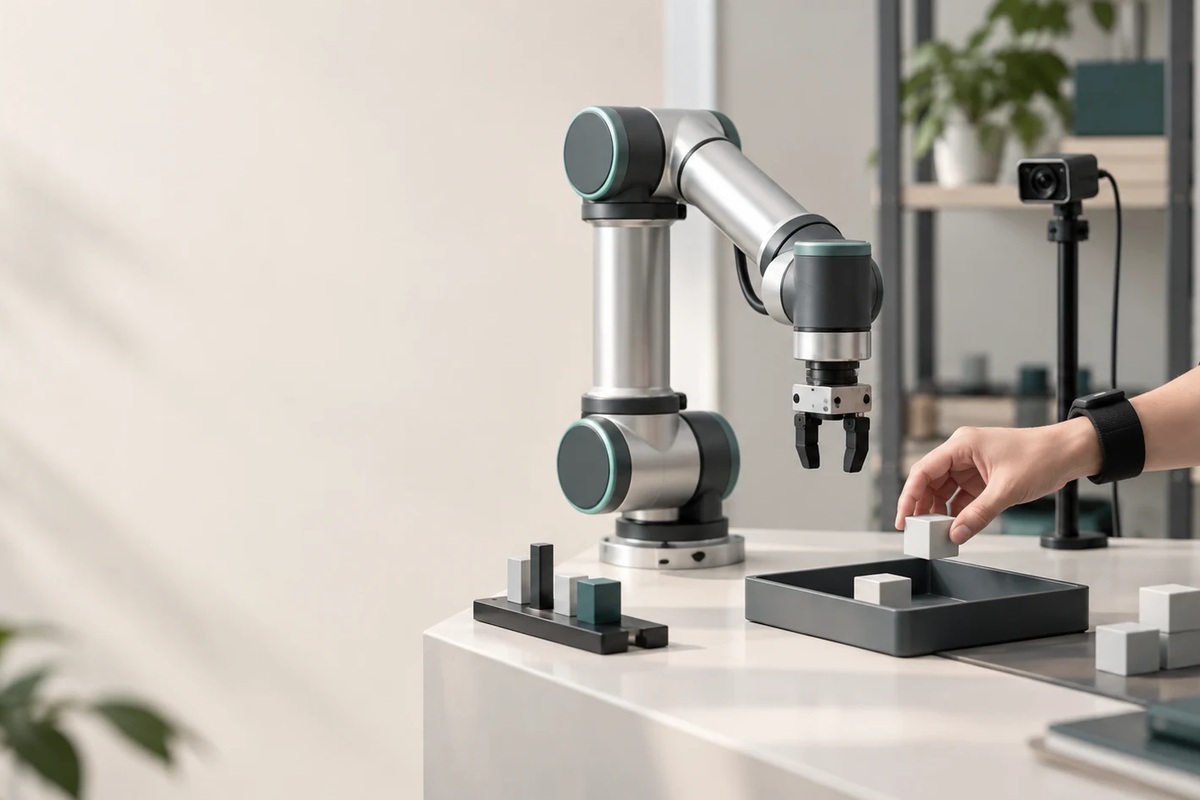
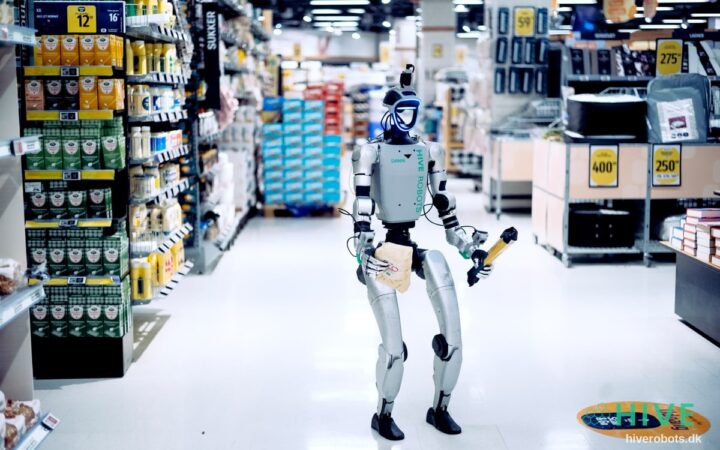
MIT researcher Phillip Isola outlined the idea of robot-use agents in a September essay. A language-model agent could access a robot through software interfaces, much as it already uses digital tools, making advances in general models available across different physical devices.
Isola also acknowledges the present limits: language-model-controlled robots remain less performant than dedicated systems, and latency and reliability are particularly important obstacles for safety-critical work. His proposal concerns how intelligence might spread across machines, rather than a claim that robot-specific engineering has become unnecessary.
For developers, the potential attraction is reuse. A shared reasoning layer could help interpret instructions, select tools or revise a plan, leaving teams to concentrate on their machine’s sensors, actuators and intended job.
The Control Interface Changes the Result
Anthropic’s robotics research provides a more concrete test of that vision. It evaluated language models across robot bodies and several ways of controlling them, from direct motor commands to supervising pretrained policies.
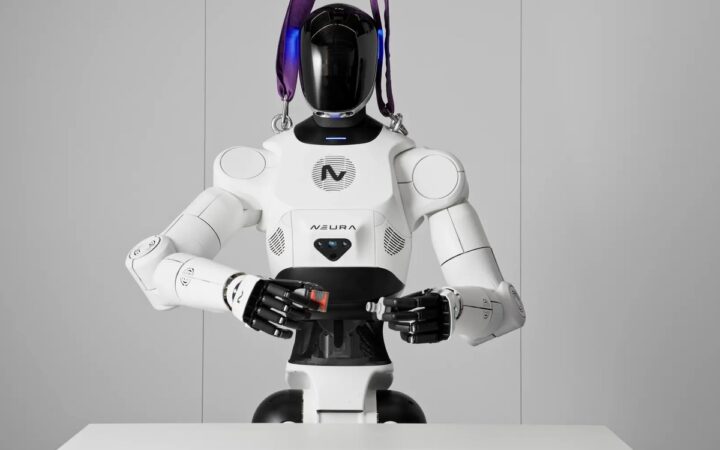
The researchers found that performance depended heavily on the interface. Models mostly failed when driving joints directly, but could complete navigation and manipulation tasks when given suitable tools or trained controllers. The study says current frontier models cannot control humanoids without a pretrained policy.
That distinction prevents “one model, many bodies” from becoming a claim that one model can safely handle every physical detail. A planner that understands a goal and a controller that maintains balance or executes a grasp solve different problems, at different time scales.
Shared Interfaces Still Need Physical Limits
Anthropic’s hardware standard research preview addresses another part of the stack: helping agents discover and operate programmable devices through standardized drivers. Those drivers describe device characteristics and the safety limits that will be enforced.
The approach also allows an agent to assemble deterministic programs that devices execute without requiring fresh model reasoning at every step. Anthropic presents the work as an early preview with further evaluation and safeguards still being developed.
For a robot system, an interface can make capabilities easier to access, but it does not remove the need to verify commands against the physical setup. Tool reach, load, collision constraints and failure recovery remain properties of the machine and its environment.
Connectivity Supports the Fleet Around the Robot
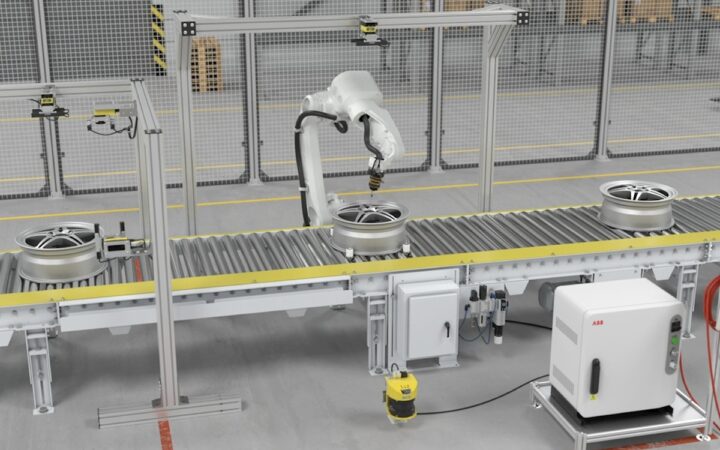
Cubic³’s commercial interest is the connected layer around these systems: fleet management, software updates and telemetry. Its analysis argues that fast physical control should remain on the machine, while networking supports slower coordination and learning across a fleet.
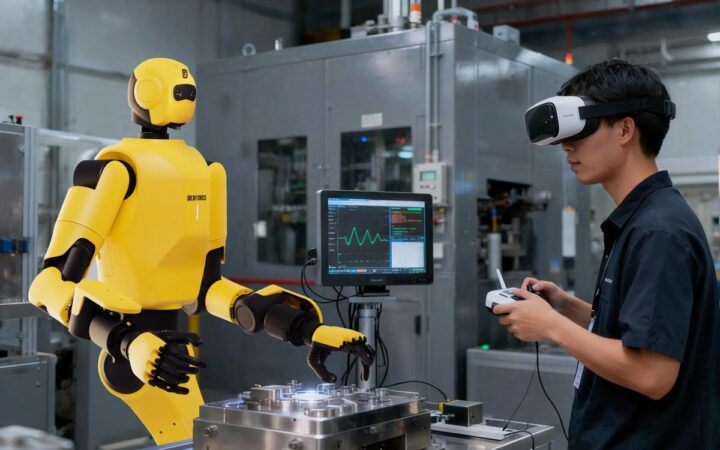
RobotsBeat has covered local speech recognition and Dexforce’s virtual training, two other pieces of that broader architecture. Neither alone supplies a complete robot intelligence system.
The practical prospect is a division of work: general models coordinate more tasks while specialized software keeps physical execution responsive and bounded. Progress will depend on whether that combination improves dependable task completion across different machines, rather than simply giving them access to the same model.
Disclaimer: RobotsBeat is an independent media brand owned and operated by NuvexMedia LLC, publishing news, research, and insights on artificial intelligence, emerging technologies, automation, and related industries. NuvexMedia LLC invests in and collaborates with companies across the AI, Robotics, technology, software, and digital innovation sectors. These relationships do not influence RobotsBeat's editorial coverage, and the publication maintains full editorial independence to provide accurate, timely, and objective information. © 2026 NuvexMedia LLC. All rights reserved. This content is for informational purposes only and should not be considered legal, tax, investment, financial, or other professional advice.