Key Notes
- Salling Group’s Føtex chain is training Unitree-built humanoids with HIVE software in a live supermarket, targeting independent restocking of selected products by early 2027.
- HIVE’s hourly service combines robots with remote human pilots, and its proposed 2027 rollout begins with continuous monitoring rather than fully unattended operation.
- The robots remain slower than store workers, while a wider Føtex deployment could take up to five years and will depend on reliable replenishment across real products.
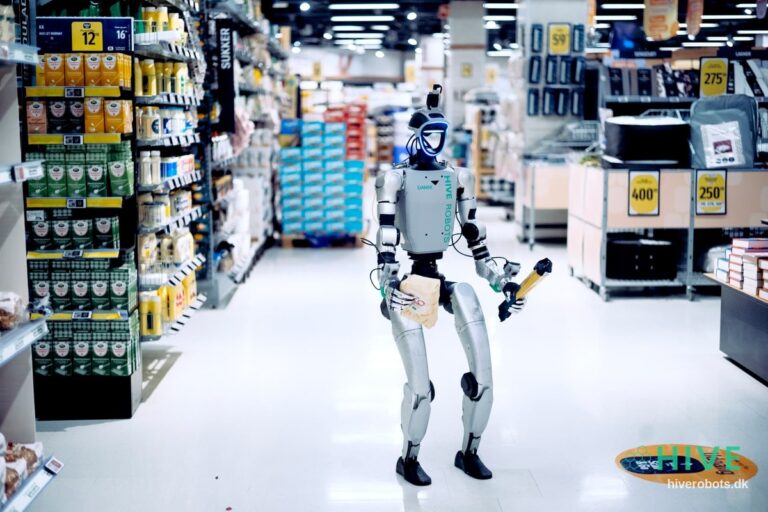
Denmark’s largest retailer, Salling Group, is testing humanoid robots for overnight shelf replenishment at its Føtex supermarket chain. The project with Danish startup HIVE Robots is using real store work to train machines for tasks that remain slower and less straightforward for robots than for employees.
Euronews reported on October 14 that training began in June at a store in Lyngby, north of Copenhagen. HIVE hopes the robots can independently restock selected products at night by early 2027. That is an autonomy target, not evidence that full supermarket shifts already run without human assistance.
Human Demonstrations Teach the Shelf Work
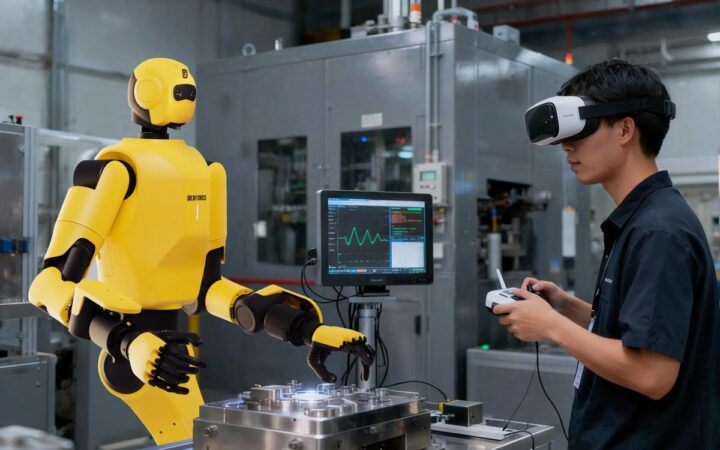
The machines are manufactured by China’s Unitree, while HIVE develops software and trains them. In the store, an operator wearing virtual-reality glasses uses handheld controllers to guide a robot through picking up pasta bags and placing them on shelves, creating demonstrations for learning.
HIVE and Føtex announced their multi-year development partnership in March. The initial pilots were designed to run after closing, reducing the complexity of working around customers while the team develops the system.
The partners’ argument for humanoids is compatibility with stores arranged for people. A machine with a human-like reach and body shape could use existing aisles and shelving, rather than require the retailer to rebuild around fixed industrial equipment.
That physical fit only solves part of the problem. Packages vary in shape and stiffness, shelf positions change, and a successful pick must end with the product correctly placed. Training on actual replenishment tasks gives developers examples of the small adjustments that are easy for a person to overlook.
An Hourly Service With Remote Human Support
HIVE describes its retail service as a combination of humanoid hardware, software, monitoring and trained remote robot pilots, billed by working hours. Its Heimdall platform allows an operator to intervene when a robot needs assistance.
The company’s published 2027 launch-partner plan begins with one robot and one teleoperator under continuous human monitoring. Later phases envisage multiple robots and eventually one operator supporting several machines as AI takes on more work. These are stages in a proposed deployment program, not results from a completed chain-wide rollout.
Store employees would choose replenishment tasks through an app, using product photographs and shelf locations. The model leaves staff involved in deciding the work, preparing the robot and handling the store’s operating routine.
For retailers, the meaningful comparison is the cost and output of that combined service. A robot working overnight still needs reliable task completion, recoverable errors and a support arrangement that does not consume the savings it is meant to create.
From One Store to a Wider Deployment
Salling Group says the trial is intended to support employees and give them more time for customers. Føtex operations director Simon Kudsk told Euronews that deployment across the chain could take up to five years. The report says the robots are currently slower than supermarket workers.
HIVE’s earlier service presentation framed night replenishment as a response to recruitment difficulties and described the model as being tested in a live Føtex store. Together, the announcements show a progression from partnership to store-based training, with autonomy and scale still being developed.
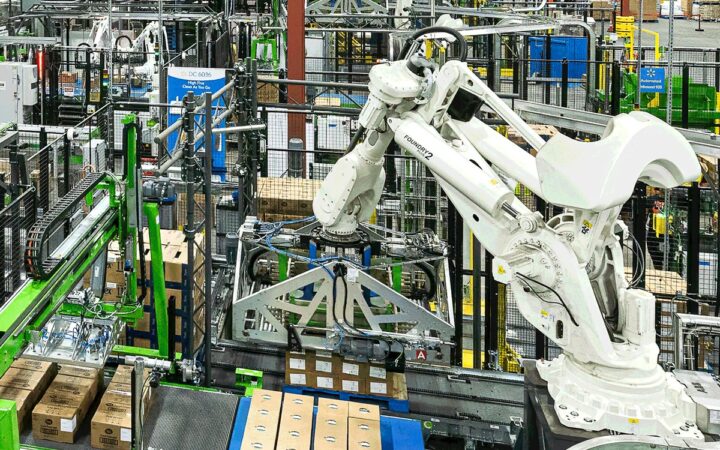
RobotsBeat’s reporting on Walmart’s automation highlights why reliability and integration matter alongside robot capability. The related 120ft model illustrates another approach to selling robotic work as a service rather than selling a machine.
Føtex’s pilot will be most informative when it shows repeatable shelf replenishment across different products with a clear account of human assistance. That evidence will help determine whether the night-shift trainees can become a dependable part of store operations.
Disclaimer: RobotsBeat is an independent media brand owned and operated by NuvexMedia LLC, publishing news, research, and insights on artificial intelligence, emerging technologies, automation, and related industries. NuvexMedia LLC invests in and collaborates with companies across the AI, Robotics, technology, software, and digital innovation sectors. These relationships do not influence RobotsBeat's editorial coverage, and the publication maintains full editorial independence to provide accurate, timely, and objective information. © 2026 NuvexMedia LLC. All rights reserved. This content is for informational purposes only and should not be considered legal, tax, investment, financial, or other professional advice.