Key Notes
- Walmart’s warehouse automation faces packaging, maintenance and retrofit challenges, according to the WSJ. The retailer’s fiscal 2026 targets covered automated freight, fulfillment volume and potential unit-cost savings. Reliable operations across warehouses, transport and stores determine the commercial payoff.
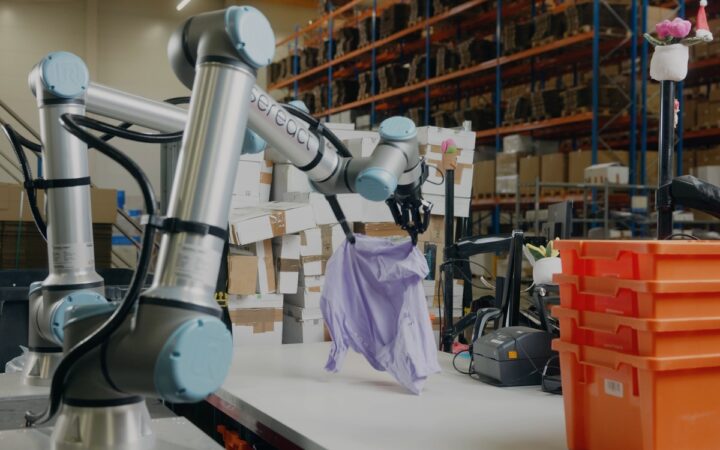
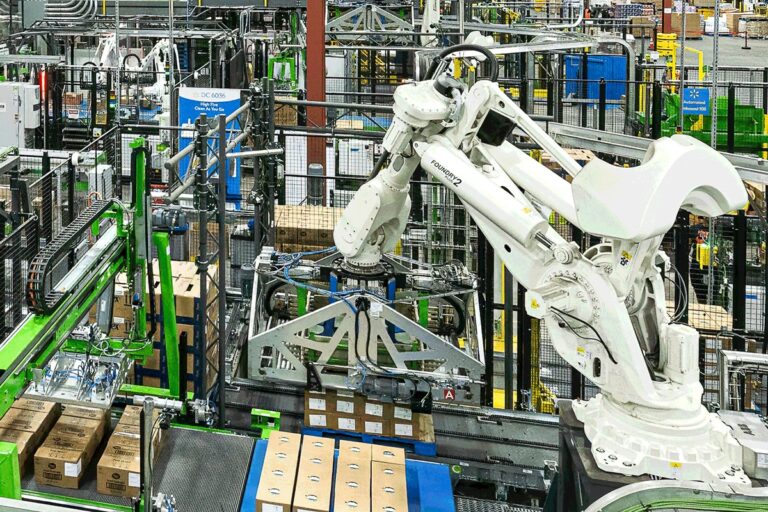
Walmart’s multibillion-dollar push to automate its warehouses is confronting an expensive reality: robots must work around awkward packaging, maintenance problems and buildings that keep shipping goods while they are rebuilt.
The Wall Street Journal reported that the retailer’s transformation has proved harder than expected. Walmart’s U.S. supply-chain chief Rob Montgomery described the current phase as “peak complexity,” with roughly 80% of construction projects involving retrofits.
Small Packaging Problems Have Large Consequences
According to the Journal, some existing shipping boxes are too large for the new equipment. Replacements are 1.5 inches shorter, but require taping that adds another handling step. Oversized goods, including large bags of dog food, create further exceptions.
The report also described dust buildup and maintenance issues affecting mobile robots. In a connected warehouse, interruptions can propagate beyond one machine, complicating the promise of faster and cheaper freight handling.
Walmart’s Automation Targets Remain a Useful Benchmark
Walmart set out its ambitions at an April 2023 investor meeting. Its original targets called for roughly 65% of stores to be serviced by automation and approximately 55% of fulfillment-center volume to move through automated facilities by the end of fiscal 2026. It also said average unit costs could improve by about 20%.
Those figures describe different measures of progress. A store receiving automated freight does not mean its entire supply chain operates without people, while a projected cost reduction is not a measured saving.
In its February 2026 presentation, Walmart reported that approximately 60% of stores were receiving some automated freight and about 50% of e-commerce fulfillment-center volume was automated. It also said 23 of 42 regional distribution centers were at various stages of automation retrofit. These are dated benchmarks, rather than a snapshot of the network today.
The Goal Extends Beyond Moving Boxes
The intended benefits reach store shelves. Walmart’s Symbotic partnership uses mobile robots and palletizing equipment to sort, store, retrieve and pack cases. The company expanded the planned deployment to all 42 regional distribution centers in May 2022.
Walmart says the system can assemble pallets organized for individual stores and aisles, reducing unloading and stocking work. That makes the economic case depend on coordination between warehouses, transport and stores, alongside the speed of the robots themselves.
Reliable Operations Determine the Payoff
The distinction between technical capability and commercial viability also runs through RobotsBeat’s coverage of robot costs. A machine’s ability to perform a task leaves a separate question about whether it can do so economically at deployment scale.
Other retailers are tackling different forms of variability. Zalando’s returns robots, for example, address the handling of returned fashion items. Walmart’s rollout highlights the additional challenge of integrating automation across a large operating network: packaging, maintenance and construction must all fit the production schedule for the promised savings to materialize.
Disclaimer: RobotsBeat is an independent media brand owned and operated by NuvexMedia LLC, publishing news, research, and insights on artificial intelligence, emerging technologies, automation, and related industries. NuvexMedia LLC invests in and collaborates with companies across the AI, Robotics, technology, software, and digital innovation sectors. These relationships do not influence RobotsBeat's editorial coverage, and the publication maintains full editorial independence to provide accurate, timely, and objective information. © 2026 NuvexMedia LLC. All rights reserved. This content is for informational purposes only and should not be considered legal, tax, investment, financial, or other professional advice.