
Key Notes
- Kawasaki has completed a prototype of its Home LEO social robot.
- The planned service combines conversation, monitoring and household assistance.
- Demonstration trials will precede a targeted fiscal 2028 launch.
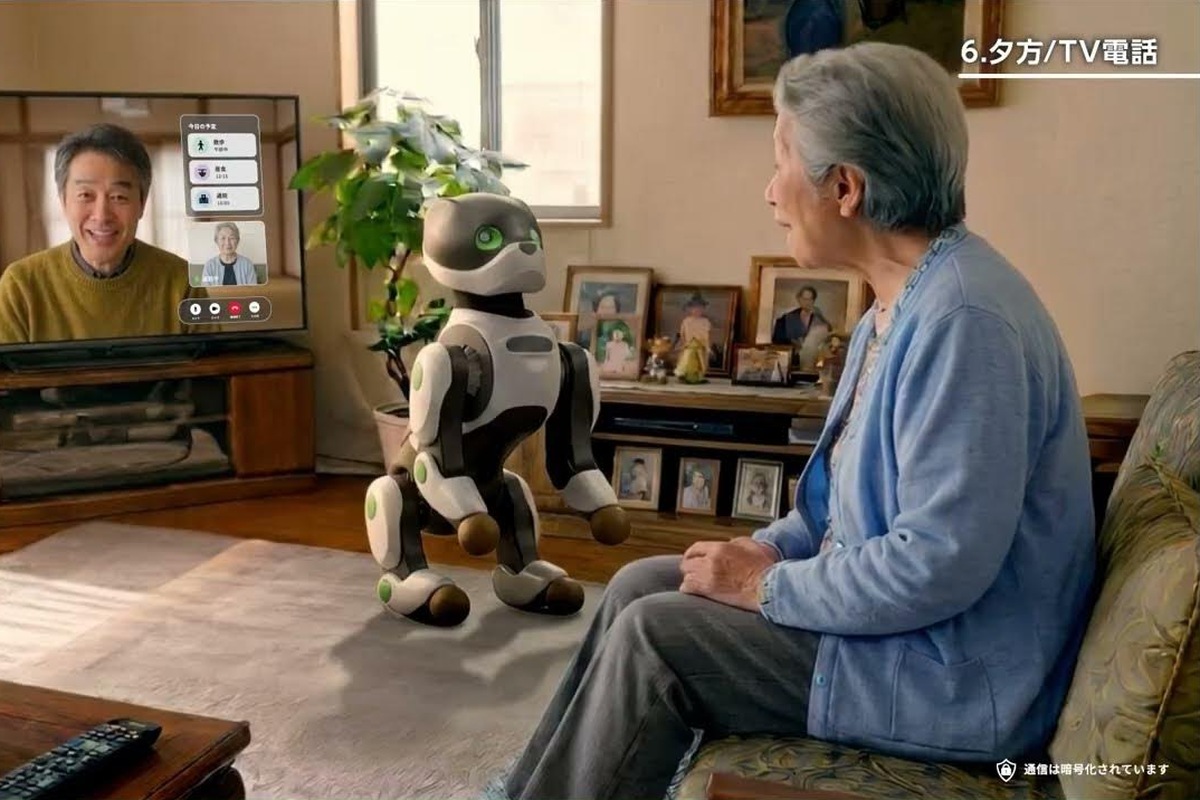
Kawasaki Heavy Industries has unveiled Home LEO, a dog-shaped robot intended to support older people living at home. The company has completed a prototype and is targeting a market launch in fiscal 2028, with demonstration trials still ahead.
Kawasaki’s October 6 announcement describes a combination of conversation, household assistance and monitoring. Its physical AI approach is intended to connect recognition of people and surroundings with decisions and autonomous movement.
A Companion With a Practical Care Role
The proposed functions include finding and handing over belongings, noticing falls or changes in a user’s condition, and responding to unattended fire hazards. Home LEO would prompt the person directly and coordinate with relatives or care professionals when necessary.
Kawasaki’s official video, embedded above, presents the robot in a home setting. The film’s description explicitly says it includes functions intended for future development, so these scenarios should be read as a presentation of the intended service rather than a completed commercial rollout.
The concept places conversation alongside physical assistance. That differs from the emphasis of Ami, the companion robot from Roomba co-founder Colin Angle previously covered by RobotsBeat, which focuses on emotional interaction and does not grasp objects. A shared animal-like form can conceal quite different expectations about what a household robot should do.
Household Data Is Part of the Service
Kawasaki plans to use information about daily routines and preferences to personalize interactions. It also envisages sharing care-related data with medical and nursing institutions through secure communications, subject to the user’s consent and appropriate information management.
That makes the service around the robot as consequential as the hardware. Families and providers would need to understand what information is collected, who receives an alert and who takes responsibility for responding. A machine noticing a possible problem is only one step in a care workflow.
Trials Come Before the Fiscal 2028 Target
Kawasaki plans demonstrations with government bodies, care providers and AI companies. It frames Home LEO as a way to support people in familiar homes amid shortages of care workers.
The broader deployment challenge is already visible in RobotsBeat’s coverage of South Korea’s proposed care robot council, where suppliers are seeking clearer rules on safety, liability and household information. That effort concerns a different jurisdiction, but highlights questions that accompany robots entering care settings.
Kawasaki’s robotics work also spans industrial systems, including the RL030N platform built for external AI control. Home LEO brings the company into a more personal operating environment, where useful assistance must fit the resident’s routines and the people supporting them. The planned trials will be the next opportunity to assess that fit.
Disclaimer: RobotsBeat is an independent media brand owned and operated by NuvexMedia LLC, publishing news, research, and insights on artificial intelligence, emerging technologies, automation, and related industries. NuvexMedia LLC invests in and collaborates with companies across the AI, Robotics, technology, software, and digital innovation sectors. These relationships do not influence RobotsBeat's editorial coverage, and the publication maintains full editorial independence to provide accurate, timely, and objective information. © 2026 NuvexMedia LLC. All rights reserved. This content is for informational purposes only and should not be considered legal, tax, investment, financial, or other professional advice.