Key Notes
- NVIDIA is extending its autonomous vehicle safety approach into robotics through Halos.
- Agility’s Digit 5 combines its own safety systems with IGX Thor and Halos Core.
- Final certification remains a separate process; Digit 5 availability is planned for 2027.
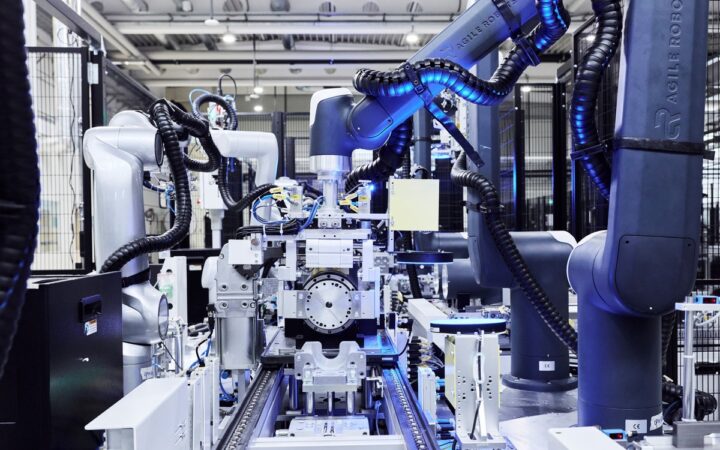
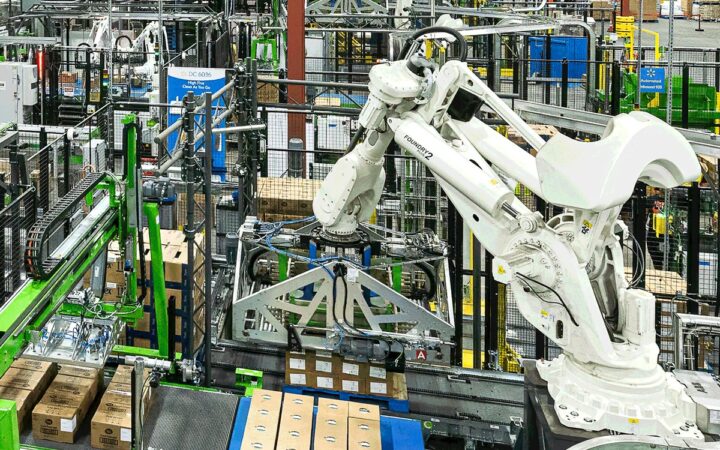
NVIDIA is making safety a central part of its physical AI strategy, extending technology developed for autonomous vehicles to humanoid robots and industrial machines. Its Halos platform combines computing hardware, safety software, sensor connectivity and an inspection process intended to help developers bring autonomous systems into workplaces shared with people.
The challenge is becoming more urgent as robots gain broader capabilities. In an October 8 Ars Technica report, NVIDIA robotics executive Amit Goel described safety as the next potential bottleneck as AI models and robot hardware improve. His argument puts deployment safeguards alongside intelligence and mechanical performance as requirements for scaling the industry.
From Robotaxis to Factory Floors
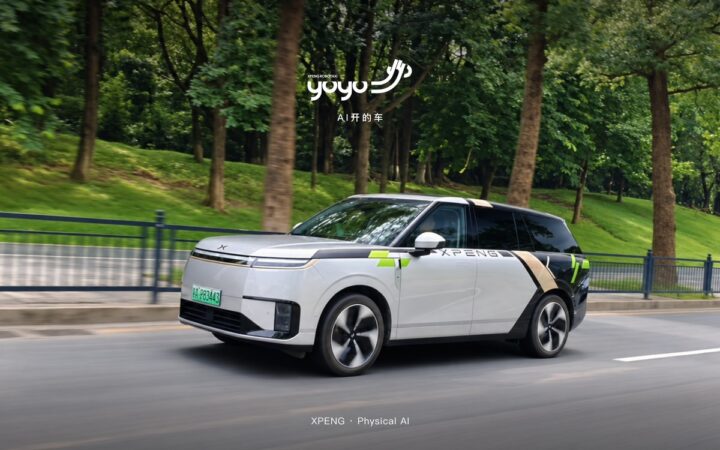
NVIDIA introduced Halos for autonomous vehicles in March 2025. That system brought together tools spanning AI training, simulation and onboard deployment, with platform, algorithmic and ecosystem safety addressed across the development process.
The company expanded the approach to robotics in June 2026, as RobotsBeat covered in its launch report. The transition involves more than transferring a driving system into a humanoid: a warehouse robot, a moving forklift and a machine working beside an assembly line face different hazards and require different responses.
How Halos Separates AI and Safety
At the hardware level, NVIDIA’s technical documentation describes IGX Thor’s dedicated functional safety island, isolated from the main AI computing domain. Halos Core manages safety-related operating functions, while Holoscan Sensor Bridge connects sensors and actuators to the computing platform.
The separation matters because a robot needs a way to respond to faults even when its main application encounters a problem. NVIDIA also offers Linux and Linux-plus-QNX configurations, with the latter partitioning AI application workloads and safety-critical functions into separate virtual machines.
Its Outside-In Safety Blueprint adds facility cameras to onboard sensing. In NVIDIA’s trailer-loading reference example, external perception tracks whether workers enter the loading area and triggers the appropriate safety response. This approach uses site infrastructure to address visibility limits; it is distinct from putting all safety sensing inside a robot.
Digit 5 Shows the Humanoid Application
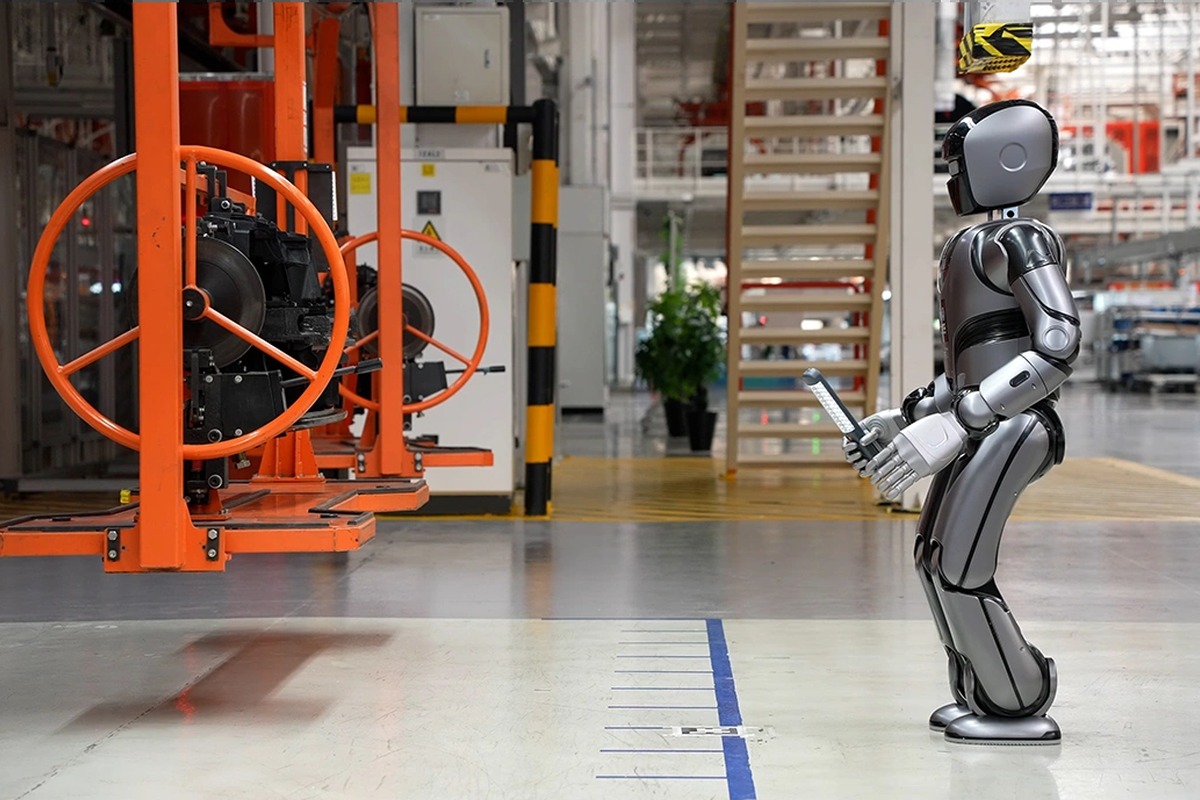
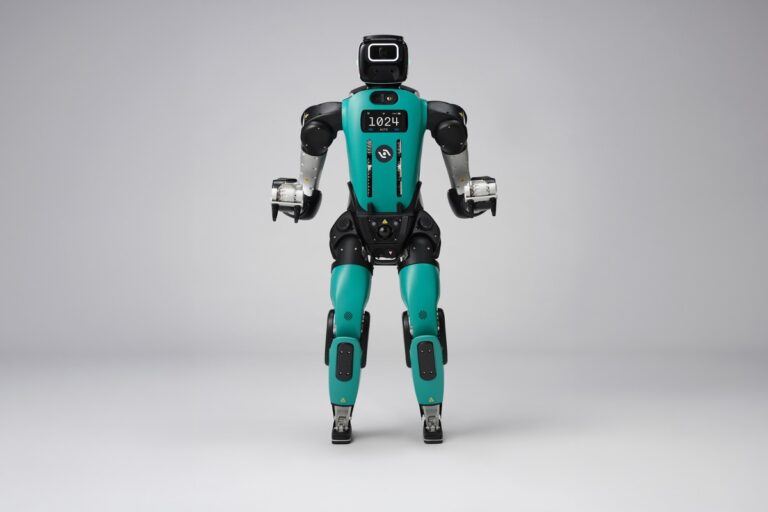
Agility Robotics provides a concrete example of the strategy. The company unveiled Digit 5 on September 15, describing a humanoid engineered to work near people without the physical barriers associated with conventional robot workcells.
According to Agility, the design combines human detection, visual and auditory safety cues, and an independent motion safety controller. The robot can avoid people, stop or assume a seated position when necessary. Agility is pairing its own systems with NVIDIA IGX Thor and Halos Core; the robot’s safety behavior is not supplied by NVIDIA alone.
Availability remains prospective. Agility expects early access in the first half of 2027 and general availability by the end of that year. Its existing Digit 4 deployments should therefore be distinguished from the newer model’s planned capabilities and rollout.
Certification Is Still a Separate Step
NVIDIA’s robotics announcement also outlines an AI Systems Inspection Lab that helps partners assess integrations before final third-party certification. Using Halos does not automatically certify a finished robot or establish that it can operate safely in every environment.
For customers, the practical test is whether a machine can perform useful work within clearly defined operating limits, with fault handling and safeguards validated for the site. That requirement sits alongside the productivity ambitions seen in NVIDIA’s Foxconn assembly work: faster automation still needs a credible route from demonstration to dependable production.
Disclaimer: RobotsBeat is an independent media brand owned and operated by NuvexMedia LLC, publishing news, research, and insights on artificial intelligence, emerging technologies, automation, and related industries. NuvexMedia LLC invests in and collaborates with companies across the AI, Robotics, technology, software, and digital innovation sectors. These relationships do not influence RobotsBeat's editorial coverage, and the publication maintains full editorial independence to provide accurate, timely, and objective information. © 2026 NuvexMedia LLC. All rights reserved. This content is for informational purposes only and should not be considered legal, tax, investment, financial, or other professional advice.