
Key Notes
- Zhaopeng Chen predicts physical AI could become an industry 10x bigger than automotive, without a defined deadline in the report.
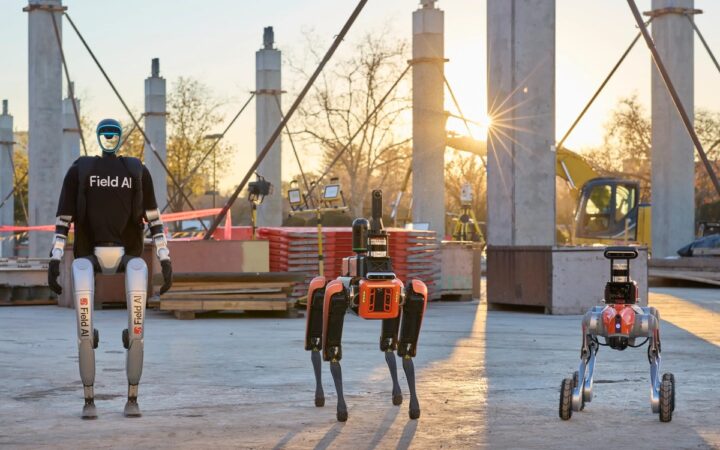
- Agile reports series humanoid production, with most current shipments using wheels.
- Its 20,000 deployed automation solutions cover the wider portfolio, not humanoid shipments.
Agile Robots founder and CEO Zhaopeng Chen expects physical AI to become an industry 10x bigger than automotive, as the Munich-based company expands humanoid manufacturing and factory automation.
Robotics & Automation News reported the comments on October 6. They came from an earlier Physical AI Media Day, where journalists visited Agile’s headquarters, laboratories, Robots Academy and production operations in Germany.
In its company recap, Agile described Chen’s approach as combining the robot’s body, intelligence and application. The strategy involves building an integrated system that can perform useful industrial work.
Agile ONE Moves Into Series Production
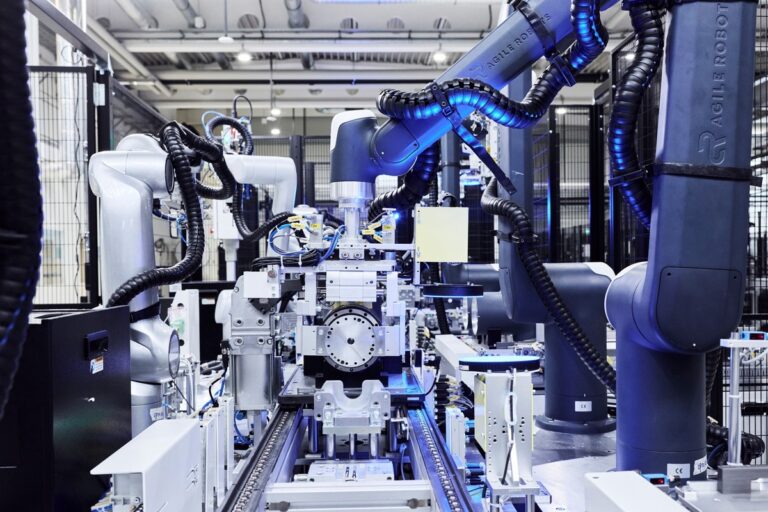
Agile’s September 16 factory update says production began in January and reached series production by late summer. Its Fürstenfeldbruck facility covers 10,000 square meters and builds both legged and wheeled machines.
Most current shipments use wheels, the company says, partly because those platforms already have certification. It identifies the absence of suitable standards for bipedal humanoids working alongside people as a barrier in Europe and North America.
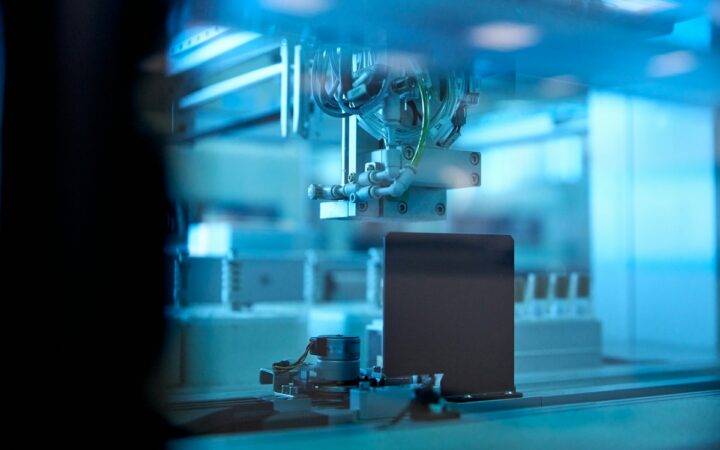
The company describes automated production of arms and torsos, while technicians assemble dexterous hands and complete final assembly. A robot takes three to four days to pass through the plant. Series production does not mean every manufacturing step is automated.
Factory Experience Feeds the AI
Agile says it has deployed more than 20,000 automation solutions worldwide. That figure covers its wider portfolio and should not be read as 20,000 humanoid shipments.
Its Agile ONE platform uses industrial operating data, simulation, teleoperation and human demonstrations to train robot foundation models. The company equips its humanoid with cameras, lidar and hands incorporating force and tactile sensing.
For factory operators, those capabilities matter when parts arrive in different positions or a task requires controlled contact. A successful demonstration still needs to become repeatable work with predictable cycle times and recovery from errors.
RobotsBeat previously covered Agile’s DeepMind partnership, which connects AI model development with industrial robotics hardware and operating data.
Hitachi Partnership Targets Variable Tasks
A September 29 Hitachi agreement provides another route to customers. The companies plan to combine robotics, industrial integration experience and edge AI semiconductors, then commercialize systems for real production environments.
Their targeted applications include handling parts, loading machines, assembly and moving materials between processes. Longer-term ambitions include coordinating robots, machines and people across whole operations. These are partnership objectives, rather than a disclosed fleet-wide performance result.
The 10x Claim Remains a Forecast
The October report does not provide a market-sizing methodology or deadline for Chen’s comparison. His forecast expresses a long-term opportunity across physical work, rather than a measured description of today’s robotics market.
Agile is expanding the infrastructure to pursue that opportunity, including the XNG Automation acquisition previously covered by RobotsBeat. Whether the market reaches Chen’s projected scale will depend on reliable deployments, integration costs and customers’ returns from the systems they buy.
Disclaimer: RobotsBeat is an independent media brand owned and operated by NuvexMedia LLC, publishing news, research, and insights on artificial intelligence, emerging technologies, automation, and related industries. NuvexMedia LLC invests in and collaborates with companies across the AI, Robotics, technology, software, and digital innovation sectors. These relationships do not influence RobotsBeat's editorial coverage, and the publication maintains full editorial independence to provide accurate, timely, and objective information. © 2026 NuvexMedia LLC. All rights reserved. This content is for informational purposes only and should not be considered legal, tax, investment, financial, or other professional advice.