Key Notes
- Techman identifies its TM AI Cobot S Series as the certified product range.
- IEC 62443-4-2 covers component cybersecurity capabilities, rather than the security of an entire installed factory.
- The company also describes vulnerability handling, incident reporting and security updates.
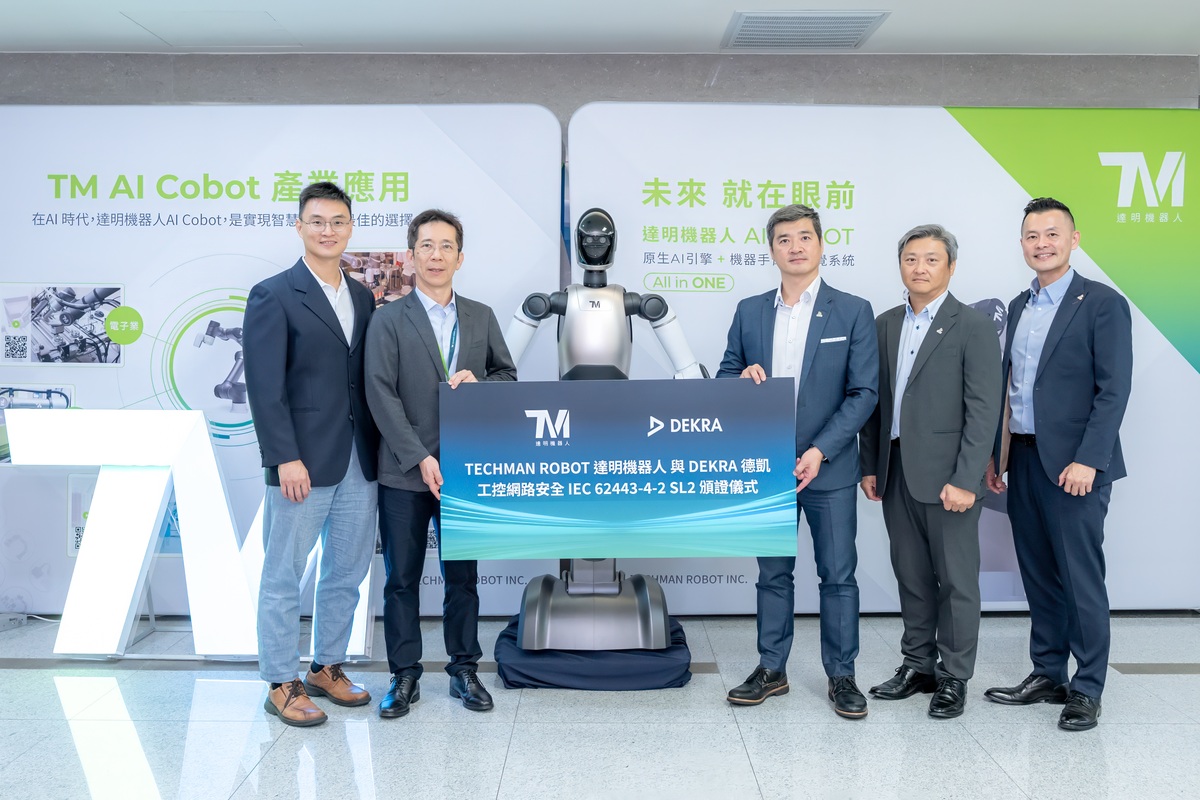
Techman Robot says its TM AI Cobot S Series has obtained IEC 62443-4-2 Security Level 2 cybersecurity certification following an independent assessment by DEKRA, adding a product security credential to its connected industrial robots.
The company announced the certification on its website on October 1 and distributed the news through PR Newswire on October 6. The scope identified in the announcement is the S Series collaborative robot range.
What the Certification Covers
The IEC standard sets technical cybersecurity requirements for industrial automation and control system components. Its seven foundational areas cover identification and authentication, control of use, system integrity, confidentiality, restricted data flows, response to events and availability.
That makes the credential relevant to how a connected component controls access, protects information and maintains its operation. The IEC explicitly distinguishes component security capabilities from the security level achieved by an entire installed system.
DEKRA’s certification framework likewise separates component requirements under Part 4-2 from secure product development processes under Part 4-1 and system requirements under Part 3-3. A factory’s broader security depends on the installation and its operating practices, alongside the robot’s own capabilities.
Security Beyond the Initial Assessment
Techman says it has established processes for vulnerability management, incident reporting and security updates across the product lifecycle. It is continuing to develop those mechanisms with reference to the EU’s Cyber Resilience Act.
The practical question for buyers is how those processes work after deployment: how a problem is reported, how affected equipment is identified and how fixes reach a production line. The announcement does not specify an update support period or response-time commitment.
RobotsBeat’s earlier coverage of a DJI security flaw illustrated why vulnerability disclosure and remediation matter for connected robots, even when the machines operate in a very different setting.
Physical AI Meets Factory Infrastructure
The certification sits alongside Techman’s broader effort to connect machine vision, AI and robotic execution. Its June development package, built with NVIDIA and QCT, links human demonstrations, model training, simulation and deployment across cobots and the TM Xplore I humanoid platform.
That workflow includes teleoperation for capturing movements and virtual evaluation before models run on physical machines. The October security announcement does not extend the S Series certification to every platform in that development package.
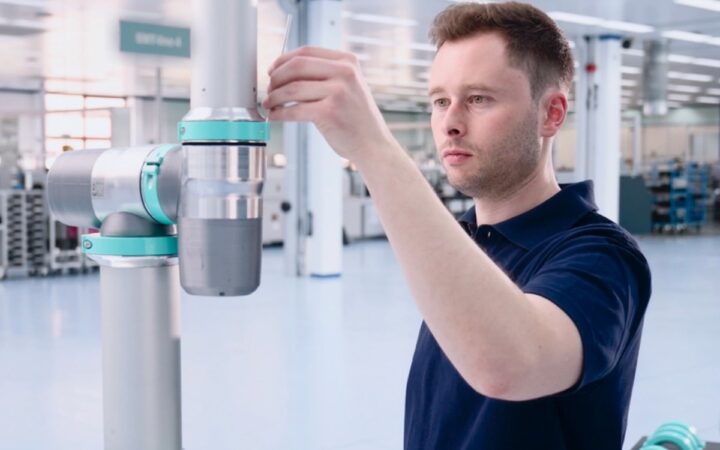
RobotsBeat previously covered Universal Robots’ Gen 7 platform, another example of industrial robotics hardware being designed around AI and factory connectivity. As more intelligence reaches production equipment, product security assessments become part of the deployment decision, alongside task performance and integration costs.
Disclaimer: RobotsBeat is an independent media brand owned and operated by NuvexMedia LLC, publishing news, research, and insights on artificial intelligence, emerging technologies, automation, and related industries. NuvexMedia LLC invests in and collaborates with companies across the AI, Robotics, technology, software, and digital innovation sectors. These relationships do not influence RobotsBeat's editorial coverage, and the publication maintains full editorial independence to provide accurate, timely, and objective information. © 2026 NuvexMedia LLC. All rights reserved. This content is for informational purposes only and should not be considered legal, tax, investment, financial, or other professional advice.