Key Notes
- Minerva has raised approximately $10 million in pre-seed funding led by General Catalyst.
- Roger combines human teleoperation with software-assisted movement for hazardous work.
- The company plans its first paid pilots this fall.
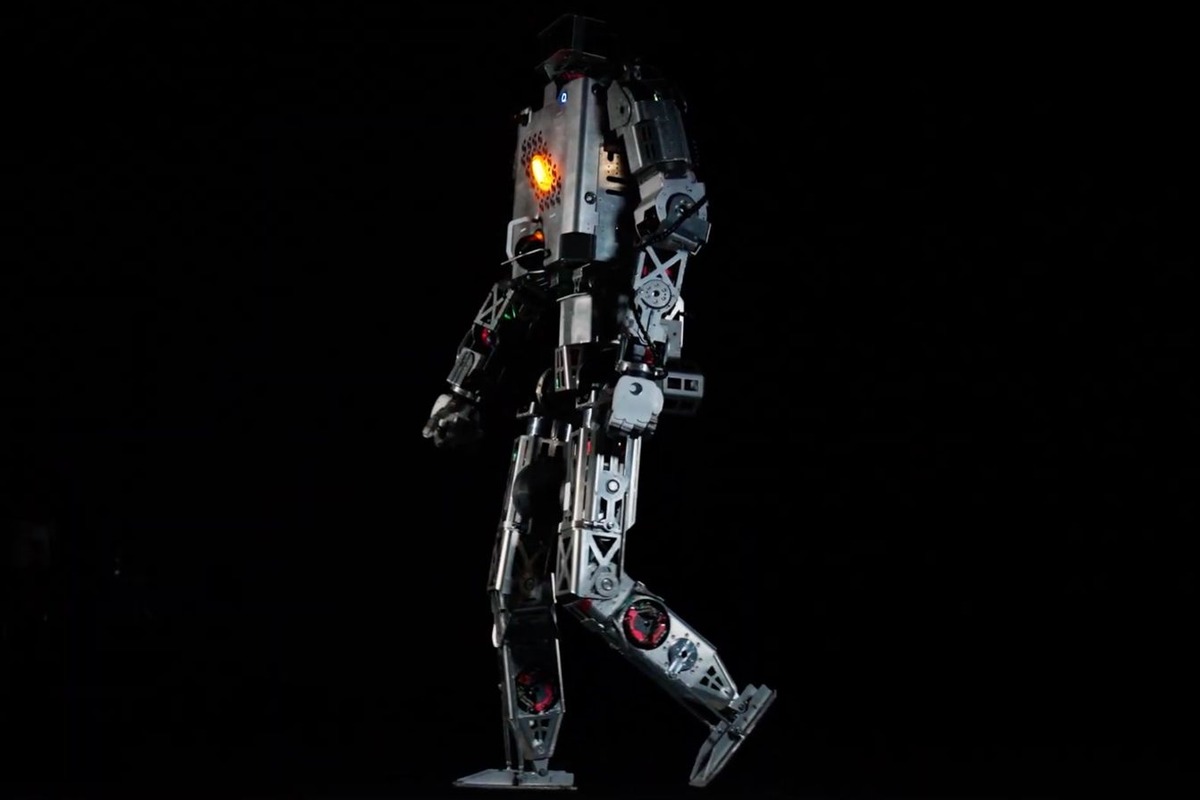
Minerva Humanoids has emerged from stealth with approximately $10 million in pre-seed funding to develop Roger, a semi-autonomous humanoid for hazardous energy operations and public safety work, including bomb disposal. The company plans its first paid pilots this fall.
The October 6 announcement names General Catalyst as the lead investor, with Long Journey Ventures and Credo Ventures as co-leads. Roger is intended to let trained specialists perform dangerous tasks remotely while retaining responsibility for critical decisions.
A Human Operator Stays in Control
Minerva’s control system handles balance, navigation and fall recovery while an operator uses a VR headset to see through the robot’s cameras and direct its actions. The aim is to move the specialist’s body away from the hazard while preserving their expertise at the worksite.
In an interview with Tectonic, CEO Sandor Felber described shared autonomy as the immediate approach, with haptic gloves planned. Full autonomy is not the current objective: the priority is completing the task safely with human judgment involved.
Two-handed manipulation is central to that proposition. Minerva argues that some explosive-disposal tasks exceed the dexterity of traditional tracked, single-arm machines. The engineering challenge connects with Boston Dynamics’ work on Atlas hands: useful manipulation requires more than reaching an object.
Built for Energy Sites and Emergency Response
Minerva’s website describes Roger as weighing under 100 kilograms when outfitted and being designed for passenger-seat transport, stairs and wet decking. These are company specifications and design claims, rather than independent field-test results.
The proposed energy applications include reading gauges, tracking corrosion and responding remotely to gas alarms or leaks. RobotsBeat has also covered Eni’s GENE.01 partnership, another effort to assess humanoids for industrial inspection and remote assistance.
US Software and German Prototypes
Minerva says Roger progressed from an initial idea to a walking humanoid in five months, including custom design, manufacturing and assembly. Its first prototypes are manufactured and assembled in Germany, while software and AI development are primarily based in the United States.
The company plans production in both countries and says its supply chain will avoid dependence on single-source Chinese components. CEO Sandor Felber previously worked on Tesla’s Optimus program, while CTO Maurice Rahme spent six years at Boston Dynamics, including as a technical lead on Stretch.
Research and Pilots Come Before Deployment
A two-year research partnership with Mohamed bin Zayed University of Artificial Intelligence focuses on perception, navigation and simulation for safety-critical energy operations. Its agenda includes interpreting visual scenes and language commands, working in confined or low-visibility environments, and validating interventions in digital twins before physical deployment.
Minerva also identifies a University of Waterloo research partnership focused on perception in smoke, darkness and sensor failures. That work addresses situations where a robot’s normal view of a hazardous site may be compromised.
Minerva says it has presented at NATO’s Explosive Ordnance Disposal Centre of Excellence in Slovakia and completed on-site public-safety testing while exploring deployments at two major airports. Those activities establish demonstrations and testing, rather than a confirmed airport rollout or NATO procurement contract.
Paid pilots will be the next test of whether Roger can turn remote manipulation into reliable hazardous-work capability. For operators, the practical question is how consistently the system can complete a difficult task while keeping the human at a safe distance.
Disclaimer: RobotsBeat is an independent media brand owned and operated by NuvexMedia LLC, publishing news, research, and insights on artificial intelligence, emerging technologies, automation, and related industries. NuvexMedia LLC invests in and collaborates with companies across the AI, Robotics, technology, software, and digital innovation sectors. These relationships do not influence RobotsBeat's editorial coverage, and the publication maintains full editorial independence to provide accurate, timely, and objective information. © 2026 NuvexMedia LLC. All rights reserved. This content is for informational purposes only and should not be considered legal, tax, investment, financial, or other professional advice.