Key Notes
- Multiply Labs has raised $75 million in a Series B led by Patrick Soon-Shiong with NantWorks.
- Its robotic clusters automate existing biomanufacturing instruments and processes.
- The company plans to expand capacity and support additional biologics.
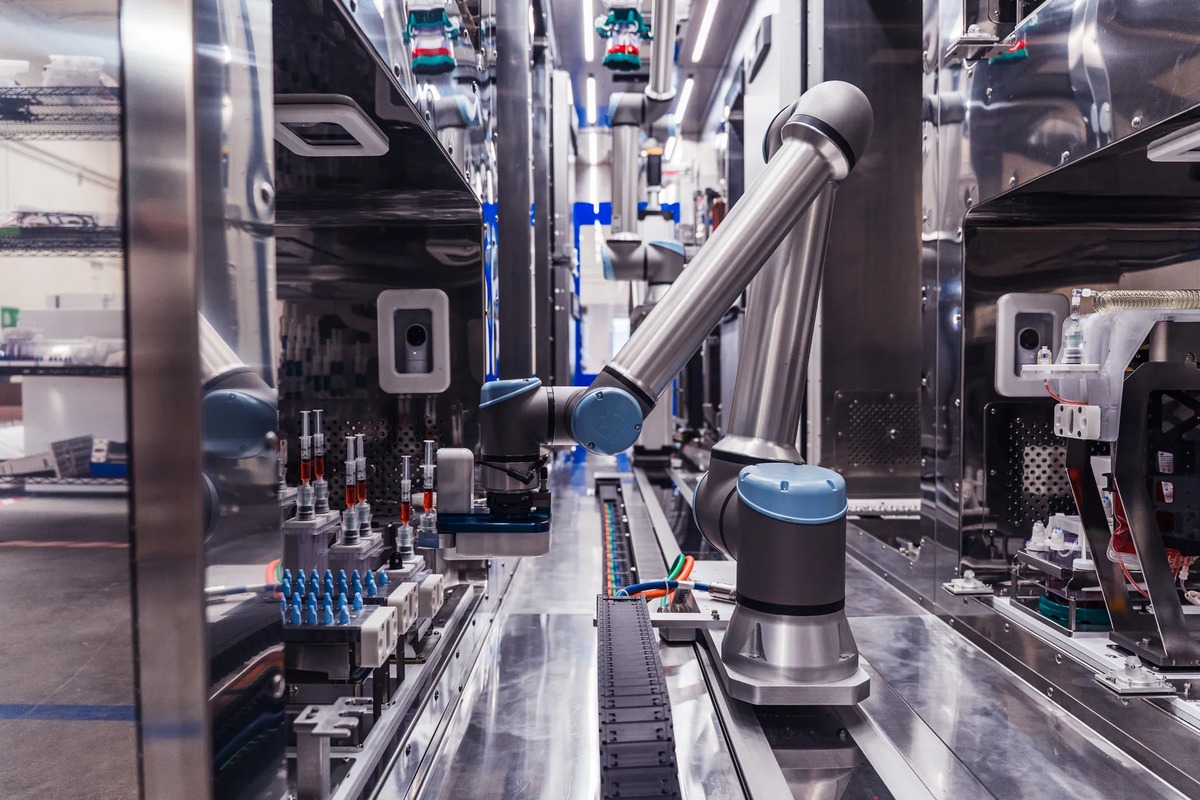
Multiply Labs has raised $75 million in Series B funding to expand its robotic systems for pharmaceutical manufacturing. The San Francisco company builds clusters of robot arms and laboratory instruments intended to automate the production of advanced biologic medicines.
The October 6 announcement names Patrick Soon-Shiong with NantWorks as the round’s lead. New investors include AstraZeneca, Lingotto, Teradyne and Strange Ventures, joining returning backers including Casdin Capital and Lux Capital. Multiply Labs says its total funding now exceeds $100 million.
Robotic Arms Connect Existing Instruments
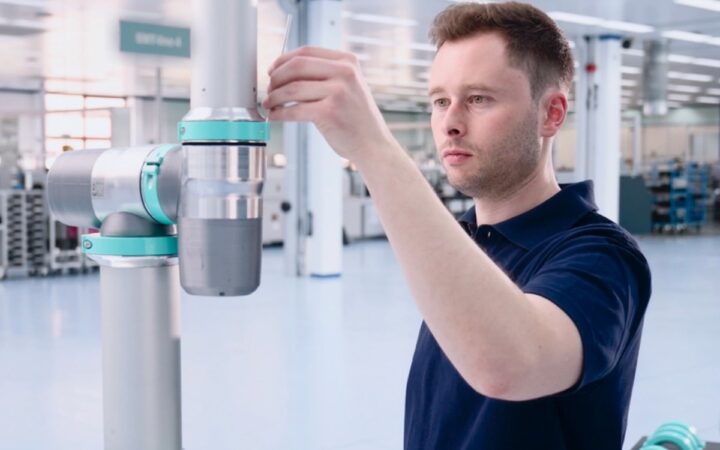
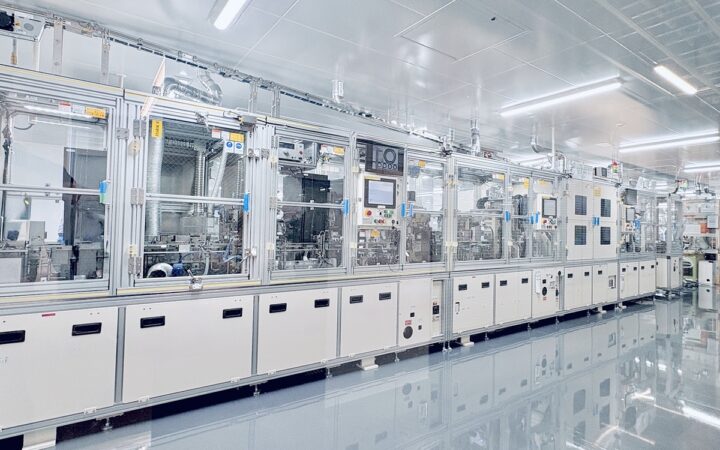
The company’s manufacturing platform combines four Universal Robots arms with modular towers housing laboratory equipment. The arms move materials between instruments and perform operations such as liquid transfer, cell counting, resuspending bags and loading incubators. Software coordinates the sequence, allowing instruments already used in a manufacturer’s process to work together inside an enclosed system.
Rather than asking operators to program every movement directly, Multiply Labs offers a graphical application for arranging manufacturing steps. Its software also records process information, sensor readings, material genealogy and operator actions. Those records are part of the practical challenge of making automated production traceable, alongside the mechanics of moving a vial or handling a bag.
Universal Robots’ case study describes force-sensitive arms mounted on additional axes so they can reach equipment throughout the cluster. It also outlines imitation learning from demonstrations by scientists. RobotsBeat’s coverage of SymSkill research examined a separate effort to teach robots sequences of tasks from brief demonstrations, illustrating the wider interest in reducing manual programming.
What the Cost and Throughput Figures Measure
Multiply Labs and its robotics supplier cite a 74% reduction in manufacturing cost per dose and potential output of up to 100x more doses per square foot of cleanroom space. These are production claims tied to the proposed manufacturing approach. The space-based throughput comparison does not mean every process runs 100x faster, and a lower manufacturing cost is not a promise of a corresponding reduction in a medicine’s selling price.
A 2024 study in Cytotherapy provides evidence for a narrower question: whether a robotic cluster could carry out cell-manufacturing work while preserving the measured properties of the cells. In proof-of-concept experiments expanding human CD8+ T cells, researchers reported comparable yields, viability and identity to manual processing, while maintaining culture sterility. That result supports the manufacturing concept; it does not establish clinical effectiveness in patients.
Moving Toward Commercial Manufacturing
The new funding will support manufacturing capacity, product development and hiring as Multiply Labs moves from clinical-stage work toward commercial-scale production. The company also plans to extend its platform beyond cell and gene therapies to antibodies, viral vectors and mRNA. Its model is to supply systems that pharmaceutical companies own and operate themselves.
The investment adds to a broader push to automate specialized healthcare workflows. While NEURA HealthTech is targeting hospital logistics, Multiply Labs is tackling the controlled environment in which medicines are manufactured. The test ahead is turning a coordinated cluster of instruments and arms into repeatable production at the scale drugmakers require.
Disclaimer: RobotsBeat is an independent media brand owned and operated by NuvexMedia LLC, publishing news, research, and insights on artificial intelligence, emerging technologies, automation, and related industries. NuvexMedia LLC invests in and collaborates with companies across the AI, Robotics, technology, software, and digital innovation sectors. These relationships do not influence RobotsBeat's editorial coverage, and the publication maintains full editorial independence to provide accurate, timely, and objective information. © 2026 NuvexMedia LLC. All rights reserved. This content is for informational purposes only and should not be considered legal, tax, investment, financial, or other professional advice.