Key Notes
- The GIANT expedition made 523 instrument deployments during 30 days in East Greenland.
- Surface and underwater robots produced 30 glacier-face maps.
- Meltstake sensors recorded conditions beside the ice for 19 continuous hours.
- Researchers will use the data to improve glacier and ocean models.
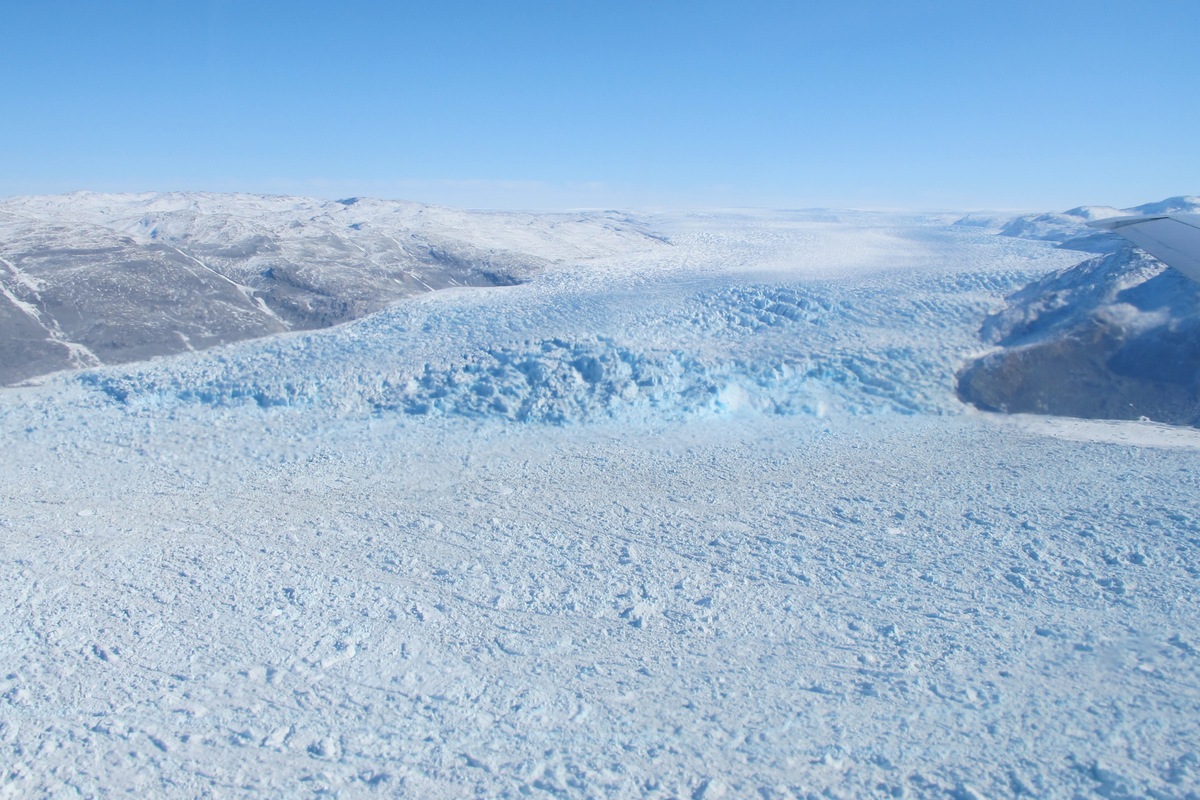
A fleet of marine robots has completed an intensive survey of a melting glacier in East Greenland, gathering measurements in places too hazardous for people to approach. British Antarctic Survey (BAS) says the GIANT expedition made 523 instrument deployments during 30 days of work in a remote fjord.
The October 9 expedition report describes a coordinated campaign around Sorgenfri Gletsjer, supported by the research ship RRS Sir David Attenborough. The goal is to understand how ocean water melts Greenland’s glaciers and how the resulting freshwater affects the North Atlantic.
Robots Mapped the Glacier Above and Below Water
A DriX surface vehicle surveyed the upper ice face, while Gavia and ecoSUB underwater robots mapped submerged sections. Together, they produced 30 glacier-face maps, which researchers can compare with simultaneous drone observations.
The team also used a remotely piloted inflatable boat, Polly, and a tethered underwater vehicle to insert a Meltstake sensor into the glacier. BAS reports the first deployment of this instrument in Greenland, recording conditions just millimetres from the ice for 19 continuous hours.
Another vehicle, the National Oceanography Centre’s Autosub Long Range, known as Boaty McBoatface, travelled close to the seabed beneath kilometres of glacial mélange: a congested mixture of icebergs and other floating ice. These operations extend robotic observation beyond open water into environments where access and navigation are much harder.
Positioning Matters as Much as Autonomy
GPS cannot provide an underwater vehicle with a continuous position fix. Equipment supplier Sonardyne outlined the expedition’s acoustic positioning setup before departure, including Ranger 2 on the research ship and Mini-Ranger 2 on its workboat, Erebus.
Locating a measurement accurately matters when scientists want to compare repeated surveys and distinguish a changing glacier from a changing observation point. Reliable movement is another recurring challenge in marine robotics, including the separate adaptive fin research previously covered by RobotsBeat.
The fleet combined autonomous vehicles with remotely operated equipment. BAS stresses that engineers, scientists and ship crews remain essential to making these systems work in demanding polar conditions.
From Field Measurements to Climate Models
Shipboard researchers completed 261 CTD casts, measuring properties such as water temperature and salinity. A land team added drone surveys and instruments tracking glacier movement. In their field account, expedition researchers describe combining ice, ocean and glacier observations to investigate processes that are difficult to capture from a distance.
The work illustrates a different stage of environmental robotics from early demonstrations such as the ALBATROSS sailing robot. Here, multiple platforms were brought together for a sustained scientific campaign, with human teams coordinating measurements across the same landscape.
Over the next three years, the GIANT team plans to use the data to improve models of glacier melting and freshwater mixing. Funded through ARIA’s Forecasting Tipping Points programme, the research is intended to inform the UK Earth System Model and, ultimately, warnings of major ocean-circulation changes. The expedition has delivered observations; those modelling results are still ahead.
Disclaimer: RobotsBeat is an independent media brand owned and operated by NuvexMedia LLC, publishing news, research, and insights on artificial intelligence, emerging technologies, automation, and related industries. NuvexMedia LLC invests in and collaborates with companies across the AI, Robotics, technology, software, and digital innovation sectors. These relationships do not influence RobotsBeat's editorial coverage, and the publication maintains full editorial independence to provide accurate, timely, and objective information. © 2026 NuvexMedia LLC. All rights reserved. This content is for informational purposes only and should not be considered legal, tax, investment, financial, or other professional advice.