NVIDIA has announced Halos for Robotics, a full-stack safety architecture for physical AI systems that unifies AI compute, safety software, sensor connectivity, and certification preparation into a single common framework.
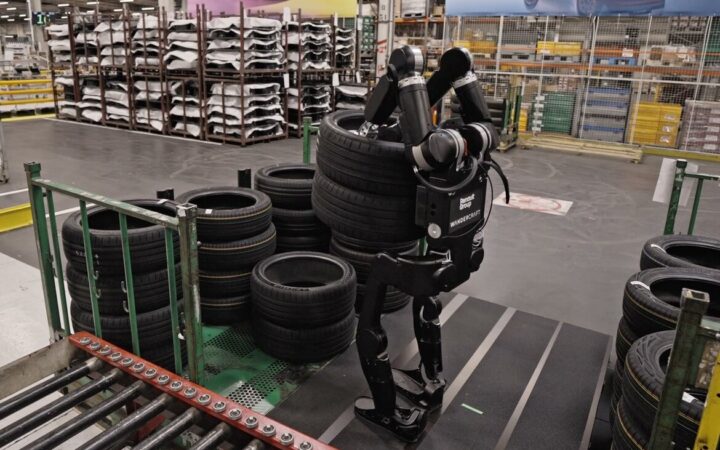
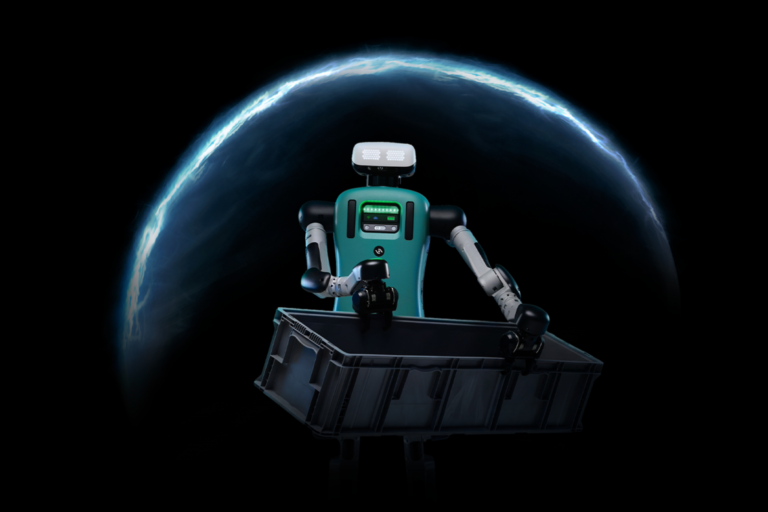
The system draws on more than 18,600 engineering years of autonomous vehicle safety development and extends that foundation to robots operating in dynamic industrial environments alongside human workers. Agility Robotics is the first company to integrate Halos for Robotics into a commercial humanoid platform, incorporating it into its Digit robot deployed at Amazon, GXO, Schaeffler, and Toyota Motor Manufacturing Canada.
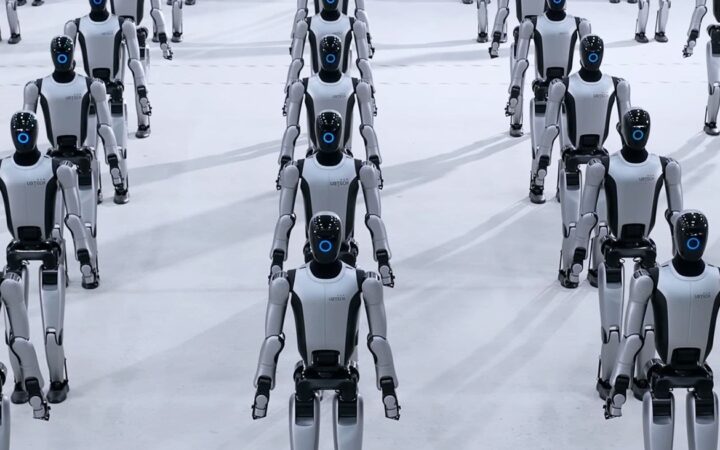
The announcement addresses a structural gap in physical AI deployment: as humanoid robots and autonomous systems scale from controlled pilots into live industrial operations, the absence of a standardized safety architecture has created fragmented, company-specific approaches that are difficult to certify, validate, and audit at scale.
What Halos for Robotics Covers
The system spans three layers. At the hardware level, NVIDIA IGX Thor provides industrial-grade AI compute with built-in safety capabilities, while the Holoscan Sensor Bridge handles sensor connectivity for real-time robotics and safety workloads. At the software level, Halos OS provides the safety stack, including Halos Core for safety-related operating functions and the Halos Outside-In Safety Blueprint – an open-source framework that extends robot perception using external cameras and AI agents to dynamically monitor and control robot behavior in industrial settings.
The third layer is the NVIDIA Halos AI Systems Inspection Lab, the world’s first ANSI National Accreditation Board-accredited program for functional and AI safety for physical AI systems. The lab helps partners prepare Halos integrations for third-party certification by recognized bodies including TÜV Rheinland, UL Solutions, TÜV SÜD, exida, SGS, and CertX. More than 40 companies are participating in the lab across manufacturing, certification, and safety vendor categories.
“With NVIDIA Halos for Robotics, developers and system builders can harness NVIDIA’s proven autonomous vehicle safety foundation to develop safer robots faster and bring them into industrial operations alongside workers with greater confidence,” said Deepu Talla, Vice President of Robotics and Edge AI at NVIDIA.
Agility’s Digit as the First Integration
Agility Robotics is integrating NVIDIA IGX Thor and Halos Core into its proprietary safe human detection system for Digit, its humanoid robot designed for logistics, manufacturing, and warehouse operations. The integration covers safety-related compute and software functions.
Agility will also participate in the Halos AI Systems Inspection Lab, using it to validate Digit’s safety-related software, AI components, and cybersecurity protections against standards including IEC 61508, ISO 13849, and ISO/IEC TR 5469 before final third-party certification.
“For humanoids to deliver value at scale, safety has to be built into the robot and validated across the entire system,” said Peggy Johnson, CEO of Agility. “Partnering with NVIDIA to implement and optimize the Halos for Robotics system extends our leadership in responsible automation, which is a nonnegotiable requirement for bringing humanoids safely into industrial workflows.”
An Ecosystem Rather Than a Product
Halos for Robotics is structured as an ecosystem rather than a closed platform. Software partners including Acontis, FreeRTOS, and QNX support real-time operating environments and embedded safety layers.
Embedded system partners Advantech and NexCobot deliver IGX-based systems for robotics deployments. Semiconductor contributors include Infineon, NXP, STMicroelectronics, and Texas Instruments. Industrial application partners FORT Robotics, KION Group, and others are developing functional safety agents using the Outside-In Safety Blueprint.
The open-source Halos Outside-In Safety Blueprint is now available in early access on GitHub. Halos Core for IGX is available in early access for registered developers. The certification pathway through the Halos AI Systems Inspection Lab represents the most direct available route to internationally recognized safety certification for physical AI systems operating in human-shared industrial environments – a requirement that is becoming non-negotiable as enterprise procurement of humanoid robots moves from pilots to production contracts.
Disclaimer: RobotsBeat is an independent media brand owned and operated by NuvexMedia LLC, publishing news, research, and insights on artificial intelligence, emerging technologies, automation, and related industries. NuvexMedia LLC invests in and collaborates with companies across the AI, Robotics, technology, software, and digital innovation sectors. These relationships do not influence RobotsBeat's editorial coverage, and the publication maintains full editorial independence to provide accurate, timely, and objective information. © 2026 NuvexMedia LLC. All rights reserved. This content is for informational purposes only and should not be considered legal, tax, investment, financial, or other professional advice.