Key Notes
- Brian Gu says XPENG aims to sell IRON in the second half of 2027 after testing the humanoid in its own stores and offices, with internal service roles planned earlier.
- XPENG describes a platform combining three Turing chips, whole-body AI models and dexterous hands, while demonstrations remain distinct from verified customer performance.
- The commercial test is whether internal deployments translate into repeatable work, manageable supervision and dependable servicing for outside buyers.
XPENG plans to begin selling its IRON humanoid robot in the second half of 2027, following initial testing in the company’s own stores and offices, vice chairman and president Brian Gu told Forbes Asia. The rollout puts customer-facing service work at the center of the electric vehicle maker’s robotics strategy.
Speaking around the Forbes Global CEO Conference in Singapore, Gu said robots could assist sales staff and greet headquarters visitors by early next year. He also reiterated a plan for mass production during 2026. Those remain company targets, rather than evidence that external customer deliveries have started.
IRON Will Start Alongside XPENG Employees
The stores-and-offices sequence gives XPENG a practical setting in which to evaluate the product before offering it more broadly. Its own staff can observe the robot, step in when necessary and identify interactions that need better software or clearer operating limits.
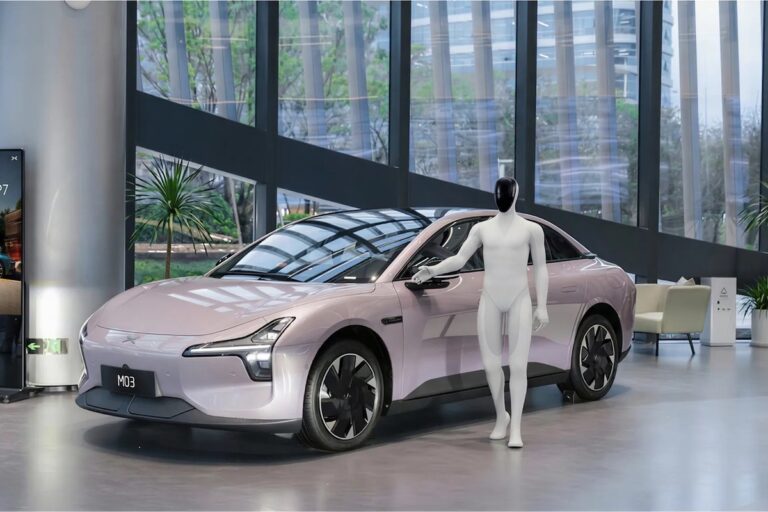
A showroom assistant must do more than answer a prepared question. It needs to hear customers in a noisy space, understand follow-up requests and move without blocking visitors or vehicles. A reception role adds another test: recognizing when a request falls outside its remit and passing the visitor to a person.
These are examples of the requirements such deployments would face, rather than a list of capabilities independently verified for IRON. Testing in a familiar location can help expose those problems, but it does not by itself demonstrate reliable performance at an outside customer’s site.
XPENG Combines Its Own Chips With Whole-Body AI
XPENG’s IRON overview describes three in-house Turing chips and a combination of vision-language, decision-making and action models. The company presents these as the computing and software foundation for perception, planning and whole-body control.
The same page highlights a bionic spine, tactile sensing and hands with 22 degrees of freedom. Promotional demonstrations show walking, coffee preparation and coordinated movements, while the proposed service roles include shopping guidance, tours and patrols. These are manufacturer descriptions and demonstrations, rather than published customer uptime or task-success results.
For a service robot, the value of that hardware lies in how consistently the complete system behaves. A conversation that leads to a physical action requires language understanding, perception and motion control to agree about what the user wants and what is safe to do.
From Automotive Manufacturing to Robot Sales
Gu framed XPENG’s investment in its own semiconductors around control of costs, software compatibility and supply stability. The strategy connects the company’s intelligent-vehicle work with its ambitions in physical AI, rather than treating humanoids as an unrelated product line.
Our earlier reporting on XPENG’s Guangzhou factory covered the manufacturing infrastructure behind that push. A dedicated production base could support repeatable assembly and servicing, although planned capacity and commercial demand remain separate questions.
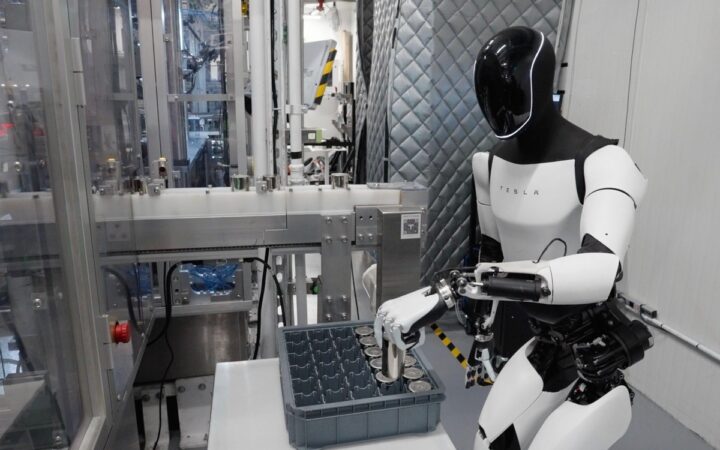
There is a useful comparison with Tesla’s Optimus roadmap. Both companies are using their automotive experience to pursue humanoid products, but a vehicle supply chain does not remove the need to validate robot reliability, safe interaction and useful autonomy.
A Clearer Test of the 2027 Commercial Plan
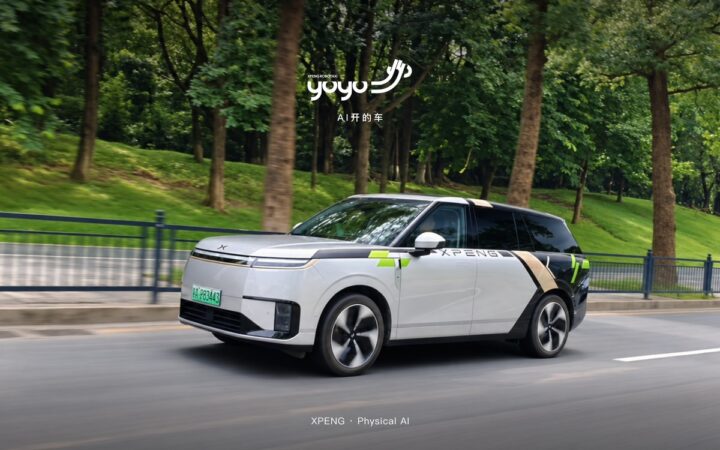
Gu’s Forbes comments reinforce the calendar outlined in our recent YOYO coverage, which also examined IRON’s planned move from internal use to outside customers. The distinction is that this rollout centers on a humanoid working near people, rather than a robotaxi operating on roads.
As an assessment of the commercial plan, the most useful next disclosures would be the tasks XPENG will support, the amount of human supervision required and the maintenance arrangements offered to customers. Those details would show how the proposed product moves beyond a demonstration.
Internal deployment provides a place to collect that evidence. The second-half 2027 sales target will become more concrete when XPENG can connect its manufacturing plans to repeatable work in stores and offices, then explain how that performance transfers to paying customers.
Disclaimer: RobotsBeat is an independent media brand owned and operated by NuvexMedia LLC, publishing news, research, and insights on artificial intelligence, emerging technologies, automation, and related industries. NuvexMedia LLC invests in and collaborates with companies across the AI, Robotics, technology, software, and digital innovation sectors. These relationships do not influence RobotsBeat's editorial coverage, and the publication maintains full editorial independence to provide accurate, timely, and objective information. © 2026 NuvexMedia LLC. All rights reserved. This content is for informational purposes only and should not be considered legal, tax, investment, financial, or other professional advice.