Key Notes
- Robotic Mars missions avoid the crew habitats, life support and guaranteed return systems that make human expeditions substantially more complex.
- Perseverance’s autonomous localization shows how robots can navigate more independently, although their electronics still need protection against space radiation.
- NASA’s coordinated robot tests and humanoid research explore complementary roles for machines and people, rather than proving humanoids are ready for Mars.
Sending robots to Mars is easier than sending people because a machine can complete its mission without breathable air, food, a pressurized home or a ticket back to Earth. Those differences shape the spacecraft, the equipment it carries and the consequences of a failure. They also explain why robotic explorers remain central to preparations for human exploration.
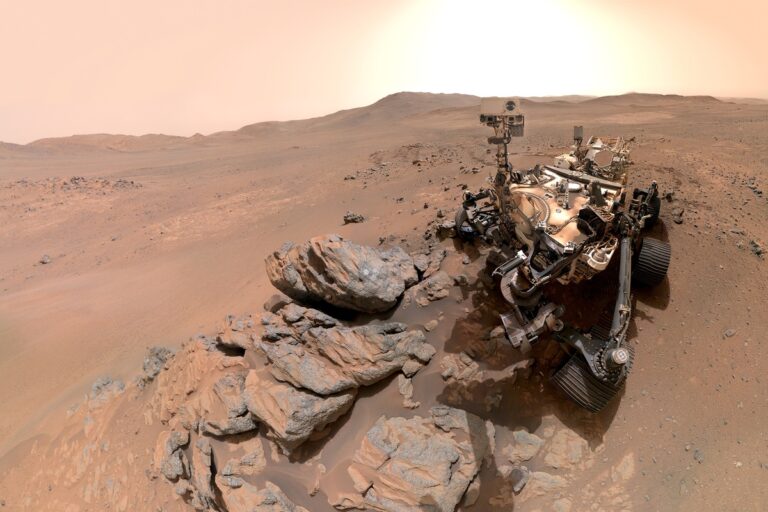
The comparison is becoming more interesting as robots gain greater independence. NASA has upgraded Perseverance’s ability to locate itself on Mars and tested teams of autonomous machines on Earth. These developments address a practical problem: a distant explorer cannot depend on an operator steering every movement in real time.
Life Support Changes the Payload
NASA’s Mars planning describes the systems needed to keep astronauts alive, including oxygen production, food supplies, water recycling and pressurized shelter. Mars has an atmosphere dominated by carbon dioxide, so arriving on the surface does not remove the need for a protected living environment.
A rover still needs power and environmental protection, but it does not need a habitat built around human survival. For a crew, equipment failures can also become medical emergencies. Carrying people therefore changes the mission from delivering scientific instruments to sustaining a small, isolated community.
The Journey Home Adds Another Mission
A robotic explorer can perform useful work while remaining on Mars. A human expedition must also provide a credible route home, adding requirements for ascent, fuel and the return journey.
NASA’s architecture papers explain how mass carried through successive mission stages affects complexity, cost and scheduling. They also examine the difficulty of aborting a Mars mission: an emergency return during transit could take months, while options on the surface are limited. The comparison cannot be reduced to the price of a rover versus a crew capsule; the human mission includes an entire chain of survival and return systems.
Robots Need Protection and Better Autonomy
Machines are not immune to space radiation. Perseverance uses radiation-hardened main computers, illustrating why a terrestrial robot cannot simply be shipped to Mars unchanged. Robotic missions exchange the biological challenges of keeping people healthy for demanding requirements in electronics, navigation and reliability.
In February, NASA detailed a Perseverance navigation upgrade that compares panoramic views with orbital imagery to identify its position without help from Earth. Previously, uncertainty about its location could force the rover to stop and wait for engineers. The new capability complements AutoNav, which plans routes around obstacles toward a destination selected for the rover.
That distinction matters: improved autonomy can reduce interruptions without making the machine an unrestricted, independent scientist. People still define the mission and its objectives.
Teams of Machines Could Extend Exploration
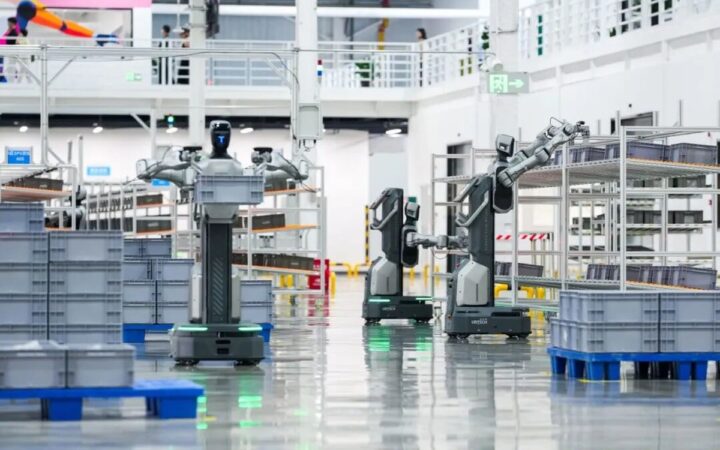
A NASA field test reported in September offers another example. A drone and two rovers coordinated exploration at a Virginia test site, selecting areas of interest, assessing hazards and allocating tasks. The machines could revise plans and report results to human managers. This was a terrestrial demonstration, rather than a fleet operating on Mars, but it tested capabilities relevant to places where communication delays or danger limit direct human involvement.
Humanoids Have a Different Role
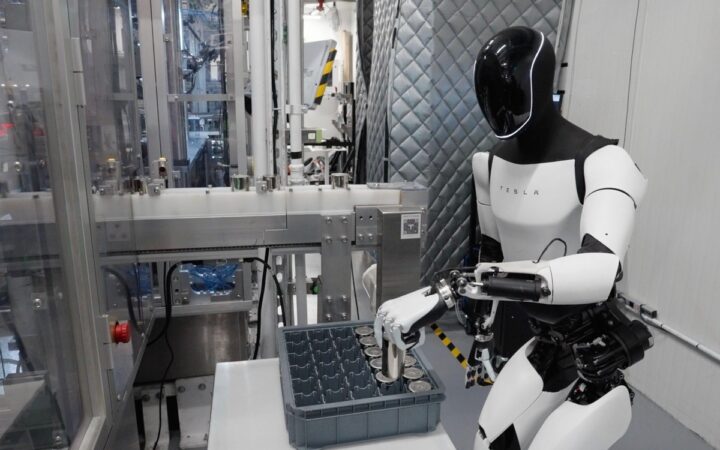
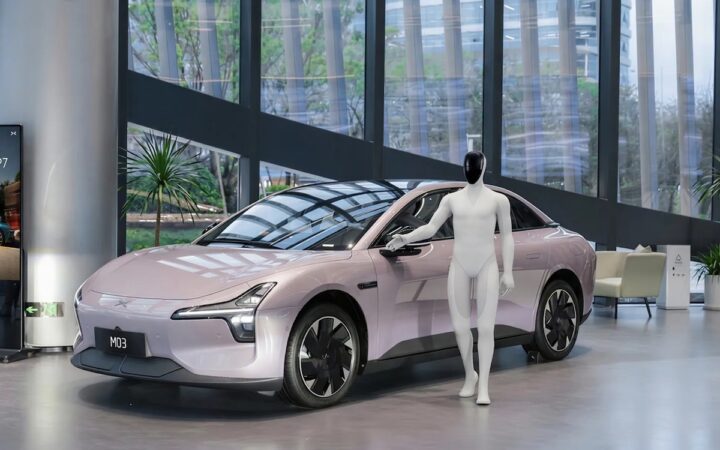
NASA’s humanoid research explores another part of the problem: manipulating equipment and performing tasks inside environments designed around people. Ground demonstrations involving robotic arms and habitat mockups should not be confused with an approved humanoid mission to Mars.
Our coverage of Valkyrie’s return to the United States also shows how long development and testing can take. A useful research platform is an intermediate step, rather than proof that a robot is ready for interplanetary deployment.
Human explorers would bring adaptable judgment and hands-on problem-solving. Robots offer a way to investigate environments and test capabilities before crews face the same conditions. NASA’s architecture work treats their contributions as complementary, making the practical question which tasks each should perform—and what must be proven before people follow.
Disclaimer: RobotsBeat is an independent media brand owned and operated by NuvexMedia LLC, publishing news, research, and insights on artificial intelligence, emerging technologies, automation, and related industries. NuvexMedia LLC invests in and collaborates with companies across the AI, Robotics, technology, software, and digital innovation sectors. These relationships do not influence RobotsBeat's editorial coverage, and the publication maintains full editorial independence to provide accurate, timely, and objective information. © 2026 NuvexMedia LLC. All rights reserved. This content is for informational purposes only and should not be considered legal, tax, investment, financial, or other professional advice.