Key Notes
- NASA’s Dexterous Robotics Team builds on experience with Robonaut 2 and Valkyrie.
- The iMETRO testbed supports habitat logistics and maintenance experiments.
- The update describes ground testing without a humanoid launch or deployment date.
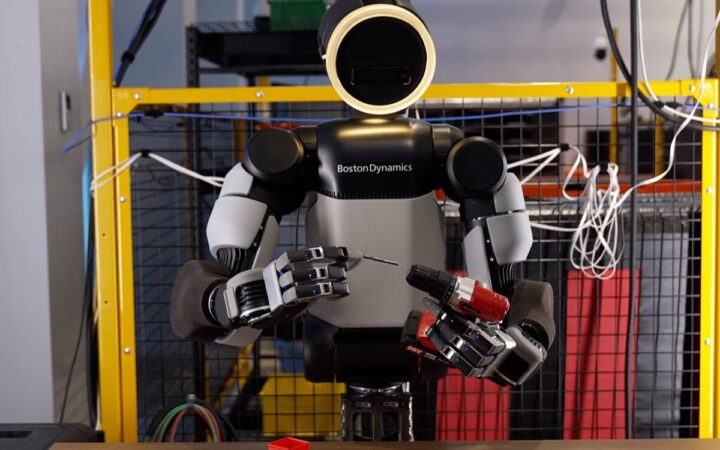
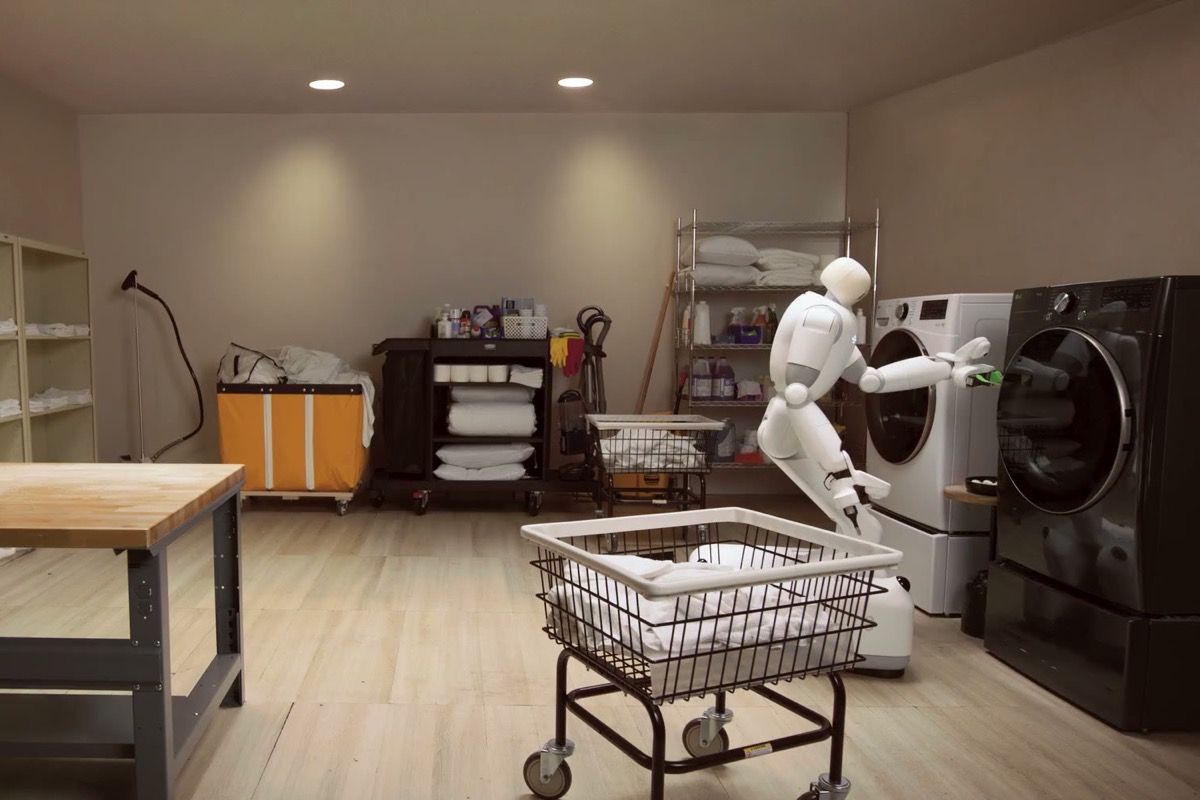
NASA is developing humanoid robots and dexterous robotic systems to help astronauts with logistics, maintenance and other demanding work on future Moon and Mars missions. At Johnson Space Center in Houston, its Dexterous Robotics Team is testing how machines can handle equipment and operate in environments built for people.
In a September 28 NASA update, team lead Shaun Azimi described the goal as making human exploration safer and more sustainable. The work builds on Robonaut 2 and Valkyrie, while extending to commercial robotic arms and software tested on Earth.
From Robonaut 2 to Valkyrie
Robonaut 2 became the first humanoid robot in space in 2011. Developed by NASA and General Motors, it initially operated as a torso attached to a support; a later mobility upgrade added climbing manipulators for movement inside the International Space Station.
Valkyrie followed as an entirely electric bipedal research platform, originally built for the 2013 DARPA Robotics Challenge trials. NASA subsequently improved its hands, ankles and sensing systems. RobotsBeat previously covered Valkyrie’s return to the United States after a decade of research in Edinburgh.
Those projects provided experience in coordinating perception, movement and manipulation. Today’s program applies that experience to specific jobs, rather than treating a human-shaped body alone as proof that a robot can support a space mission.
iMETRO Tests Work Inside Space Habitats
A central part of the effort is the Integrated Mobile Evaluation Testbed for Robotics Operations, or iMETRO. The facility combines physical mockups with simulation and robot-control tools for evaluating tasks in habitats, pressurized rover cabins and space station interiors.
NASA’s facility documentation describes both a rail-mounted manipulator and a mobile platform with two robotic arms. External partners can bring their own machines or integrate sensors and end effectors, allowing experiments with different hardware configurations.
The documentation also addresses remote operation under communication delays and interruptions. It lists an isolated network with configurable latency and bandwidth restrictions as a planned capability, an important distinction between the testbed’s existing equipment and features still being developed.
Opening Hatches and Moving Cargo
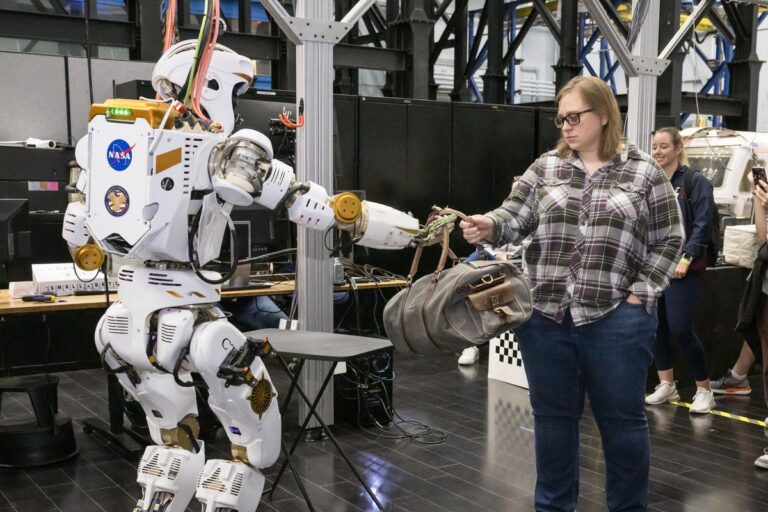
One concrete demonstration used software from PickNik to help a robotic arm identify a spacecraft hatch, turn its latch, grasp the handle and open the door. The arm then moved cargo bags between the hatch and a storage bin.
NASA’s PickNik account identifies the software as MoveIt Pro and describes support from the agency’s Small Business Innovation Research program. Such tasks test several linked capabilities: recognizing the right object, making contact, applying force and completing a useful sequence.
The broader team has also supported a freezer inspection and maintenance experiment. NASA says collaboration with habitat designers can reveal practical improvements, including larger handles or better lighting, that help robots and people use the same equipment.
Ground Testing Comes Before Deployment
The team’s near-term emphasis is supporting a sustained human presence on the Moon, with potential applications for Mars later. NASA’s update describes research, demonstrations and technology adaptation; it does not set a launch date for a humanoid worker or announce a lunar deployment.
RobotsBeat’s reporting on China’s lunar construction robot shows another approach to combining mobility with manipulation for exploration. For NASA, iMETRO provides a place to test the everyday actions that future crews may need automated before selecting hardware for a mission.
Disclaimer: RobotsBeat is an independent media brand owned and operated by NuvexMedia LLC, publishing news, research, and insights on artificial intelligence, emerging technologies, automation, and related industries. NuvexMedia LLC invests in and collaborates with companies across the AI, Robotics, technology, software, and digital innovation sectors. These relationships do not influence RobotsBeat's editorial coverage, and the publication maintains full editorial independence to provide accurate, timely, and objective information. © 2026 NuvexMedia LLC. All rights reserved. This content is for informational purposes only and should not be considered legal, tax, investment, financial, or other professional advice.