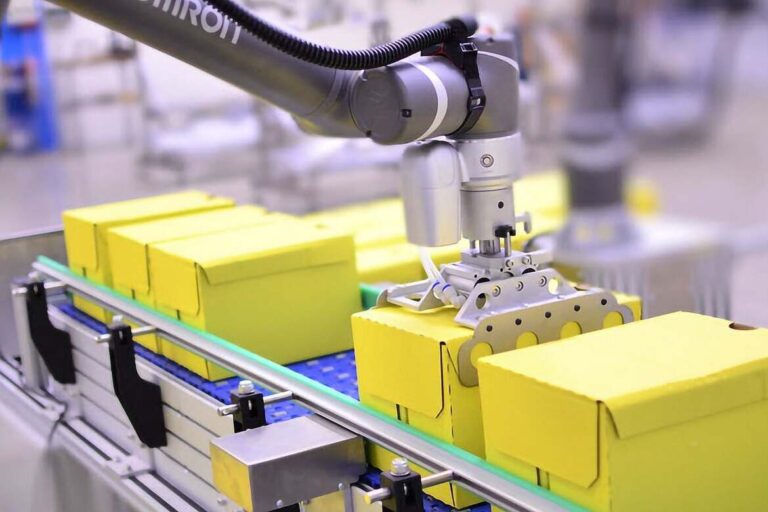
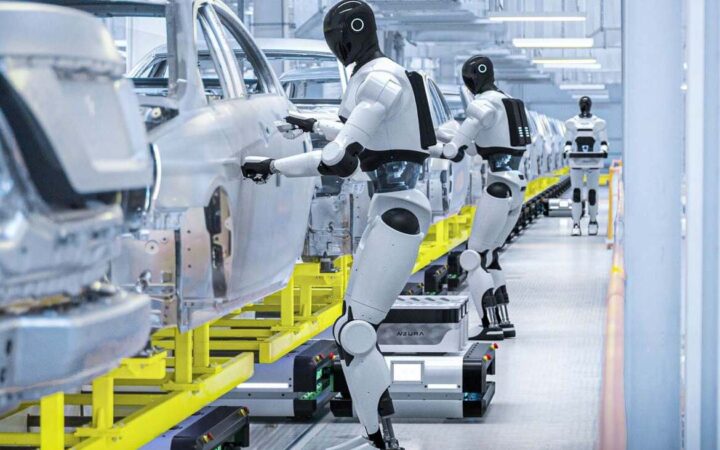
The global operational stock of industrial robots reached 5.08 million units in 2025, the highest total ever recorded, rising 9% from the prior year, according to the International Federation of Robotics’ annual World Robotics report published last week. Annual new robot installations surpassed 600,000 for the first time, reaching 603,000 units – an 11% increase. “The new mark of five million robots operational in factories worldwide is more than double the number seven years ago,” said IFR president Jane Heffner.
The same report, read alongside the IFR’s first-ever humanoid count and a series of financial market signals published over the same period, presents a detailed picture of where automation is actually scaling and where it remains aspirational.
The Industrial Robot Landscape
China continues to dominate global robot installations at a scale that makes all other markets secondary. The country installed 354,000 robots in 2025, up 20%, accounting for 59% of global deployments. The United States overtook Japan to become the world’s second-largest market, installing approximately 38,500 units, up 12%.
Europe moved in the opposite direction. New installations across the EU fell 11% in 2025 to 60,500 units, even as global installations accelerated. The EU’s operational stock passed 700,000 robots for the first time, reaching 712,000, but its five-year compound annual growth rate stands at a modest 3%. Germany, the bloc’s largest market, installed fewer than 25,000 robots – down 8% – as its automotive sector, still the single largest robot customer category, continued to contract. Italy, France, and Spain each recorded double-digit installation declines.
The Humanoid Reality Check
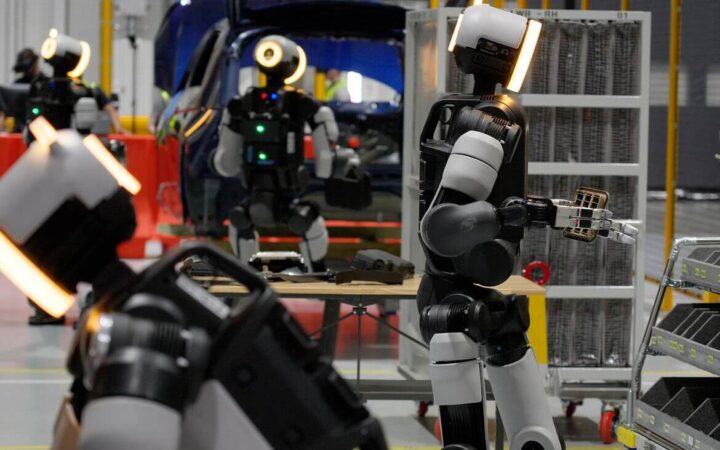
In a separate release, the IFR confirmed that approximately 7,000 humanoid robots were sold globally in 2025 for industrial and professional service use – the first time the federation has tracked the category. Most went to research institutions and AI companies generating training data rather than to buyers deploying them for productive work. Car manufacturers piloting humanoids typically run fewer than ten machines.
Bank of America forecasts 90,000 humanoid shipments in 2026 and 1.2 million by 2030. The gap between those projections and the 7,000-unit 2025 baseline is the central unresolved question in robotics investment.
Financial Markets Signal the Gap
The IFR data arrived alongside a series of market signals that reinforce the reality check. Unitree Robotics debuted on the Shanghai STAR Market on August 19 at 150.80 yuan per share – a listing 5,500 times oversubscribed at retail level – but subsequently fell 55% from its peak and has struggled to recover. Chinese regulators have reportedly used informal guidance to hold back further humanoid IPOs in response. Boston Dynamics, owned by Hyundai, is unlikely to pursue a stock listing in 2027, as Atlas has not yet been deployed at scale and the company remains unprofitable.
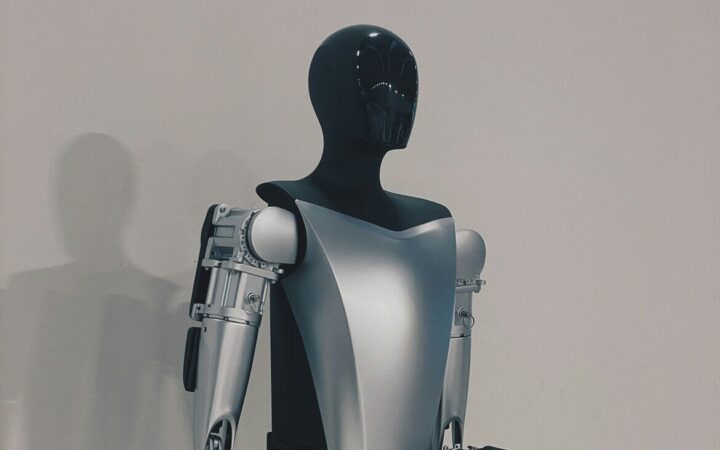
Elon Musk has been unusually candid about Tesla’s Optimus program: “This is going to be the hardest product to scale manufacturing that we’ve ever made at Tesla, because everything on the robot is new. There is no supply chain.”
Where Value Actually Sits
A report by Arthur D. Little published this year frames the competitive dynamic directly: “Humanoid robots will capture attention; specialised physical AI will capture value.” The consultancy puts the broader physical AI market at approximately $18 billion today, of which humanoids account for $2 billion to $3 billion, and projects the overall sector will reach $60 billion to $100 billion by 2030.
The report warns that many humanoid demonstrations “are fake, AI-generated, or heavily staged”, while real ones often show pre-recorded routines or remote human operation. The commercial sweet spot in the near term, it argues, is structured environments such as factories and warehouses, where wheeled robots and fixed arms will scale first because they are cheaper and easier to tailor to specific jobs.
Human-level dexterity, reliable autonomy outside controlled settings, the absence of a killer application, and unresolved liability and insurance questions remain the major structural constraints for humanoids. The world’s robotics story in 2025, the IFR data suggests, is not about humanoids – it is about a slower, steadier build-up of machines that already work.
Disclaimer: RobotsBeat is an independent media brand owned and operated by NuvexMedia LLC, publishing news, research, and insights on artificial intelligence, emerging technologies, automation, and related industries. NuvexMedia LLC invests in and collaborates with companies across the AI, Robotics, technology, software, and digital innovation sectors. These relationships do not influence RobotsBeat's editorial coverage, and the publication maintains full editorial independence to provide accurate, timely, and objective information. © 2026 NuvexMedia LLC. All rights reserved. This content is for informational purposes only and should not be considered legal, tax, investment, financial, or other professional advice.