
Vesoma has announced a European humanoid robotics project founded by Synapticon co-founder Nikolai Ensslen and Belarusian technology entrepreneur Peter Skoromnyi, the Easybrain co-founder. The company says it designed, built and walked its first humanoid prototypes within six months of starting work in December 2025.
In its September 22 announcement, Vesoma said it had grown to more than 60 people and fitted out over 3,500 square meters of laboratory and office space in Munich, Germany, and Limassol, Cyprus. It is now developing its software, AI and Vesoma 1 robot.
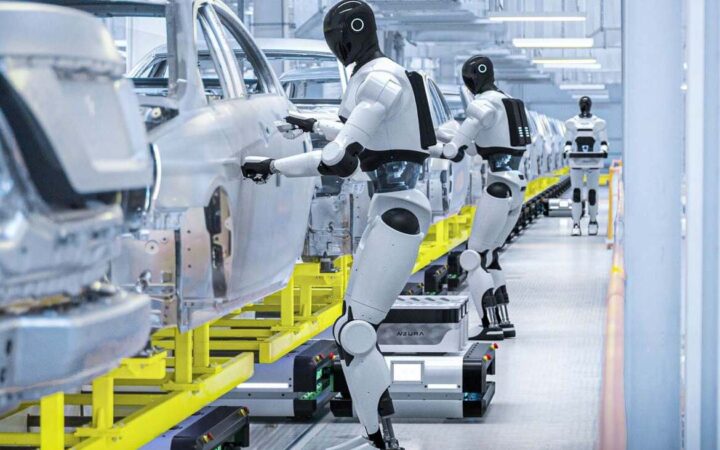
The company is entering the humanoid robot market with a specific argument: walking demonstrations are advancing faster than reliable, commercially useful work. Its initial focus is manufacturing, logistics and warehousing, rather than an immediately available general-purpose household robot.
A Walking Prototype Is Not the Finished Product
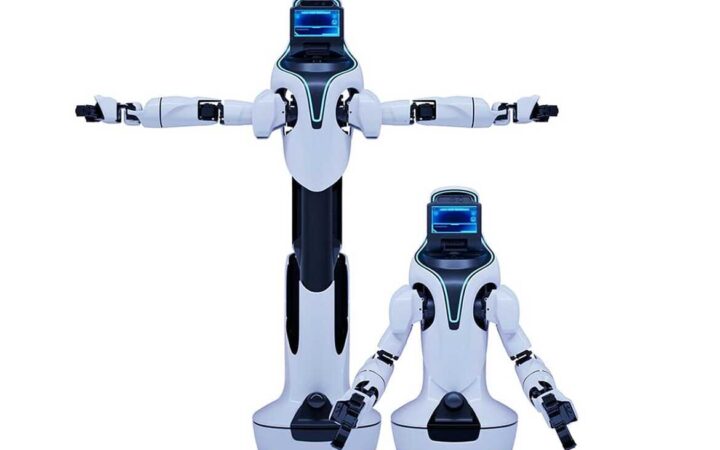
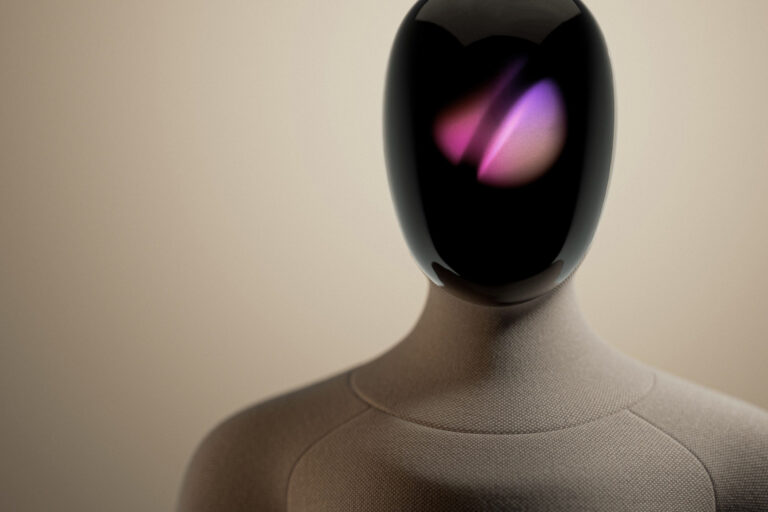
The six-month milestone refers to development prototypes, not a production-ready robot. Vesoma labels the polished robot imagery on its website as a design visualization of Vesoma 1 and states that the product remains under development.
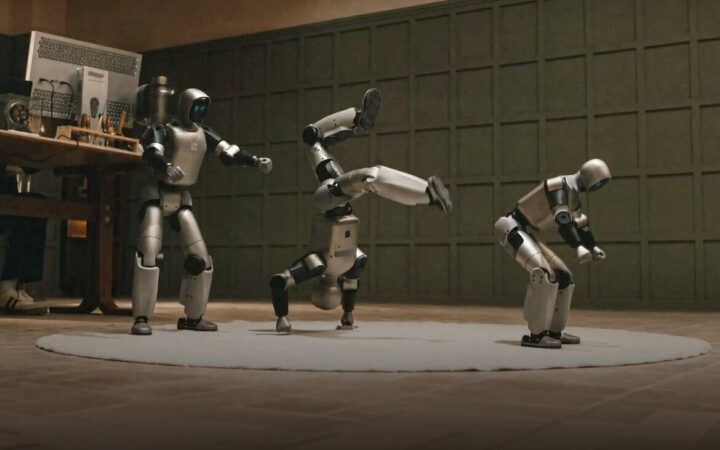
Ensslen has separately described an early platform called Kyle, approximately 1.70 meters tall and weighing 75 kilograms. In a post reshared on AI chief Martin Riedmiller’s LinkedIn profile, he said the machine was built as a concept study for the AI team and took its first steps in June.
That account describes locomotion combining kinematic planning with learned dynamic tracking and stabilization. It provides useful context for the company’s statement that nobody programmed the gait: learning forms part of an engineered control system, rather than removing the need for mechanical design, control objectives or software.
The distinction also explains why an early walking machine can look different from a product rendering. A development platform is built to test assumptions and collect experience; its appearance does not establish the final robot’s specifications or production readiness.
Learning Through Interaction
Vesoma’s central bet is on an agent that develops physical skills through its own interaction with the world. The company says its prototype learned how to move toward a supplied objective, and it wants to extend that approach beyond locomotion into manipulation and whole-body work.
This places the project within embodied AI, where intelligence must account for a machine’s body and physical surroundings. Vesoma argues that learning from experience will make its robots more adaptable when conditions change than systems relying heavily on recorded human demonstrations.
That remains the company’s technical thesis, rather than a demonstrated result across industrial tasks. Walking successfully does not establish that a robot can handle unfamiliar objects, recover from a failed grasp or complete a full shift without intervention. Vesoma itself identifies manipulation and learning safely through contact as difficult work still ahead.
Its decision to build the body and AI together is intended to shorten that development loop. Sensors, actuators and mechanical geometry influence what a policy can learn; a hardware change can make a task easier while forcing the control system to adapt. The commercial question is whether that combined approach produces repeatable performance outside the laboratory.
A Team With Robotics and Consumer Software Experience
Vesoma’s leadership page lists Ensslen as co-founder and CEO, bringing experience in motion control and functional safety from Synapticon. Skoromnyi is co-founder and chief strategy officer. Riedmiller, formerly a research director and control team lead at Google DeepMind, is chief AI officer.
Skoromnyi previously co-founded Apalon, acquired by IAC in 2014, and puzzle-game developer Easybrain. Embracer agreed to acquire Easybrain in 2021 for an initial $640 million in shares, with up to $125 million in additional consideration. The distinction matters: $640 million was the initial transaction value, not the maximum potential price.
Embracer later agreed to sell Easybrain to Miniclip for $1.2 billion. It confirmed the sale had closed on January 23, 2025, following the announcement in November 2024.
Those transactions establish experience in building and selling software businesses. They do not disclose how Vesoma itself is financed. Its launch announcement provides no funding amount, investor list or valuation, so the founders’ earlier exits should not be treated as a financing announcement for the robotics company.
The Test Is Reliable Work
Vesoma frames success around performing a customer’s task correctly throughout a shift, in an imperfect environment, without an engineer repeatedly intervening. That is a useful operational target, but the launch materials do not provide customer-site results, task success rates or a commercial delivery schedule.
The emphasis on learning also offers a contrast with Toyota’s robot strategy, which includes transferring skills from experienced workers through demonstrations. Different training approaches can address different parts of the problem; Vesoma still needs evidence that its preferred method meets customers’ reliability and cost requirements.
For now, the announcement establishes a team, a development footprint and a company-reported walking milestone. The next meaningful evidence will be a defined task completed repeatedly, with measured intervention needs and a clear path from prototype hardware to a serviceable product.
Disclaimer: RobotsBeat is an independent media brand owned and operated by NuvexMedia LLC, publishing news, research, and insights on artificial intelligence, emerging technologies, automation, and related industries. NuvexMedia LLC invests in and collaborates with companies across the AI, Robotics, technology, software, and digital innovation sectors. These relationships do not influence RobotsBeat's editorial coverage, and the publication maintains full editorial independence to provide accurate, timely, and objective information. © 2026 NuvexMedia LLC. All rights reserved. This content is for informational purposes only and should not be considered legal, tax, investment, financial, or other professional advice.