Key Notes
- Embodied AI has introduced AIR with tendon-driven lightweight arms and a wheeled base for tasks near factory staff.
- The robot begins each new job under human control and learns from recorded demonstrations, with operators remaining available for unfamiliar situations.
- CE marking is planned for 2027, while the launch leaves pricing, payload and a broad delivery schedule undisclosed.
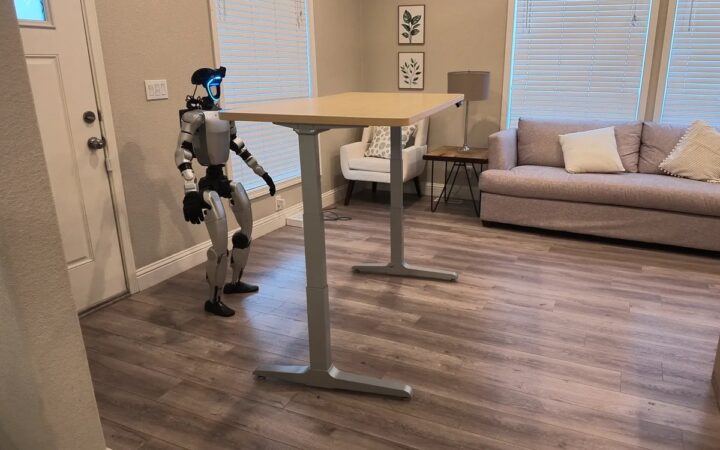
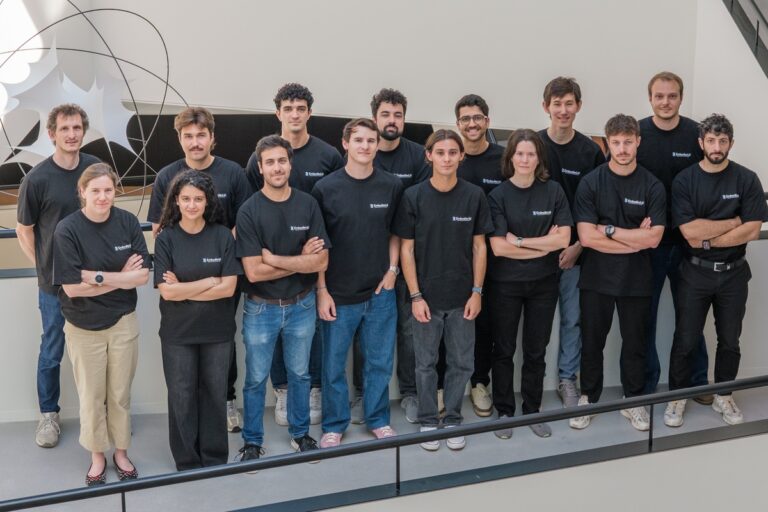
Swiss startup Embodied AI has introduced AIR, a wheeled humanoid designed to learn repetitive factory tasks alongside human workers. The EPFL spin-out announced the robot on November 6, combining a lightweight arm design with an operating model that begins with human control and gradually adds autonomy.
The company’s launch release says AIR was developed in nine months and is being tested with global manufacturers. It does not disclose a retail price, payload specification or delivery timetable for a broad commercial rollout.
Putting Heavy Components in the Torso
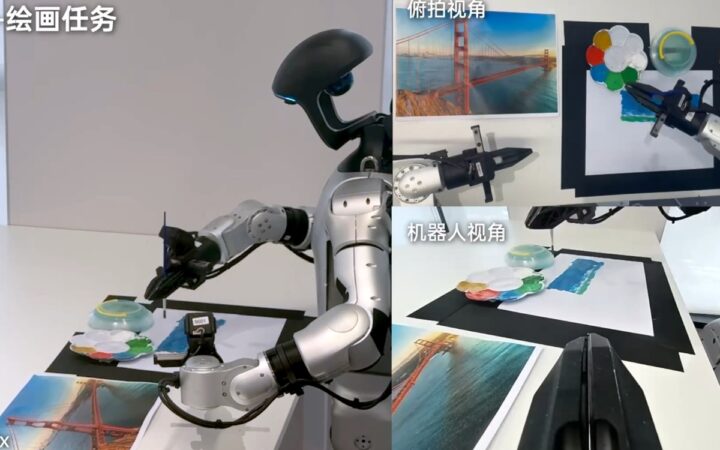
AIR’s tendon-driven architecture places motors, gearboxes and electronics in the torso, leaving the arms lighter and able to yield on contact. A wheeled base prioritises stability on factory floors over the terrain flexibility of a walking robot.
The company presents this mechanical design as a foundation for working close to people. That design intent should be distinguished from certification: Embodied AI says AIR is designed under ISO/TS 15066:2016 and that CE marking is planned for 2027. It has not announced completed CE marking in this release.
Human Control Comes First
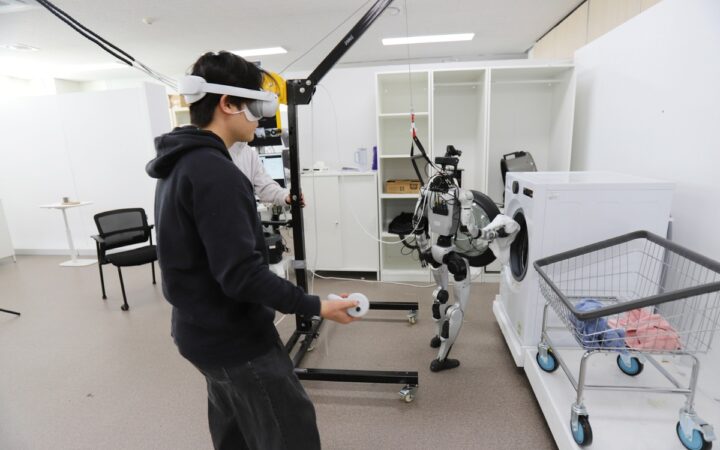
AIR starts a new job under an operator’s control. The system records those runs, and the company says its AI can typically learn to perform the task within about a month. An operator remains available for situations the machine has not learned.
The company website describes the wider stack as a combination of teleoperation, imitation learning and vision-language-model orchestration. That approach makes the transition from human demonstrations to autonomous execution part of the deployment process, rather than assuming an unfamiliar task is solved on arrival.
Earlier Factory Results Use the Same AI Stack
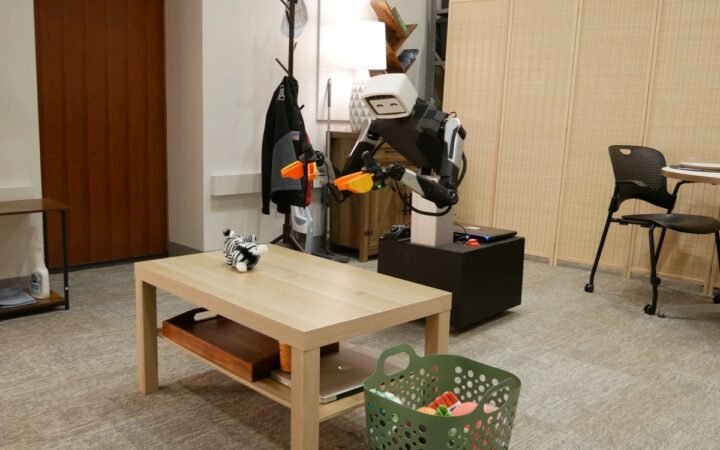
Embodied AI says its software is already used in paid deployments of a separate two-arm industrial cell. In one customer proof of concept, it reports 98% reliability on a cable-handling task against a 90% target. The manufacturer is not named, and the figures come from company-provided data.
That result concerns the earlier cell and shared AI technology. It should not be read as a universal reliability figure for the newly introduced AIR platform, or as independent evidence that every factory workflow can be automated after the same training period.
A Factory-Specific Route to Physical AI
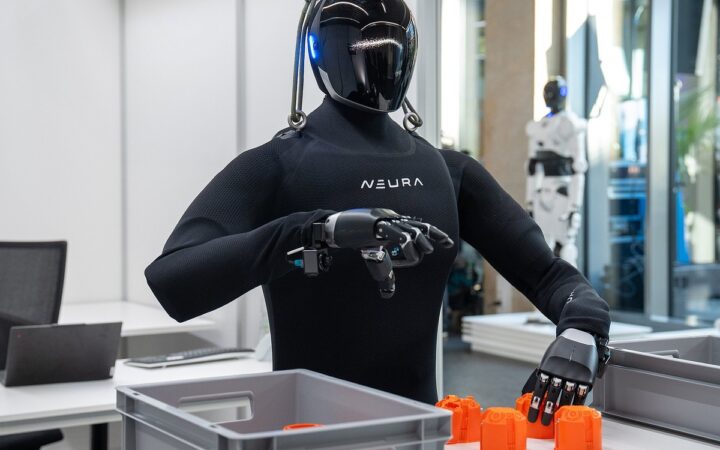
Our report on Bleu Robotics examines another effort to make factory robots learn from demonstrations. The NEURA utility partnership shows how a customer’s own work requirements can shape training and validation.
AIR’s proposition is similarly tied to a defined workplace: compliant hardware, locally collected task examples and human support during operation. Named customer deployments, sustained operating results and the planned certification milestone will provide clearer measures of readiness than the launch demonstration alone.
Disclaimer: RobotsBeat is an independent media brand owned and operated by NuvexMedia LLC, publishing news, research, and insights on artificial intelligence, emerging technologies, automation, and related industries. NuvexMedia LLC invests in and collaborates with companies across the AI, Robotics, technology, software, and digital innovation sectors. These relationships do not influence RobotsBeat's editorial coverage, and the publication maintains full editorial independence to provide accurate, timely, and objective information. © 2026 NuvexMedia LLC. All rights reserved. This content is for informational purposes only and should not be considered legal, tax, investment, financial, or other professional advice.