
Key Notes
- US investors are visiting Chinese robot factories to assess competitors to their portfolio companies.
- MERICS identifies China’s component supply chain as a major advantage, while noting continued dependence on foreign software and high-end parts.
- Rising robot shipments and production milestones show manufacturing progress, but do not establish reliable autonomous performance in real workplaces.
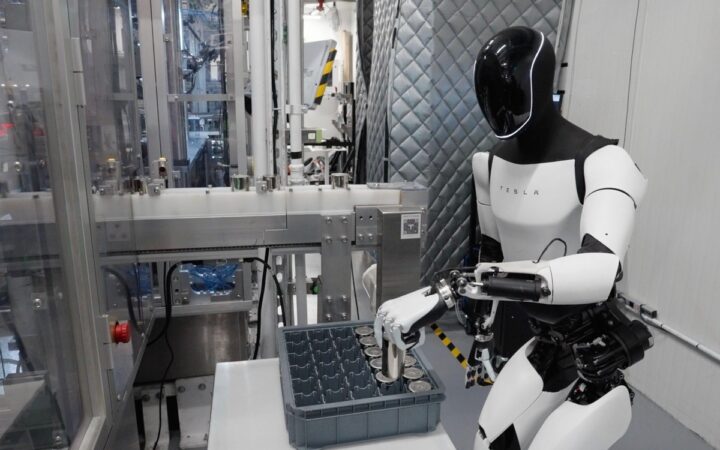
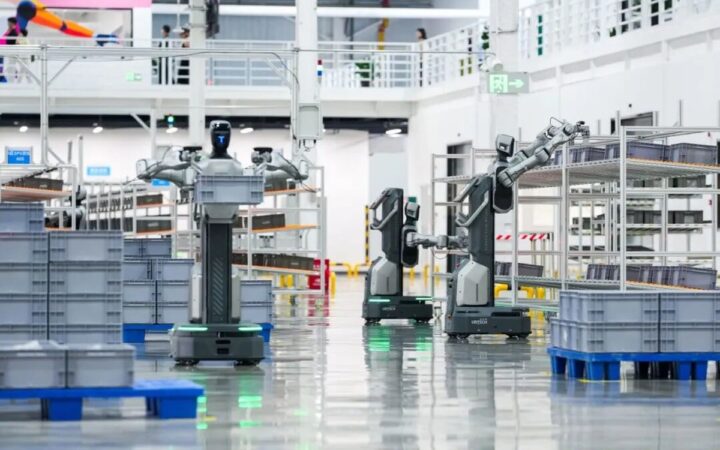
US venture investors are visiting Chinese robot factories to assess competitors to their portfolio companies, Business Insider reported on October 5. Visitors include investors from Eclipse and G2 Venture Partners.
Some organized tours cost around $10,000 per person, combining factory access with executive meetings. The visits put manufacturing capacity and supply chains under closer scrutiny as investment in physical AI accelerates.
China’s Advantage Extends Beyond the Robot
The manufacturing backdrop is substantial. An April MERICS report says China controls 63% of the key companies in the global supply chain for humanoid robot components. That figure describes the supplier base, rather than China’s share of robot sales or the value of every part inside a humanoid.
MERICS connects this advantage to the country’s electric vehicle industry, whose batteries, sensors and other components also serve robotics. But the supply chain is not entirely domestic: the report identifies continued dependence on foreign software and high-end components from European and Japanese suppliers.
The competitive picture therefore involves more than comparing demonstration videos. A robot developer must also source parts, repeat assembly processes and support machines after delivery. Lower hardware costs can help a company put more systems into customers’ hands, but do not establish that those systems can work autonomously.
Shipment Growth Gives Investors a Benchmark
AgiBot’s January announcement, citing Omdia, put its 2025 humanoid shipments above 5,100 units and its global share at 39%. Its portfolio includes full-size, smaller and wheeled platforms, making the product mix important when comparing vendors.
More recent shipment data covered by RobotsBeat placed global humanoid deliveries at about 19,100 units in the first half of 2026, with AgiBot and Unitree leading. Those figures come from Smart Analytics Global and cover a different period from Omdia’s 2025 estimates; they should not be treated as one continuous dataset.
Expansion is also moving beyond China. RobotsBeat previously covered Minth Group and AgiBot’s Serbian factory, an example of Chinese robotics companies building a manufacturing presence closer to overseas markets.
Production Scale Still Needs Useful Work
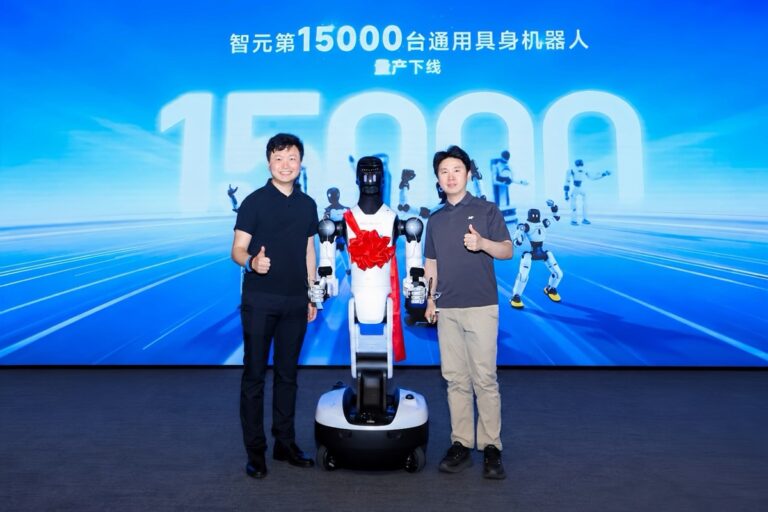
AgiBot announced its 15,000th robot production milestone in June. That is a cumulative manufacturing figure, rather than an annual shipment total or a count of robots independently verified to be performing productive work.
MERICS cautions that humanoids remain largely limited to specific tasks and trials, with precision, dexterity and cost constraining wider use. That echoes the deployment gap examined in our earlier coverage: the harder commercial test is sustained, economical operation in real workplaces.
Disclaimer: RobotsBeat is an independent media brand owned and operated by NuvexMedia LLC, publishing news, research, and insights on artificial intelligence, emerging technologies, automation, and related industries. NuvexMedia LLC invests in and collaborates with companies across the AI, Robotics, technology, software, and digital innovation sectors. These relationships do not influence RobotsBeat's editorial coverage, and the publication maintains full editorial independence to provide accurate, timely, and objective information. © 2026 NuvexMedia LLC. All rights reserved. This content is for informational purposes only and should not be considered legal, tax, investment, financial, or other professional advice.