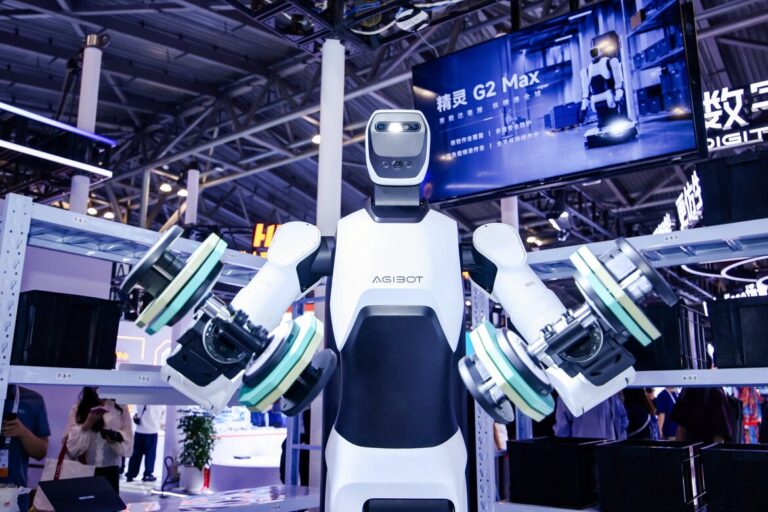

Global humanoid robot shipments reached approximately 19,100 units in the first half of 2026, surging 272% year-on-year from 5,100 units in the same period of 2025, according to new data from Smart Analytics Global. Agibot overtook Unitree to become the world’s largest humanoid robot vendor, capturing 44% of global shipment share compared with Unitree’s 31%. Together the two companies accounted for approximately 75% of all global shipments.
Chinese vendors contributed more than 97% of global humanoid robot shipments in the period, while China represented more than 85% of global demand. SAG now forecasts global humanoid robot shipments will approach 60,000 units in 2026, nearly tripling year-on-year, with industry revenue reaching approximately $1.6 billion.
The Vendor Breakdown
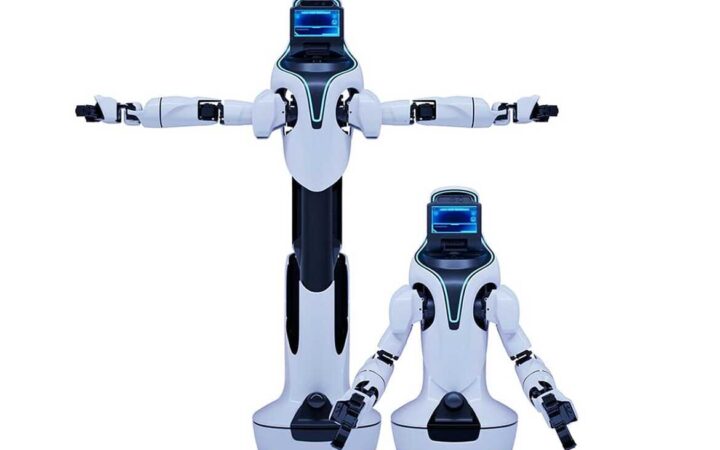
Agibot shipped approximately 8,400 humanoid robots in H1 2026, up 562% year-on-year, supported by a diversified portfolio spanning full-size bipedal A-series robots, half-size bipedal X-series, and wheeled G-series platforms. Industrial and commercial applications represent the company’s primary deployment focus, with products already deployed in the UK and Germany as it accelerates European expansion.
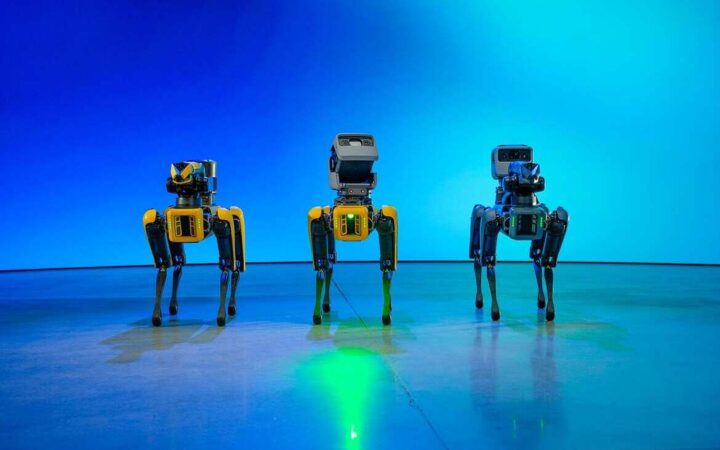
Unitree moved to second place despite delivering strong growth of 170% year-on-year to approximately 5,900 units. Its G1 half-size bipedal robot is the dominant product, with cumulative manufacturing volume reaching approximately 11,000 units by mid-2026. Research, education, and performance applications continue to represent a meaningful portion of Unitree’s deployments – a portfolio characteristic that distinguishes it from Agibot’s more industrial focus.
Galbot ranked third with approximately 900 units, concentrating on wheeled humanoid robots for industrial and commercial environments. UBTECH ranked fourth at approximately 700 units, primarily driven by its Walker series industrial platform, with the newly introduced U-series ultra-bionic companion robots expected to contribute more significantly in the second half. Leju rounded out the top five with approximately 600 units of its KUAVO series.
The Deployment Shift
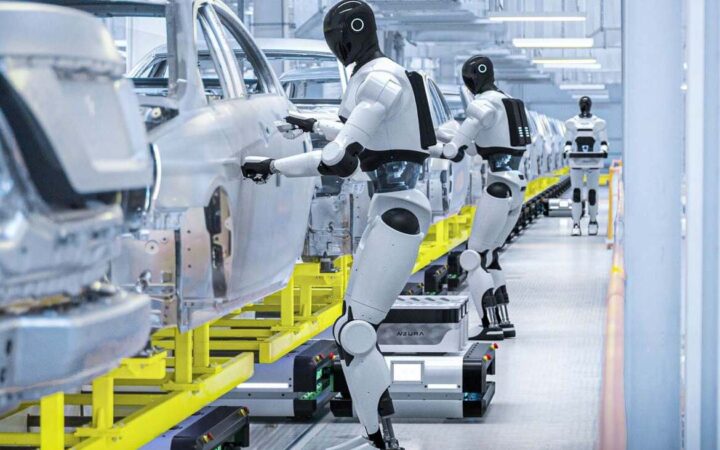
Industrial and commercial applications accounted for more than 70% of global humanoid robot shipments in H1 2026, up from approximately 50% a year earlier. Manufacturing, logistics, warehousing, and structured commercial environments are becoming the primary commercialization path, where robots can perform defined tasks and demonstrate measurable economic value.
A new segment is emerging in parallel: ultra-bionic humanoid robots targeting emotional companionship, exemplified by UBTECH’s U1 with 13,000 pre-orders. SAG is cautious about this category, noting that meaningful adoption remains to be proven given current costs, technology limitations, consumer acceptance, and regulatory uncertainty around highly human-like robots.
SAG explicitly does not expect general-purpose home-service humanoid robots to reach meaningful mass-market scale within the next five years.
Technology Maturity Lags Shipment Growth
SAG’s most significant analytical note is that hardware is scaling faster than underlying technology maturity. Vision-Language-Action models and world models are advancing but remain at early stages. Real-world training data scarcity, manipulation accuracy, reliability, safety, and cost continue to constrain broader deployment. “Moving from robots that can demonstrate toward robots that can reliably work will be critical to unlocking broader commercial adoption,” the report states.
The Geopolitical Variable
US restrictions on foreign-made robots – including the FCC Covered List additions and the July 28 import ban announcement – are identified as a significant uncertainty for Chinese vendors pursuing overseas expansion. The impact will vary by vendor depending on geographic revenue exposure and international strategy, and could reshape competitive dynamics in markets outside China as the industry expands.
SAG’s 2030 forecast places global humanoid shipments at 500,000 units, with commercial adoption, AI capability, reliability, and demonstrated economic value increasingly determining competitive outcomes rather than hardware volume alone.
Disclaimer: RobotsBeat is an independent media brand owned and operated by NuvexMedia LLC, publishing news, research, and insights on artificial intelligence, emerging technologies, automation, and related industries. NuvexMedia LLC invests in and collaborates with companies across the AI, Robotics, technology, software, and digital innovation sectors. These relationships do not influence RobotsBeat's editorial coverage, and the publication maintains full editorial independence to provide accurate, timely, and objective information. © 2026 NuvexMedia LLC. All rights reserved. This content is for informational purposes only and should not be considered legal, tax, investment, financial, or other professional advice.