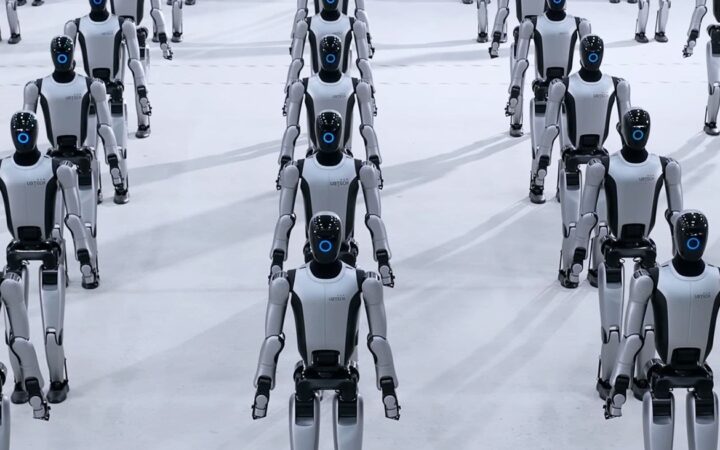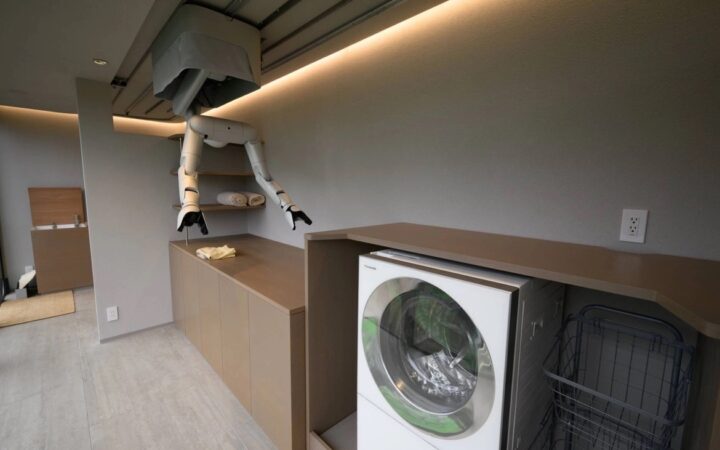
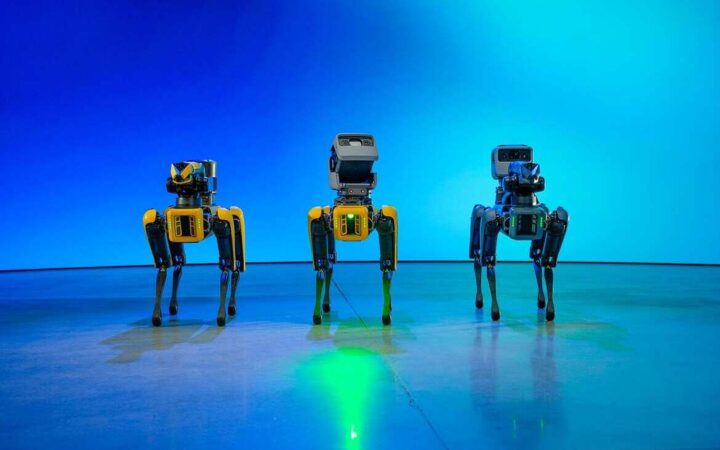
Humanoid robots are producing some of the most arresting technology demonstrations in memory – winning half-marathons, performing gymnastics, serving drinks at the Met Gala, and assembling electronics on live factory floors. Venture capital is flowing at record pace. Market projections range from $38 billion by 2035 to $5 trillion by 2050. Every week brings a new milestone claim.
The gap between those demonstrations and reliable, cost-effective deployment in real industrial environments, however, remains considerable – and is increasingly acknowledged by the people closest to the technology.
The Hand Problem
Nicolaus Radford, a veteran roboticist who led the development of NASA’s Valkyrie humanoid and recently co-founded Persona AI, has described the challenge of humanoid robotics in unsparing terms. “Robots are not that hard to build,” he said in comments to IEEE Spectrum. “They’re hard to make useful and make money with, and the challenge for us is whether we can build a viable business with Persona: can we build a business that uses robots and makes money? That’s our singular focus.”
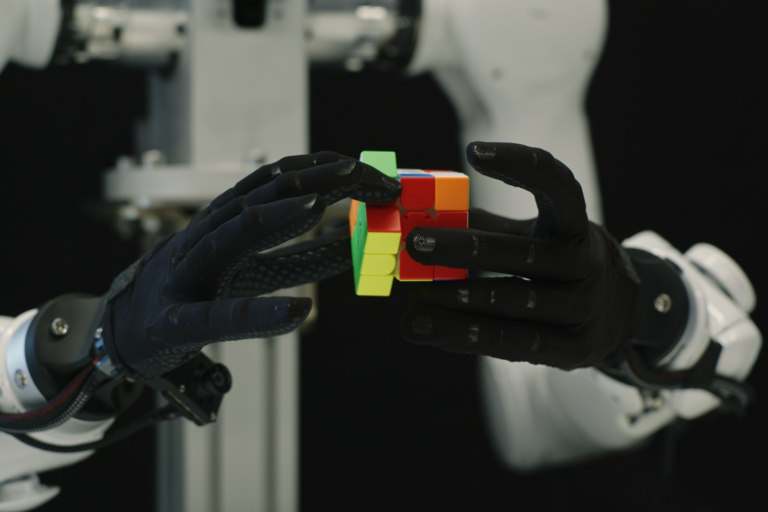
The human hand sits at the center of that challenge. Elon Musk has said publicly that hand development accounts for more than half of the entire engineering effort on Tesla’s Optimus program. Genesis AI, Linkerbot, and Kinetix AI have each made dexterous manipulation central to their product pitches this year, reflecting where the field recognizes its most significant hardware constraint. Linkerbot CEO Alex Zhou told Reuters the hand is “the most complex part of the whole humanoid robot.”
The Difference Between Demonstration and Deployment
The demonstrations that generate investor excitement are, by design, best-case scenarios. Robots performing in controlled conditions, on rehearsed courses, with support crews following behind, are not the same as robots operating reliably across eight-hour shifts in factories with variable layouts and unpredictable human activity.
Jonathan Hurst of Agility Robotics drew this distinction sharply in recent comments to Scientific American, comparing the gap between a robot that can run a half-marathon on a premapped course and one that can navigate safely among people in a warehouse to the difference between an early car and a plane. “It’s like looking at the first cars and being like, ‘It doesn’t fly,'” he said. “It’s a pretty high bar.”
Alan Fern, a computer science professor at Oregon State University who helped develop the Cassie bipedal robot, made a similar point about the Beijing half-marathon results. “The basic principles of robots walking have been around for a while,” he told Scientific American. “There’s no scientific advance in that aspect of the problem.” What changed, he argued, was engineering quality and investment volume – not a fundamental breakthrough.
The Scale Gap
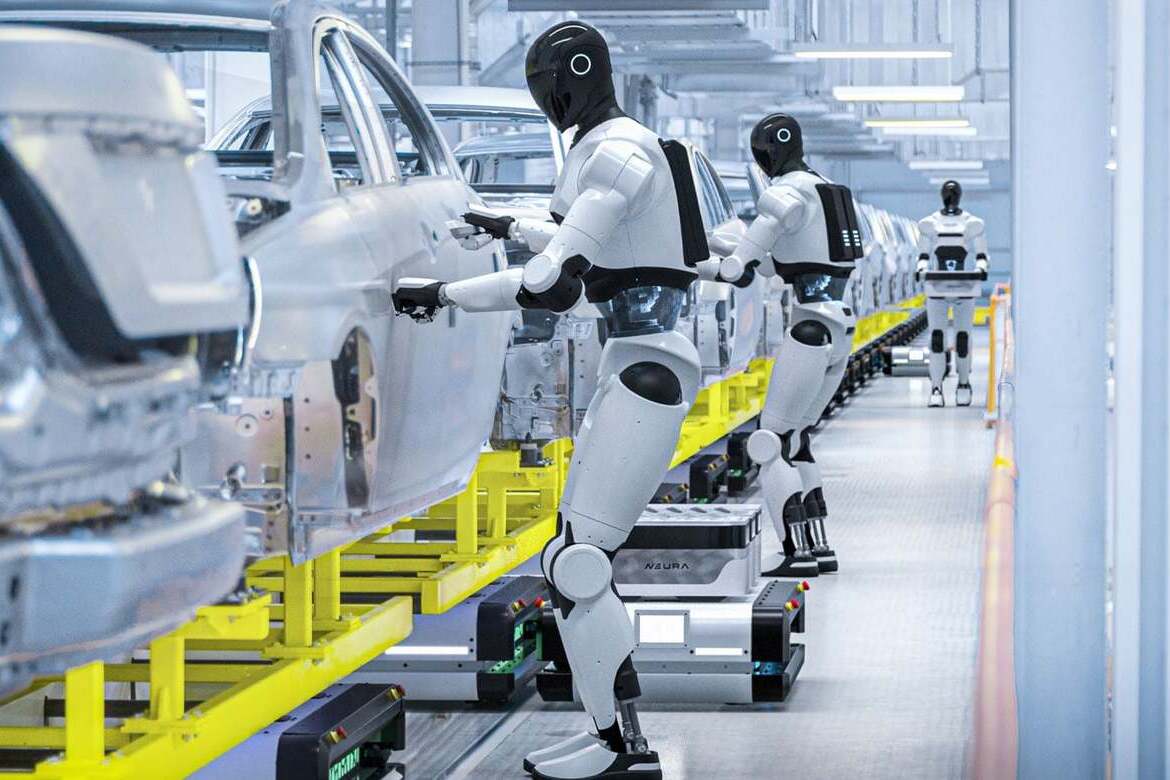
The numbers tell the story clearly. Boston Dynamics is currently producing approximately four Atlas robots per month while Hyundai is demanding tens of thousands for its automotive plants in the coming years, according to Semafor. Agibot’s Longcheer deployment – one of the most concrete live factory cases reported this year – covers four robots on a single production line. The scale of current deployment is a fraction of what the investment levels and valuation multiples imply.
Global humanoid robot shipments rose nearly 480% in 2025 to 13,318 units, according to Omdia – an impressive growth rate from a very small base. The same firm projects 2.6 million units by 2035, a trajectory that requires sustained compound growth over a decade in a market that has not yet demonstrated it can manufacture, deploy, and maintain robots at industrial scale reliably.
What Is Actually Advancing
The progress is real, even where the hype outruns it. Hardware durability has improved significantly – this year’s Beijing half-marathon robots held together where last year’s broke. Simulation-to-real transfer has compressed development timelines. AI control systems are producing more fluid, adaptive movement. The cost curve for components including harmonic reducers and actuators is declining as Chinese manufacturers scale production.
The more grounded framing of the current moment is that humanoid robotics is at an early but credible stage of industrial transition – where the technology works in controlled conditions, early deployments exist, and the timeline to mass-market utility is measured in years rather than months. “Long-term adoption will depend on how the system adds value,” noted an IEEE survey of robotics technologists published late last year. “The fun factor gets people to try the technology, but the sustained value comes from reliability, adaptivity, and meaningful human-robot collaboration.”
Disclaimer: RobotsBeat is an independent media brand owned and operated by NuvexMedia LLC, publishing news, research, and insights on artificial intelligence, emerging technologies, automation, and related industries. NuvexMedia LLC invests in and collaborates with companies across the AI, Robotics, technology, software, and digital innovation sectors. These relationships do not influence RobotsBeat's editorial coverage, and the publication maintains full editorial independence to provide accurate, timely, and objective information. © 2026 NuvexMedia LLC. All rights reserved. This content is for informational purposes only and should not be considered legal, tax, investment, financial, or other professional advice.