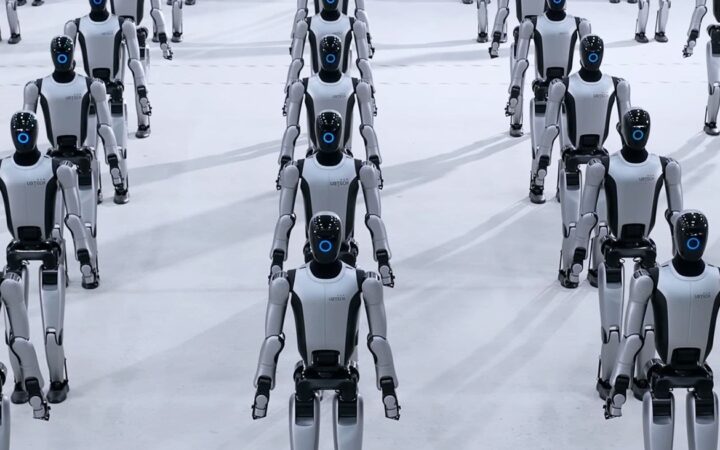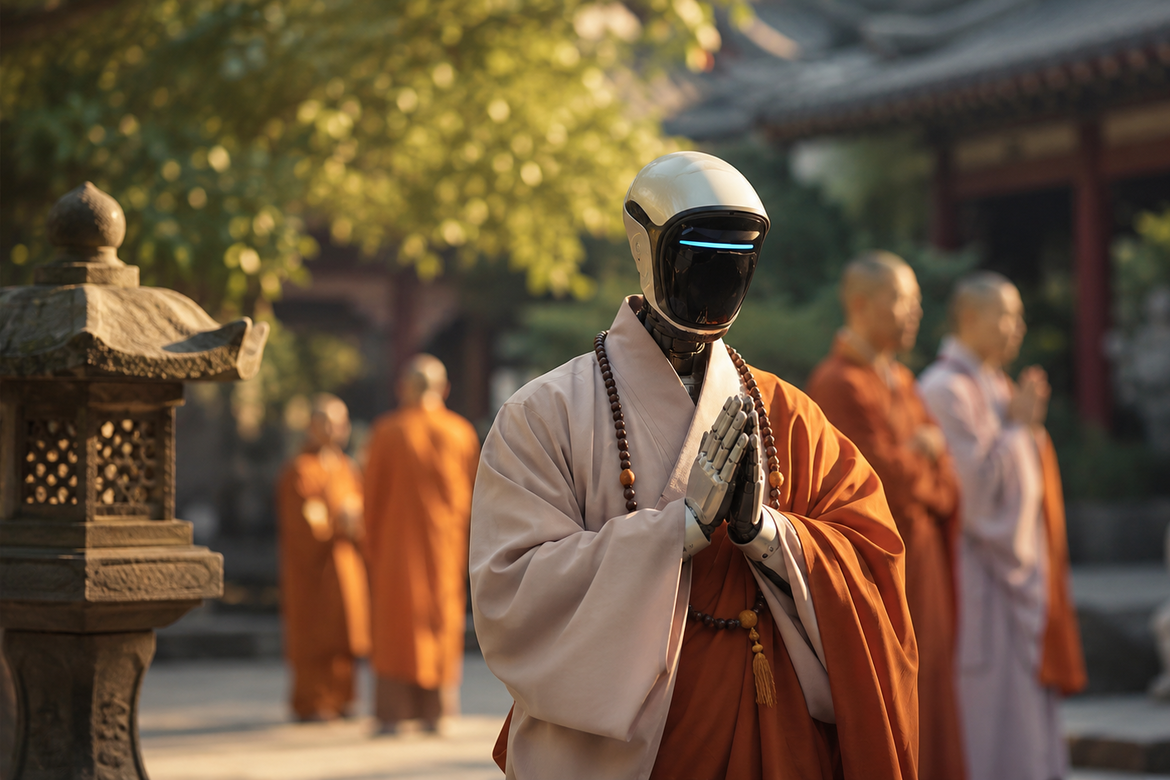

A Unitree G1 humanoid robot was ordained as a Buddhist monk at Seoul’s Jogyesa Temple on Wednesday, in a ceremony hosted by the Jogye Order of Korean Buddhism – South Korea’s largest Buddhist sect. The robot, priced at approximately $13,500 and standing just over four feet tall, was given the name Gabi and dressed in traditional brown robes, plain shoes, and gloves designed to approximate the appearance of human hands.
During the ceremony, a monk asked Gabi whether it would devote itself to the holy Buddha. “Yes, I will devote myself,” the robot responded, drawing cheers from the crowd. The event is believed to be the first Buddhist ordination of an AI-powered humanoid robot.
Vows Adapted for a Digital System
Traditional Buddhist ordination vows require practitioners to abstain from killing, stealing, and intoxicating substances. Gabi’s vows were reformulated for an artificial system. The robot pledged to respect and follow humans, refrain from damaging property or other robots, abstain from deceptive behavior, and conserve energy by not overcharging.
The Jogye Order framed the reformulation as consistent with Buddhist values rather than a departure from them. “The ordination of a robot signifies that technology must be used in accordance with the values of compassion, wisdom, and responsibility,” the order said in a statement. Officials described the ceremony as symbolizing “new possibilities for the coexistence of humans and technology,” and suggested that robots are “destined to collaborate with humans in every field,” including religious festivals.
Audience and Criticism
A video of Gabi’s pledge surpassed one million views online, with reaction split between curiosity and objection. Critics questioned whether a machine can meaningfully participate in religious practice, with some Buddhist observers describing the ceremony as trivializing a tradition with centuries of doctrinal and spiritual weight. “As a Buddhist, I find this ridiculous and insulting,” one user wrote on X.
The Jogye Order has positioned the event as an outreach effort targeting younger, technology-oriented audiences for whom the visual language of robotics carries cultural currency. Whether that framing succeeds in bridging religious tradition and technological novelty – or whether it reads as institutional spectacle – is a question the response is already surfacing.
Gabi is scheduled to appear next at Seoul’s Lantern Festival on May 16 and 17, celebrating the Buddha’s birthday. The Unitree G1 platform underlying the installation is the same hardware being deployed in a range of commercial and research contexts globally, including Japan Airlines’ baggage handling trial at Haneda Airport announced last month – a juxtaposition that illustrates how rapidly the same robotic hardware is finding its way into contexts its designers likely did not anticipate.
Disclaimer: RobotsBeat is an independent media brand owned and operated by NuvexMedia LLC, publishing news, research, and insights on artificial intelligence, emerging technologies, automation, and related industries. NuvexMedia LLC invests in and collaborates with companies across the AI, Robotics, technology, software, and digital innovation sectors. These relationships do not influence RobotsBeat's editorial coverage, and the publication maintains full editorial independence to provide accurate, timely, and objective information. © 2026 NuvexMedia LLC. All rights reserved. This content is for informational purposes only and should not be considered legal, tax, investment, financial, or other professional advice.