Key Notes
- Counterpoint forecasts humanoid robot DRAM demand rising from about 8,300 Tbit in 2026 to 172,000 Tbit in 2030, driven by both shipment growth and greater memory content.
- Average DRAM capacity per robot is projected to increase from 19GB to 39GB, while individual platforms such as NVIDIA’s Jetson Thor already offer larger configurations.
- The outlook concerns memory capacity rather than chip revenue, and actual demand will depend on commercial robot adoption, hardware choices and software efficiency.
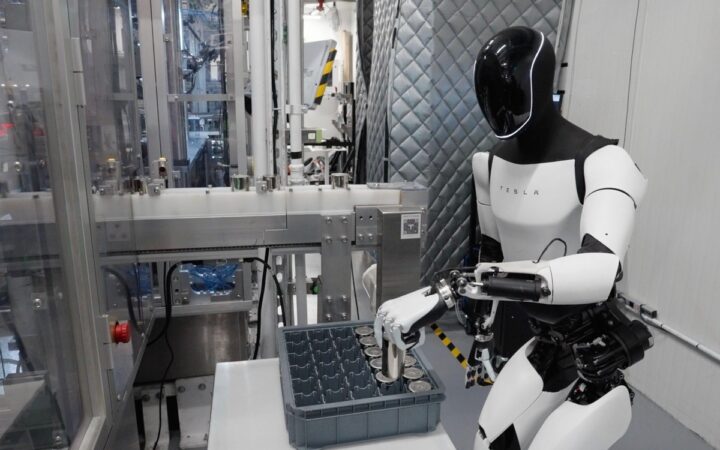
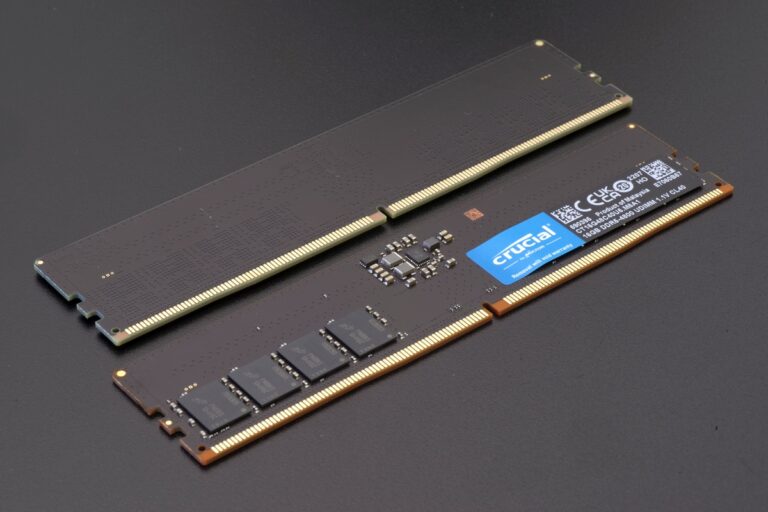
DRAM demand for humanoid robots could grow more than 20x between 2026 and 2030 as manufacturers ship more machines and equip each with larger amounts of working memory, according to Counterpoint Research. The forecast points to robotics as another potential market for memory suppliers alongside AI data centers.
Counterpoint’s October 10 forecast puts demand for humanoid robot computing systems at roughly 8,300 terabits in 2026 and 172,000 terabits in 2030. Average DRAM content per robot is projected to rise from 19GB to 39GB. The Chosun Daily subsequently reported the outlook.
More Robots and More Memory per Machine
The two measures describe different parts of the market. Average capacity concerns an individual robot; total demand combines memory content with the number of machines shipped. Roughly doubling the first figure does not, by itself, produce a 20x increase in the second. The forecast therefore also depends on a substantial expansion in robot volumes.
The figures measure memory capacity, rather than semiconductor revenue. They do not establish a comparable increase in sales value, which would also depend on chip prices and the products customers select.
Commercial rollout plans illustrate the demand question. Our coverage of the UBTECH partnership examined a target for 10,000 humanoid robot sales by 2030. Such targets indicate manufacturers’ ambitions, but completed deliveries and sustained customer use will determine how much hardware is ultimately required.
Robot Computers Already Offer Much Larger Configurations
A market average is not a specification that every robot follows. NVIDIA’s Jetson Thor specifications list 128GB of LPDDR5X memory for the T5000 module and 64GB for the T4000. These configurations show how particular computing platforms can sit well above the projected industry average.
NVIDIA describes Thor as an onboard platform for AI models, sensor processing and robotics. Its role is to keep demanding workloads close to the machine, where perception and decisions have to interact with movement. Memory capacity is one constraint in that system, alongside bandwidth, power consumption and cooling.
RobotsBeat previously covered NVIDIA’s reference humanoid, which brings Jetson Thor into a broader hardware and software development platform. That is a concrete example of the computing layer behind humanoid development, rather than evidence that all future robots will use the same memory configuration.
Software Efficiency Will Also Shape Demand
Larger models do not make memory requirements a one-way progression. NVIDIA’s optimization guidance describes reducing runtime overhead and using lower-precision model representations to fit workloads into limited edge memory. Its examples report potential savings of up to 10–12GB across selected software layers, depending on the configuration.
Our earlier DIVINE coverage examined another approach: consolidating perception models to reduce redundant computation. These efforts matter because a battery-powered machine has to balance capability with component cost and energy use.
For memory suppliers, the opportunity depends on both adoption and design choices. Counterpoint’s forecast offers a measure of potential capacity demand; the eventual market will be shaped by the robots customers buy, the tasks they perform and how efficiently their software uses the hardware.
Disclaimer: RobotsBeat is an independent media brand owned and operated by NuvexMedia LLC, publishing news, research, and insights on artificial intelligence, emerging technologies, automation, and related industries. NuvexMedia LLC invests in and collaborates with companies across the AI, Robotics, technology, software, and digital innovation sectors. These relationships do not influence RobotsBeat's editorial coverage, and the publication maintains full editorial independence to provide accurate, timely, and objective information. © 2026 NuvexMedia LLC. All rights reserved. This content is for informational purposes only and should not be considered legal, tax, investment, financial, or other professional advice.