Key Notes
- Alex Zhou founded Linkerbot in 2023 to focus on dexterous robotic hands and the skills software that turns finger movements into useful manipulation.
- Its product lineup uses linkage, direct-drive and tendon-driven designs, with active and passive joint counts reflecting different control capabilities.
- The founder profile describes a reported $3 billion valuation, while the previously reported $6 billion fundraising target remains distinct from a completed financing.
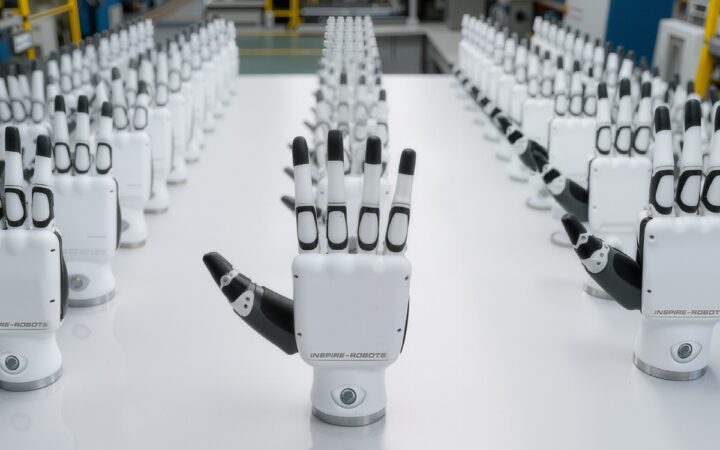
Alex Zhou built Linkerbot around a specific robotics problem: making hands that can manipulate objects with the versatility people take for granted. The Beijing company supplies dexterous hands and the software used to teach them skills, giving it a role in the humanoid supply chain without depending on a single full-body robot.
An October 14 VnExpress profile traces Zhou’s route from software engineering to a startup reportedly valued at $3 billion earlier this year. The business rests on an engineering challenge that remains separate from walking: picking up, adjusting and using the objects that make a robot useful.
From Doraemon to a Focus on Hands
According to the profile, Zhou’s childhood interest in Doraemon helped spark his fascination with robots. He later worked at Lenovo and co-founded businesses in gaming and autonomous driving before founding Linkerbot in 2023, using proceeds from earlier ventures to help finance its initial development.
His decision was to concentrate on manipulation rather than begin with a complete humanoid. A hand can serve several robot designs, and its usefulness depends on the work at the fingertips: handling a component, turning a tool or controlling pressure against a fragile object.
That also makes the customer base broader than household robots. Research teams need hardware for learning experiments, while manufacturers need end effectors that fit the arms and processes they already operate. Those applications can develop before a general-purpose home assistant becomes dependable.
Different Designs for Different Tasks
Linkerbot’s product specifications show why a robotic hand is not a single standardized component. Its lineup spans linkage, direct-drive and tendon-driven mechanisms, with different balances of movement, weight and control.
The O30, for example, lists 20 actively controlled degrees of freedom, a weight of 730g and a 500Hz communication rate. The tendon-driven L30 Pro lists 18 active and four passive degrees of freedom. These are manufacturer specifications, and the distinction between active and passive movement matters when comparing products.
A passive joint can accommodate contact without being independently commanded. An active joint gives the controller another movement to coordinate. Neither count, by itself, establishes whether a hand can complete a particular task reliably or how much maintenance it will require.
Our coverage of Atlas’ hands examined a different choice: four fingers and 13 degrees of freedom, with Boston Dynamics prioritizing tool use, strength and durability. The contrast illustrates why copying the full human hand is one design direction rather than the only route to useful dexterity.
Skills Software Connects Hardware to Work
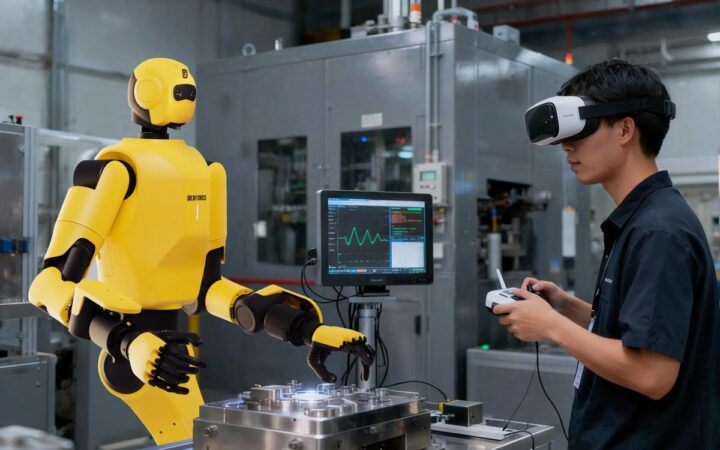
Linkerbot’s CES announcement described LinkerSkillNet as a library built from real-world manipulation data and said it contained more than 500 skills. The company presents demonstrations and data collection as part of the product, alongside the hand itself.
The underlying challenge is transferring a movement into a repeatable process. Threading a needle demonstrates precision under specific conditions; an assembly line also requires consistent results when parts, alignment and contact vary. A library’s size therefore provides a different measure from success rates across a customer’s workload.
Linkerbot’s company overview describes an ecosystem that includes teleoperation, a skills store and its Linker Genesis model. The strategy connects hardware sales with the data and software needed to develop additional capabilities.
Valuation Ambitions Meet Deployment Requirements
RobotsBeat previously covered Linkerbot’s valuation target of $6 billion. That prospective figure should be distinguished from the $3 billion valuation described in the founder profile; a fundraising ambition is not a completed transaction.
For customers, the relevant comparison ultimately reaches beyond investor interest. Purchase price, integration effort, task completion, service life and replacement costs together determine whether a dexterous hand improves an operation. Zhou’s focus gives Linkerbot a defined place in robotics: supplying the physical interface between a machine’s intelligence and the work it is expected to do.
Disclaimer: RobotsBeat is an independent media brand owned and operated by NuvexMedia LLC, publishing news, research, and insights on artificial intelligence, emerging technologies, automation, and related industries. NuvexMedia LLC invests in and collaborates with companies across the AI, Robotics, technology, software, and digital innovation sectors. These relationships do not influence RobotsBeat's editorial coverage, and the publication maintains full editorial independence to provide accurate, timely, and objective information. © 2026 NuvexMedia LLC. All rights reserved. This content is for informational purposes only and should not be considered legal, tax, investment, financial, or other professional advice.