Key Notes
- Generative Bionics plans to open a 5,000-square-meter Italian physical AI hub in the fourth quarter of 2027 as the first site in a proposed three-facility network.
- AMD Helios infrastructure is intended to connect real robot data, digital-twin simulation and model training before validation on industrial humanoids.
- The project remains a plan, with investment amounts and final site details undisclosed, while the company’s claim of European scale has not been independently established.
Generative Bionics plans to build a 5,000-square-meter physical AI training hub in Italy using AMD infrastructure, with operations targeted for the fourth quarter of 2027. Announced at CES Unveiled Milan on October 21, the project is the first part of a proposed three-site network for training and validating industrial humanoid robots.
The company’s announcement names AMD Helios as the planned computing foundation. Generative Bionics describes the Italian hub as Europe’s largest planned physical AI training facility for humanoids; the release does not provide a comparative inventory supporting that ranking.
A Data Factory for Robot Actions
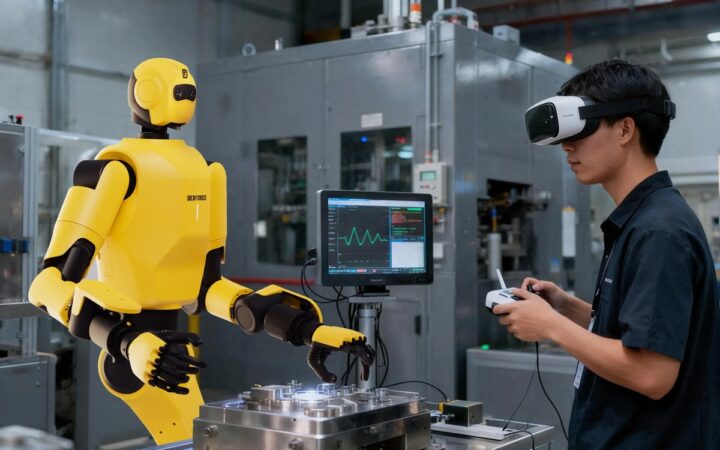
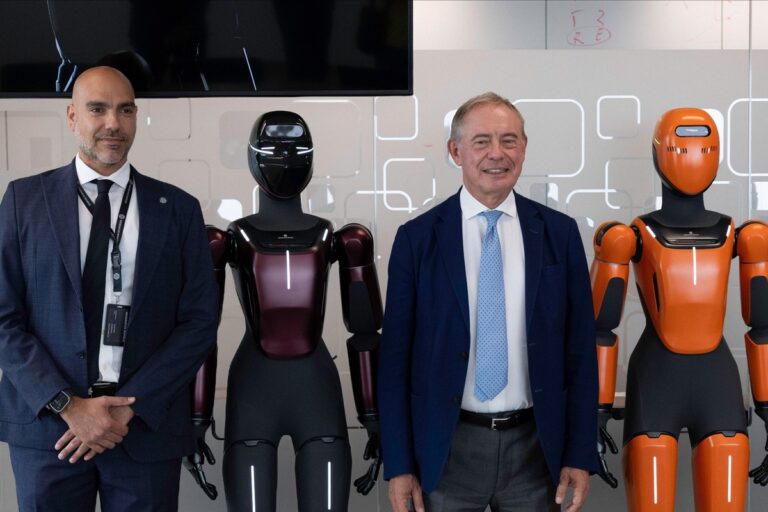
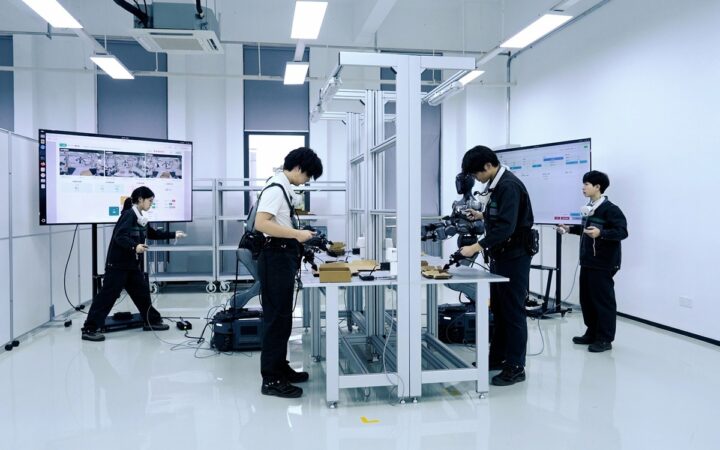
The proposed network will connect physical work by GENE.01 humanoids with digital twins, model training and validation back on the machines. A second facility is planned elsewhere in Europe, followed by a third serving global markets.
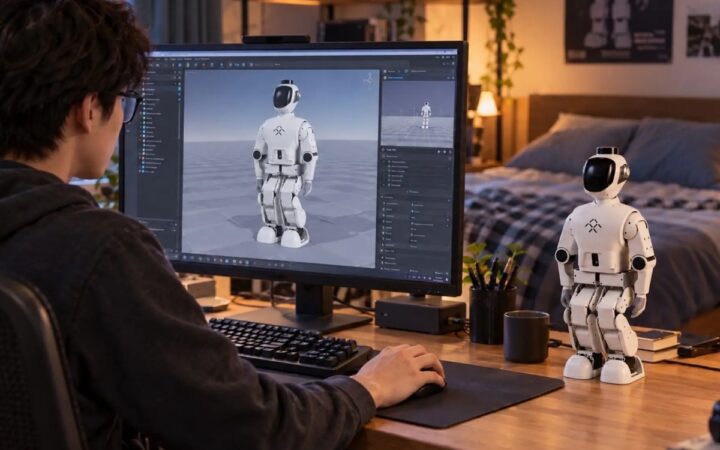
The practical idea is to record robots performing industrial tasks, recreate the conditions in simulation and explore many variations before returning a trained model to the physical system. The process could expose a controller to different parts, layouts and contact conditions without rebuilding every experiment in a real workcell.
That loop is useful only when the simulated result remains relevant to the hardware. A change in friction or material flexibility can alter how an object behaves, while a small sensing error can affect the final stage of a grasp or insertion.
Our earlier coverage of Eni’s humanoid collaboration provides the industrial context for Generative Bionics’ platform. The new announcement adds a planned training infrastructure, rather than confirming that those customer applications are already operating at scale.
AMD Links Onboard Control With Training Compute
AMD’s relationship with Generative Bionics predates this project. Its UniMoRe collaboration describes work on vision-language-action systems and a World Models Foundry, with Generative Bionics contributing industrial robotics experience.
That initiative aims to develop an open-source VLA stack, demonstrations and toolkits optimized for AMD Instinct GPUs. It also connects model design, training methods and evaluation, illustrating how the company’s robotics work extends beyond providing a processor inside a robot.
The new data-factory plan uses Helios rack-scale infrastructure for training and simulation workloads. It should not be read as a completed installation: the announcement does not disclose a system count, investment budget or a detailed delivery schedule for the three locations.
GENE.01 Supplies More Than Camera Data
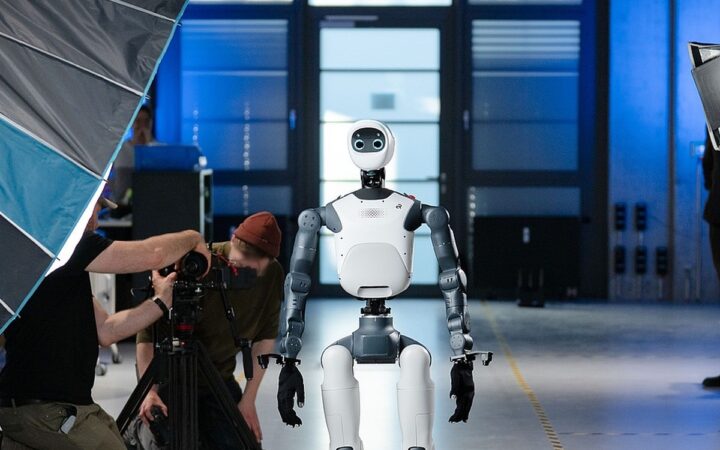
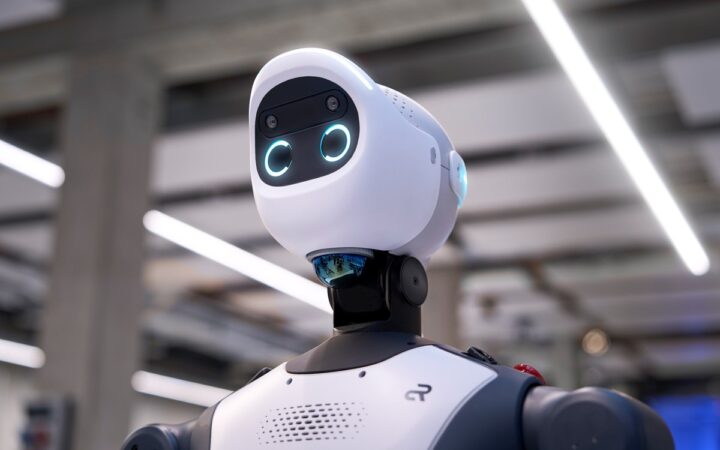
Generative Bionics’ platform unveiling described a humanoid with full-body multimodal skin. Its sensing approach combines information about contact, proximity, force and temperature, broadening the data available for interaction with people and objects.
For learning, that matters because a video records the appearance of an action without necessarily recording the forces that made it succeed. Contact measurements can help distinguish a secure grasp from one that is slipping, or a properly aligned part from one meeting unexpected resistance.
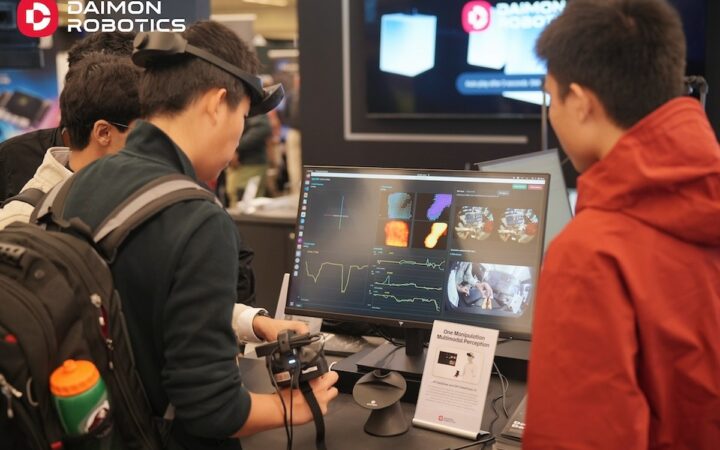
The same distinction runs through our reporting on Daimon’s tactile infrastructure and Eka’s force-aware AI. The companies pursue different business models, but all place physical interaction data closer to the center of robot development.
European Infrastructure, Industrial Validation
Generative Bionics frames the project around European control of robotics data, models and engineering knowledge. The first hub is planned in Italy, but the release does not identify its city or a final location for the second site.
Owning a training environment can let a developer reproduce customer conditions before an installation. It also creates a place to compare software versions, investigate failures and test whether a learned improvement survives a change in the task.
RobotsBeat recently covered Schaeffler’s humanoid factory, where production and training share a physical site. The Generative Bionics project proposes another route to linking robot development with industrial work, with its first opening still ahead.
The milestone to watch is the Italian hub’s targeted Q4 2027 start, followed by disclosed training capacity and validated robot applications. The announcement establishes the intended infrastructure and partnership; operating results will determine its value for industrial deployments.
Disclaimer: RobotsBeat is an independent media brand owned and operated by NuvexMedia LLC, publishing news, research, and insights on artificial intelligence, emerging technologies, automation, and related industries. NuvexMedia LLC invests in and collaborates with companies across the AI, Robotics, technology, software, and digital innovation sectors. These relationships do not influence RobotsBeat's editorial coverage, and the publication maintains full editorial independence to provide accurate, timely, and objective information. © 2026 NuvexMedia LLC. All rights reserved. This content is for informational purposes only and should not be considered legal, tax, investment, financial, or other professional advice.