Key Notes
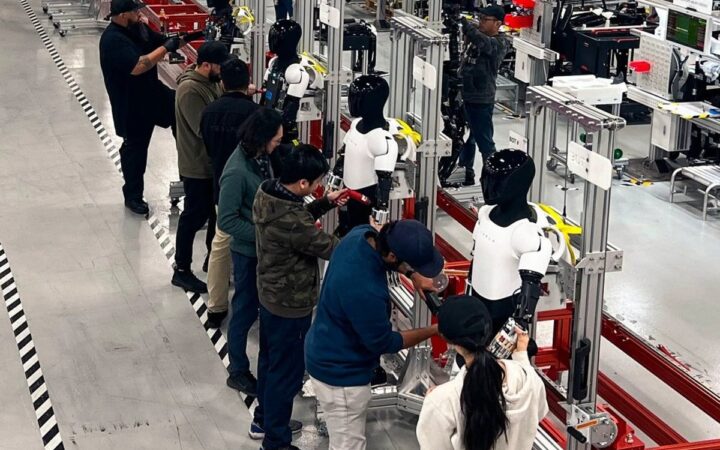
- Tesla says its first production-quality Optimus robots are emerging from Fremont’s high-volume lines, with California manufacturing classified as an early ramp.
- Musk expects reaching roughly 20,000 robots a week to take at least a year and possibly longer, making the figure a future production pace rather than current output.
- Tesla’s Texas Optimus operation remains under construction, while training, reliability and customer deployment remain separate milestones.
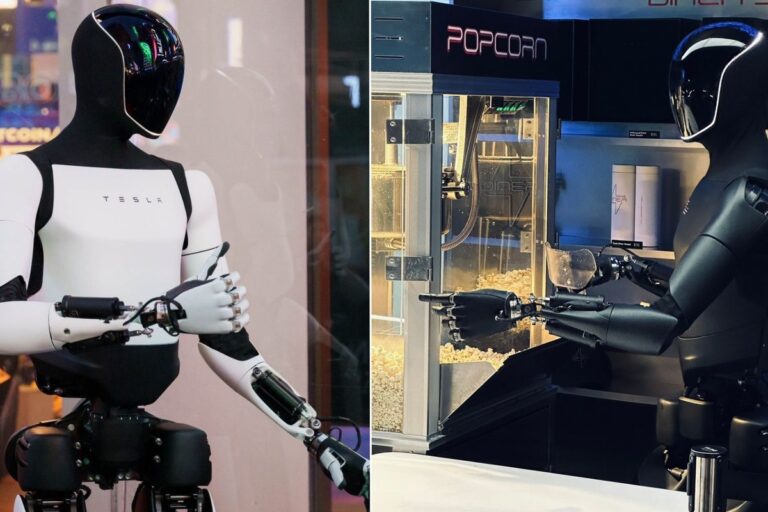
Tesla says its first production-quality Optimus humanoids are now coming off high-volume manufacturing lines in Fremont, California. The disclosure in its third-quarter update gives the robot program a more concrete manufacturing milestone, even as Elon Musk warns that reaching the line’s intended output will take at least a year and possibly longer.
The company labels California Optimus manufacturing an early ramp and its Texas operation construction. It does not disclose a current weekly production total in the update. That distinction matters: starting a production process and running it consistently at industrial volume are separate stages.
Fremont Moves Into Production-Quality Builds
In its October 21 shareholder update, Tesla says the robots leaving the Fremont line are the first production-quality units it has manufactured. It describes the manufacturing process as suitable for a commercial product, while saying both the hardware and the process will continue to change.
This is a statement about how Tesla is building Optimus, rather than confirmation that the robot is ready for unrestricted customer use. A production-quality machine can still require software development, reliability testing and carefully defined operating conditions before it becomes a dependable service for buyers.
The announcement also follows earlier work at the same plant. RobotsBeat covered the Fremont conversion that freed automotive manufacturing space for humanoids. The latest update supplies Tesla’s own assessment of the quality of the robots now emerging from that investment.
20,000 Robots a Week Remains a Target
During the earnings call, Musk said reaching roughly 20,000 Optimus units a week would take at least a year, perhaps longer, according to a call excerpt published by Yahoo Finance. He described early production growth as slow and uneven because the product is new.
At a sustained rate, 20,000 units a week would equate to about one million annually. That is an eventual manufacturing pace, not a commitment to deliver one million robots during 2027. Reaching it late in a year would produce a very different annual total from maintaining it throughout that year.
Tesla’s capacity table explicitly separates installed capacity from actual production. Equipment uptime, component supply and factory changes can affect output. For a new humanoid, repeatable assembly also has to coexist with changes to the design being assembled.
Building Robots Also Supports Their Training
Manufacturing more machines serves another immediate purpose: generating physical experience. Our separate coverage of Optimus Academy explains Musk’s plan to use thousands of robots practicing tasks to improve their behavior. That proposed training fleet is distinct from the weekly production target.
The two efforts depend on each other. Training requires working hardware, while the commercial value of additional hardware depends on increasingly capable software. More robots create opportunities to collect experience, but the resulting skills still need to transfer to unfamiliar objects and workplaces.
Customer Readiness Will Require More Than Output
For an industrial customer, useful performance includes consistent task completion, manageable supervision and predictable maintenance. Manufacturing throughput answers how many machines Tesla can build; operating results establish what those machines can do after installation.
Our earlier review of the 2027 sales timeline examines those remaining steps. Tesla’s new disclosure strengthens the manufacturing side of the story, while leaving current output, sustained reliability and the terms of broad customer deployment unresolved.
Disclaimer: RobotsBeat is an independent media brand owned and operated by NuvexMedia LLC, publishing news, research, and insights on artificial intelligence, emerging technologies, automation, and related industries. NuvexMedia LLC invests in and collaborates with companies across the AI, Robotics, technology, software, and digital innovation sectors. These relationships do not influence RobotsBeat's editorial coverage, and the publication maintains full editorial independence to provide accurate, timely, and objective information. © 2026 NuvexMedia LLC. All rights reserved. This content is for informational purposes only and should not be considered legal, tax, investment, financial, or other professional advice.