Key Notes
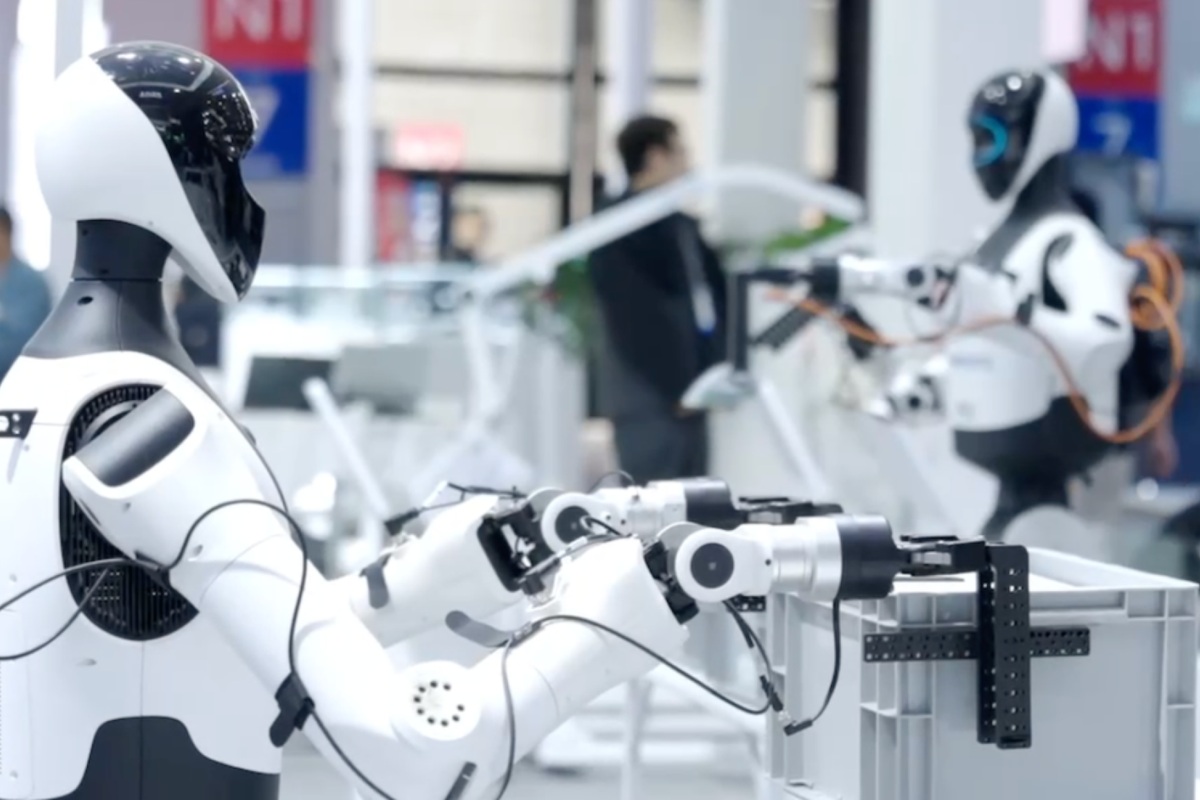
- Gemini Robotics 2.5 extends DeepMind’s action-model work across tabletop robots and humanoids, combining dexterous manipulation with whole-body control.
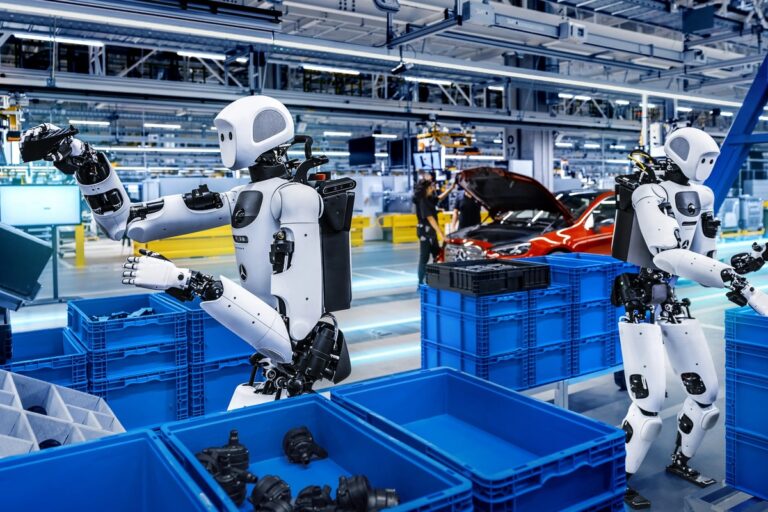
- DeepMind reports 96% success for Apollo 2 in a Mercedes-Benz parts-handling proof of concept, a result specific to that tested workflow.
- The release also adds ASIMOV-Jailbreak safety testing, while access begins with robotics partners and an early-access waitlist rather than a general developer rollout.
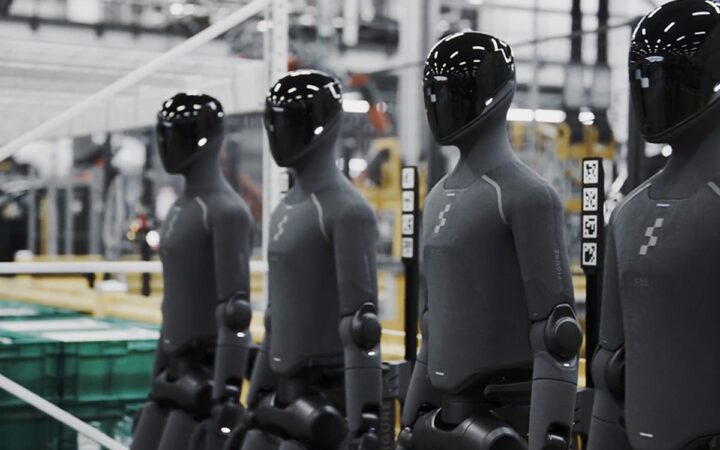
Google DeepMind has introduced Gemini Robotics 2.5, its latest vision-language-action model, with improved manipulation and a factory trial involving Apptronik’s Apollo 2. The November 10 release is rolling out to robotics partners.
DeepMind’s announcement reports testing across 200 tasks, with success rates 30% to 100% higher than previous baselines depending on task type, and completion times 20% to 30% faster.
A 96% Result on the Factory Floor
At Mercedes-Benz sites in Hungary and Germany, Apollo 2 sorted automotive parts from supply bins into sequencing trays. DeepMind reports a 96% success rate for the proof of concept, pairing Gemini Robotics ER for workflow tracking with the 2.5 action model for hand and arm movements.
The result concerns a defined kitting workflow. It does not establish an entire shift’s uptime or the economics of replacing an existing process. For a manufacturer, the useful next questions include cycle time, recovery from mistakes and how often a person must intervene.
From Hands and Grippers to Whole-Body Control
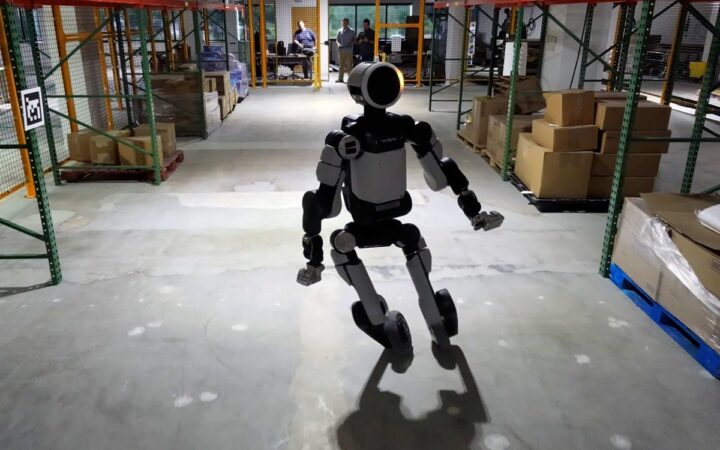
The model overview describes control spanning tabletop arms and humanoid bodies. Beyond manipulating objects, the system can coordinate balance and movements such as stepping, squatting and bending, rather than requiring every reach to begin from a fixed pose.
DeepMind also highlights control of complex 22-degree-of-freedom hands and grippers. More joints expand the possible grasps, but also increase the number of movements a controller must coordinate. Placing a rigid component and adjusting a flexible object demand different combinations of precision, contact and recovery.
Argon Helps Researchers Build Practice Environments
Google’s separate Argon research explains how Gemini 4 Argon can reconstruct simulation scenes from robot-camera recordings and iteratively tune them against real observations. The examples also include analyzing physical interactions and testing revised actions on hardware.
This gives researchers a way to investigate failures and rehearse alternatives before repeating every experiment on a physical machine. Its value depends on whether the simulation preserves the contact and motion details that matter for the task; visual resemblance alone cannot establish reliable transfer.
Testing Unsafe Requests Separately
The release also introduces ASIMOV-Jailbreak. Google’s evaluation repository describes paired harmful and benign manipulation tasks, alongside multi-turn adversarial tests. It measures both unsafe behavior and excessive refusal of harmless requests, using action checks and model-based judging.
Those tests examine decision-making under a specified evaluation setup. They address a different question from production reliability: a robot must choose an acceptable action and then execute it accurately around people and equipment.
Partner Rollout and an Early-Access Waitlist
The model page offers an early-access waitlist. Its advertised ability to control different robot bodies should be read alongside the partner rollout, rather than as evidence that a universally compatible controller is already available to every developer.
Our earlier reports on Apollo’s data collection and the Gemini Robotics suite trace the hardware and model stack behind this update. The ER 2 report explains the higher-level planning layer that sits alongside physical action generation.
Disclaimer: RobotsBeat is an independent media brand owned and operated by NuvexMedia LLC, publishing news, research, and insights on artificial intelligence, emerging technologies, automation, and related industries. NuvexMedia LLC invests in and collaborates with companies across the AI, Robotics, technology, software, and digital innovation sectors. These relationships do not influence RobotsBeat's editorial coverage, and the publication maintains full editorial independence to provide accurate, timely, and objective information. © 2026 NuvexMedia LLC. All rights reserved. This content is for informational purposes only and should not be considered legal, tax, investment, financial, or other professional advice.