Key Notes
- Jensen Huang has resigned as NVIDIA’s president, CEO and a director, with CFO Colette Kress taking interim charge during the search for a permanent successor.
- NVIDIA’s board expects its product roadmap and customer commitments to continue, with no robotics-program cancellation announced in the transition statement.
- The change arrives as NVIDIA expands GR00T 2, Isaac simulation tools and robot-manufacturer partnerships, making delivery and developer support key areas to watch.
Jensen Huang has resigned as NVIDIA’s president, chief executive and a director, with finance chief Colette Kress taking over as interim CEO. The leadership change puts a new executive in charge of a company whose robotics ambitions now span robot-learning models, simulation, onboard computing and industrial partnerships.
NVIDIA announced the transition on November 12. Kress will retain her CFO responsibilities while the board considers internal and external candidates for a permanent successor. The board expects operations, customer commitments and the product roadmap to continue without interruption.
The corporate handover is covered in MarketSpeaker’s report. For robot developers and manufacturers, the immediate issue is continuity across the technologies they are already using to train, test and run physical machines.
A Robotics Strategy That Extends Beyond Chips
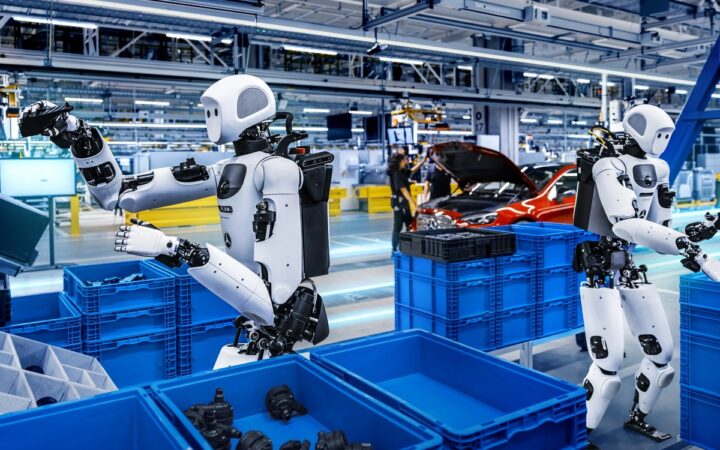
NVIDIA’s role in robotics has grown around a connected development workflow. Computing infrastructure supports training; simulation provides environments in which to practice; learned models select actions; and onboard processors execute those models on the robot. A manufacturer adopting several layers can become dependent on software interfaces and development tools as well as the underlying hardware.
The company’s recent CoRL announcements illustrate that approach. GR00T 2 is a world-action model that connects predicted visual outcomes with robot actions. Isaac Lab provides infrastructure for training and refining skills in simulation, while evaluation tools help developers inspect how performance changes with different objects, placements and physical conditions.
Our CoRL overview explains how those components fit together. The leadership transition therefore reaches an ecosystem of researchers and robot builders whose development work can span multiple NVIDIA platforms.
GR00T and Isaac Face the Same Deployment Test
The central technical challenge remains turning a demonstrated skill into repeatable work. A robot must cope with contact, changing object positions, interruptions and the limits of its own sensors and actuators. Simulation can expand the range of practice, but physical testing is needed to establish whether a learned behavior remains useful outside the training environment.
As our GR00T 2 report details, research scores must be read against their task definitions and evaluation conditions. They do not establish an industrial system’s uptime, safety or economics across arbitrary customer jobs.
For developers, practical signs of continuity will include model and software releases, maintained interfaces, hardware availability and support for existing workflows. Those are areas to monitor during the handover, rather than evidence that a disruption has already occurred.
Robot Partnerships Give the Strategy a Physical Footprint
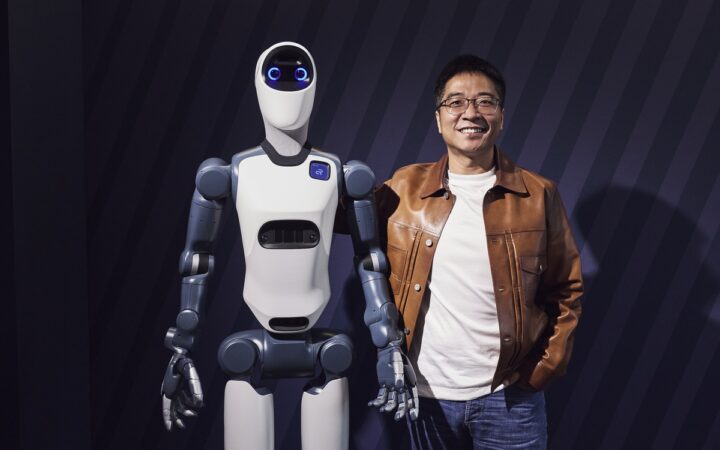
Agile Robots’ Agile ONE SN is one example of NVIDIA’s reach into physical hardware. The compact research humanoid combines Jetson Thor computing with preconfigured Isaac GR00T software, connecting demonstration capture, simulation, training and real-world testing in a single reference platform.
Our Isaac platform report covers that integration and its planned early-2027 availability. Separately, NVIDIA participated in Agile Robots’ newly announced $500 million round, adding a financial relationship to an existing technology partnership.
For robot manufacturers, the relevant question is whether those hardware, software and investment relationships continue to support their own delivery plans. The CEO announcement does not revise the cited partner timelines or identify a new robotics strategy.
Continuity Is the Board’s Stated Position
The transition creates uncertainty about future leadership decisions, but NVIDIA’s stated position is continuity. It would be premature to treat Huang’s departure as the end of its physical-AI effort or assume that Kress will change spending on a specific robotics program.
The next meaningful evidence will come from NVIDIA’s releases and partner deployments. For the robotics sector, that means watching whether the company continues to connect research advances with the tools, computing systems and support needed to make machines useful in sustained operation.
Disclaimer: RobotsBeat is an independent media brand owned and operated by NuvexMedia LLC, publishing news, research, and insights on artificial intelligence, emerging technologies, automation, and related industries. NuvexMedia LLC invests in and collaborates with companies across the AI, Robotics, technology, software, and digital innovation sectors. These relationships do not influence RobotsBeat's editorial coverage, and the publication maintains full editorial independence to provide accurate, timely, and objective information. © 2026 NuvexMedia LLC. All rights reserved. This content is for informational purposes only and should not be considered legal, tax, investment, financial, or other professional advice.