UniX AI Launches Panther Series Embodied AI Robots

UniX AI has introduced its Panther series embodied AI robots featuring 8-DOF dual arms and an omnidirectional chassis. The platform targets complex real-world service and commercial applications.

By Daniel Krauss Published: Updated:

UniX AI has unveiled its Panther series, a next-generation embodied AI robot platform designed for complex service and commercial environments. The system features dual 8-degree-of-freedom bionic arms, adaptive intelligent grippers, and a four-wheel omnidirectional chassis that enables lateral movement, in-place rotation, and precise positioning in confined spaces.

The Panther platform integrates an 80-centimeter vertical lift range and a 48V power system to support stable high-speed motion and torque-intensive actions. Demonstrations showcased capabilities including coordinated kitchen tasks, liquid pouring with predictive flow modeling, fine manipulation such as card handling and embroidery, and dynamic pose-based grasp adjustments. These functions are powered by UniX AI’s Trinity architecture, combining imitation learning, visuotactile fusion, and long-horizon task planning.

UniX AI is initially targeting high-value commercial scenarios such as elderly care and hospitality, where semi-structured environments demand adaptable manipulation and mobility. The launch reflects continued efforts in embodied AI to couple hardware iteration with algorithmic generalization for scalable real-world deployment.

News, Robots & Robotics

AGIBOT Showcases Humanoid Robots Ahead of Thailand Market Entry

AGIBOT has accelerated its planned Thailand expansion with a multi-day humanoid robotics showcase focused on Smart Tourism and digital transformation. The engagement highlighted deployment-ready systems for hospitality and public services.

By Laura Bennett Published: Updated:

AGIBOT has conducted a multi-day strategic program in Bangkok as it prepares for formal entry into the Thai market later in 2026. The initiative included demonstrations of deployment-ready humanoid robots for government stakeholders, tourism authorities, and enterprise representatives, aligning with Thailand’s Smart Tourism and broader digital transformation agenda.

During meetings with the Tourism Authority of Thailand, AGIBOT presented applications such as multilingual visitor assistance, real-time guidance, and interactive engagement in hospitality and transportation hubs. The robots also appeared at public events and broadcast programs, demonstrating bilingual communication and stable mobility in live, high-traffic environments.

The showcase underscores AGIBOT’s strategy of expanding through government-aligned smart infrastructure initiatives. As tourism-driven economies modernize service delivery, humanoid robots are increasingly positioned as front-line digital interfaces capable of augmenting staff while collecting operational data for long-term ecosystem integration.

News, Robots & Robotics

ROBOROAD Secures Seed Funding to Develop AI Road Maintenance Robots

ROBOROAD has secured seed funding and government R&D support to develop AI-powered robots for autonomous road maintenance. The startup aims to modernize pavement inspection and repair through robotics and automation.

By RB Team Published: Updated:

South Korean startup ROBOROAD has secured seed funding to advance its AI-powered robotic systems for unmanned road pavement maintenance. The round was backed by Seoul Techno Holdings, BNK Venture Investment, and BDC Accelerator. The company has also been selected for South Korea’s TIPS program, which will provide approximately $343,000 in government R&D funding over two years.

Founded in 2025, ROBOROAD is developing an integrated system that combines AI-based road inspection, autonomous repair robots, and pavement management software. The platform is designed to reduce reliance on manual labor and visual inspections by automating pothole detection and repair. A recent proof-of-concept demonstration in Gyeonggi Province showcased an autonomous robot conducting live pavement repairs.

The funding highlights growing interest in applying robotics to public infrastructure. By targeting labor-intensive and safety-critical maintenance tasks, ROBOROAD is positioning automation as a tool to lower operational costs, reduce worker exposure to traffic risks, and improve response times in urban infrastructure management.

Automation, News, Robots & Robotics

South Korean Stocks Rise as Tariff Concerns Ease and Robotics Shares Gain

South Korean equities extended gains as tariff concerns eased and early export data showed strong growth. Robotics-linked manufacturers contributed to the market’s upward momentum.

By Laura Bennett Published: Updated:

South Korean equities advanced, with the KOSPI extending its rally as investor concerns over potential U.S. tariffs moderated and export data signaled resilient external demand. Early-month figures showed exports rising 44.4% year over year, reinforcing confidence in the country’s trade-driven economy and supporting gains across industrial sectors.

Trade tensions had resurfaced after U.S. policy signals suggested possible tariff adjustments, but Seoul’s response – including plans to streamline review processes for U.S.-linked investment projects—helped stabilize sentiment. At the same time, robotics-related manufacturers saw renewed interest, reflecting continued investor focus on automation and advanced manufacturing as structural growth themes.

The combination of export strength, easing trade risk, and robotics-linked optimism underscores how technology and industrial policy remain central to South Korea’s market narrative. As global supply chains evolve, automation exposure is increasingly influencing capital flows into export-oriented economies.

Business & Markets, News, Robots & Robotics

Guadalupe to Deploy Robot Dogs for Security at 2026 FIFA World Cup

Guadalupe, Mexico, plans to deploy robotic police dogs during the 2026 FIFA World Cup to enhance stadium-area surveillance and officer safety. The units will support crowd monitoring and early incident response.

By Rachel Whitman Published: Updated:

The municipality of Guadalupe, Mexico, will deploy robotic dog units as part of its security strategy for the 2026 FIFA World Cup. The city has invested approximately 2.5 million pesos in four robots designed to operate in and around stadium zones, including the venue in Monterrey scheduled to host tournament matches.

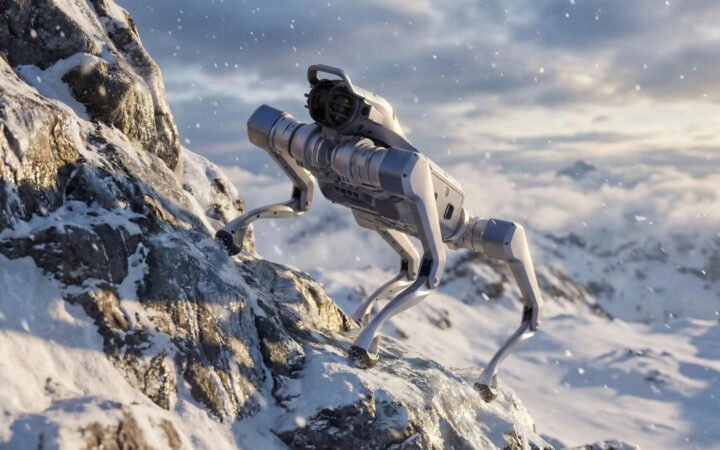
The quadruped robots are equipped with high-resolution cameras, night-vision systems, and two-way communication tools. Officials say the machines can navigate uneven terrain, climb stairs, and enter confined or potentially dangerous environments while streaming real-time video to officers. The units are unarmed and intended for surveillance, early threat detection, and communication rather than direct enforcement.

The deployment reflects a broader trend toward robotic augmentation in public security during large-scale events. With millions of visitors expected across North America, host cities are integrating ground robots, drones, and sensor networks to enhance situational awareness and reduce risks to law enforcement personnel in high-density environments.

News, Robots & Robotics

SpaceX Acquires xAI to Build Integrated Space-Based AI Infrastructure

SpaceX has acquired xAI, bringing artificial intelligence development directly under its space and launch operations. The move positions space-based compute as a long-term pillar of AI scaling.

By Laura Bennett Published: Updated:

SpaceX has acquired xAI, combining AI model development with launch systems, satellite networks, and space-based infrastructure, as first reported by AIstify. The acquisition brings xAI’s research and model training efforts inside SpaceX, creating a vertically integrated organization spanning AI, rockets, orbital communications, and satellite operations.

The strategy centers on the idea that terrestrial data centers face mounting limits related to power consumption, cooling, and environmental impact. By leveraging SpaceX’s launch capacity and satellite expertise, the combined organization is exploring orbital data centers powered by near-continuous solar energy. Starship is positioned as the key enabler, with projected payload capacity and launch frequency far beyond existing systems.

The acquisition signals a shift in how AI infrastructure may scale over the long term. Rather than relying solely on Earth-based facilities, SpaceX is framing space as future compute infrastructure, tying AI growth to launch economics, energy availability, and large-scale orbital deployment.

Artificial Intelligence (AI), Business & Markets, News