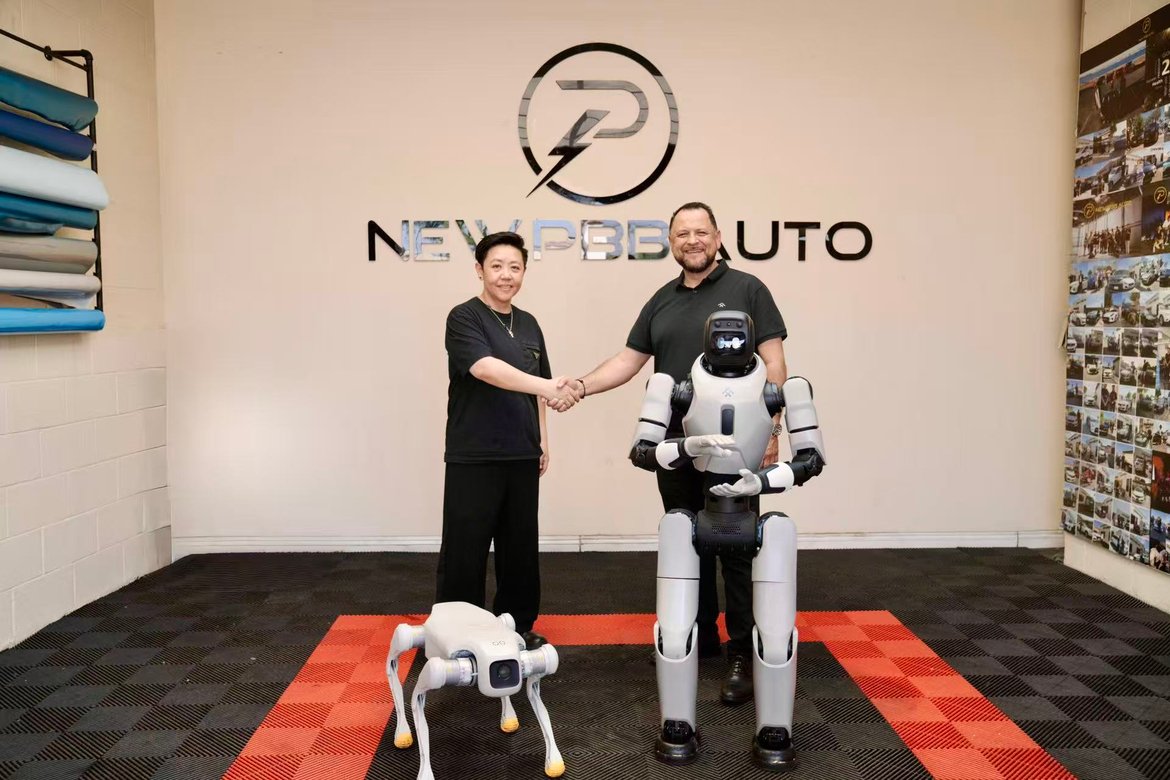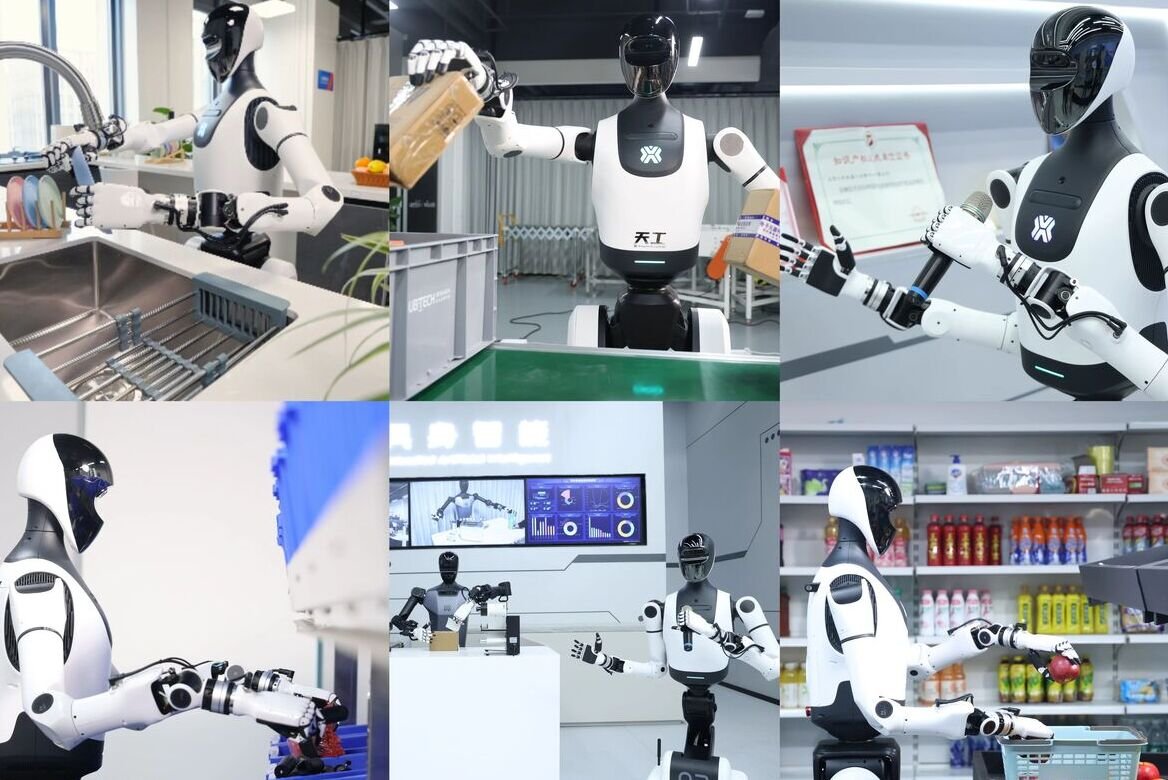
Inside a robotics lab in central China, a humanoid robot stands beside its human instructor, mirroring every motion. When the trainer raises his arm, the robot lifts its own. When he grips a coffee grinder and pours hot water into a cup, the robot repeats the sequence step by step.
The exercise is not a demonstration but part of a daily routine for a new category of worker emerging in the robotics industry: the humanoid robot trainer.
At the Hubei Humanoid Robot Innovation Center, one of China’s largest facilities dedicated to humanoid robotics development, trainers spend their days teaching machines how to perform everyday tasks through physical demonstrations and repeated trial-and-error learning. The work reflects a broader shift in robotics as companies move beyond laboratory prototypes toward preparing humanoids for practical jobs.
Training Robots for Real-World Tasks
Robot trainers use motion capture suits, sensors and virtual reality systems to translate human movements into training data that robots can learn from. By demonstrating actions such as grasping objects, walking through environments or preparing food, trainers help engineers collect detailed information about motion trajectories, force application and tactile interaction.
This data is then used to refine control algorithms and embodied AI models so robots can reproduce the actions independently.
The process is far more labor-intensive than it might appear. Even simple movements can require hundreds or thousands of repetitions before robots perform them reliably.
In a typical workday, trainers spend hours repeating and correcting actions while engineers capture usable data from only a fraction of those trials. Tasks that humans execute effortlessly, such as adjusting a grip on a utensil or coordinating several actions in sequence, remain challenging for robotic systems.
The complexity arises because robots must learn not just individual commands but continuous sequences of actions that unfold in dynamic environments.
A New Workforce Around Humanoid Robots
The growing demand for robot trainers reflects the rapid expansion of China’s humanoid robotics industry.
According to recruitment data from the job platform Zhaopin, postings for humanoid robotics roles surged more than fourfold in the first months of 2025 compared with the previous year. The number of job seekers entering the sector rose at nearly the same pace.
China has become a central player in the emerging humanoid robotics market. Industry estimates suggest the country accounted for roughly 90 percent of global humanoid robot shipments in 2025.
Analysts expect that figure to grow as companies increase production and expand commercial applications. Morgan Stanley projects that China’s annual humanoid robot sales could reach around 28,000 units in 2026, roughly doubling from earlier levels.
Robot training centers are appearing across multiple provinces, including Anhui, Zhejiang and Shandong, as companies build the data pipelines required to scale humanoid deployment.
Preparing Robots for Everyday Environments
The rise of robot trainers highlights an often overlooked aspect of robotics development: the need for extensive real-world training data.
While advances in artificial intelligence have significantly improved robot perception and decision-making, translating those capabilities into reliable physical behavior remains difficult. Robots must learn how to manipulate objects of different shapes, move through cluttered spaces and respond to unexpected changes.
Facilities like the Hubei innovation center attempt to replicate real environments where robots may eventually operate. Training areas simulate hospitals, supermarkets, kitchens and office spaces, allowing engineers to expose robots to a wide range of scenarios.
The approach reflects China’s broader strategy of accelerating the commercialization of embodied AI technologies. Government plans for the coming decade identify robotics and intelligent manufacturing as key drivers of economic growth.
For the human trainers involved, however, the task remains more immediate: teaching machines how to perform the small actions that underpin everyday work.
Their efforts illustrate a fundamental reality of the robotics industry. Before humanoid robots can enter homes, factories or hospitals, someone has to teach them how the real world works.