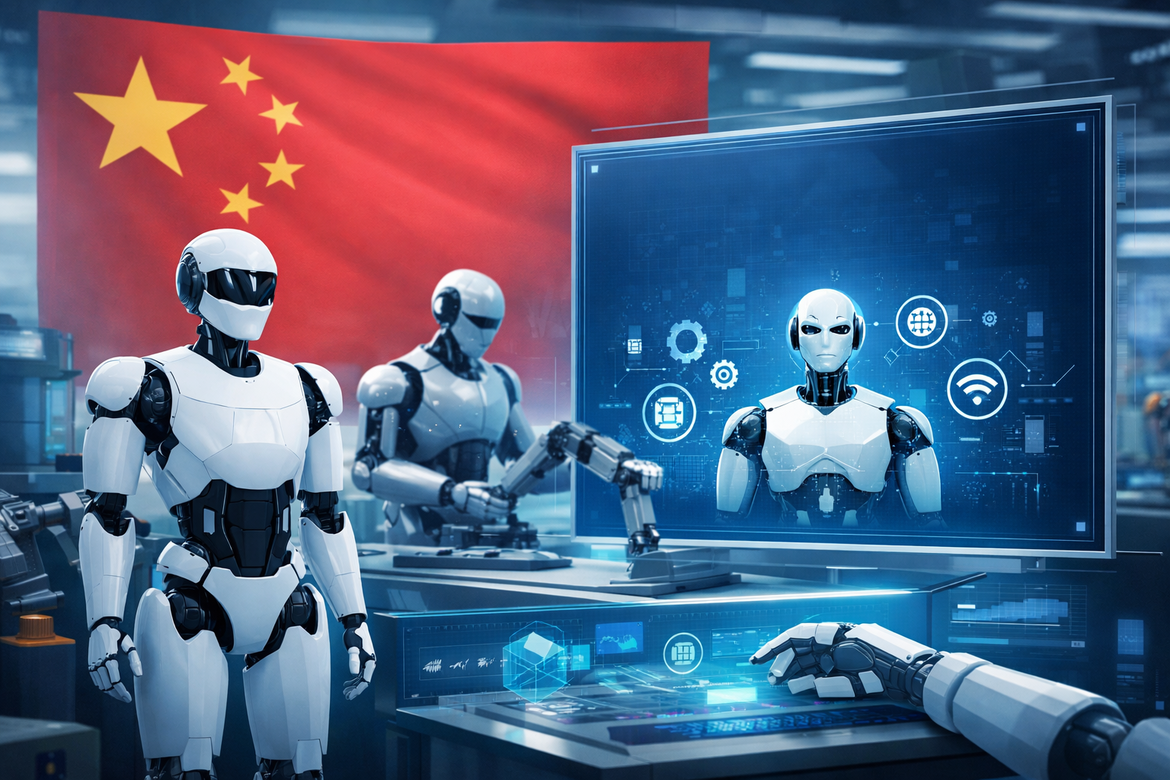
Artificial intelligence agents are beginning to move beyond software interfaces and into physical machines, as Chinese robotics companies experiment with integrating OpenClaw into robots designed for real-world tasks.
OpenClaw, an autonomous AI agent system that can perform multi-step tasks with minimal human intervention, has rapidly gained traction in China’s technology ecosystem. Developers are now adapting the system to control robots ranging from home service machines to humanoid platforms.
The shift reflects a broader effort to combine AI agents with robotics hardware, creating systems capable of interpreting natural language instructions and executing them in the physical world.
From AI Agent to Robot Controller
Several Chinese robotics companies have begun integrating OpenClaw into their platforms.
Home robotics manufacturer Ecovacs recently introduced a household robot called Bajie powered by the AI agent. The machine is designed to perform simple domestic tasks such as tidying objects or organizing items around the home.
Early demonstrations show that the system can interpret verbal instructions, though it still requires repeated prompts in some cases and occasionally behaves inconsistently.
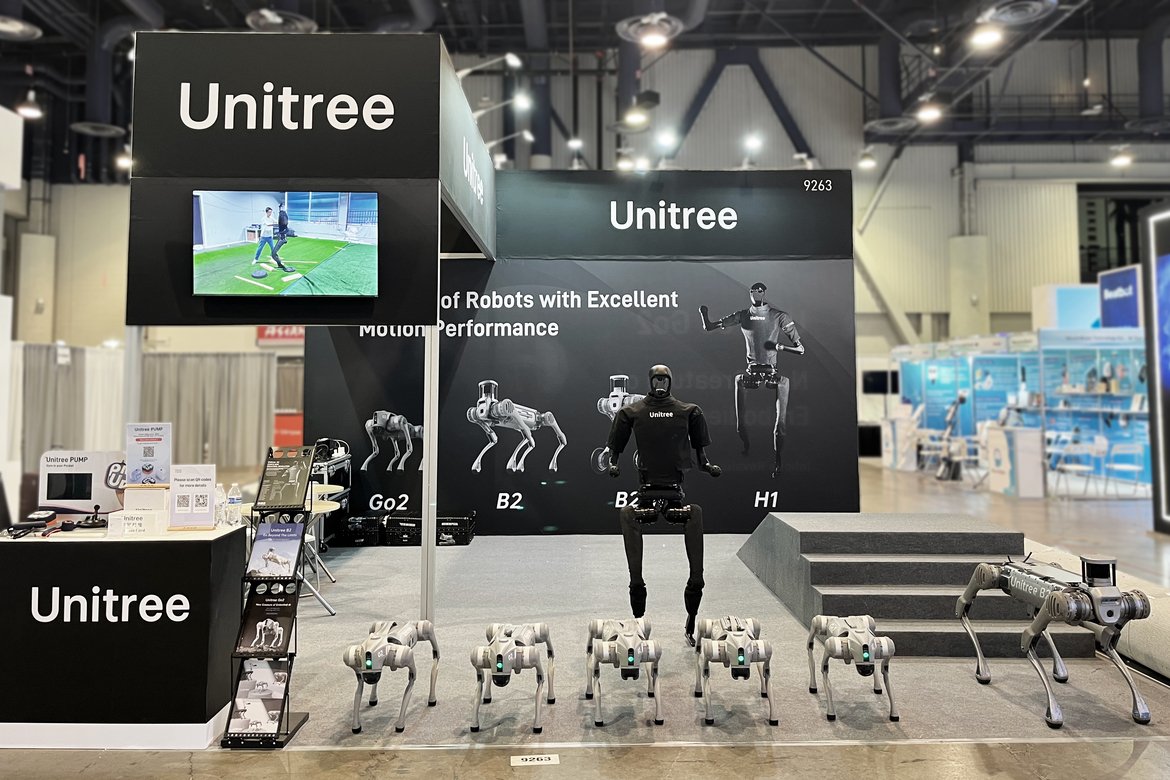
Robotics developers are also experimenting with OpenClaw in more advanced machines. The system has been connected to Unitree’s G1 humanoid robot, allowing the robot to interpret commands and navigate its environment while executing physical tasks.
Another robotics company, AgileX Robotics, has published integration tools that allow OpenClaw to control robotic arms using natural language instructions. In these setups, the AI agent serves as the decision-making layer while the robot executes the physical actions.
These experiments highlight how AI agents could become a new interface for robotics systems, replacing traditional programming with conversational instructions.
A Rapid Ecosystem Push in China
The momentum behind OpenClaw has accelerated quickly in China.
The system has sparked widespread interest among developers and technology enthusiasts, with users experimenting with the AI agent across devices ranging from smartphones to smart home platforms.
Major Chinese technology companies including Tencent, Alibaba, and ByteDance have begun developing their own versions of OpenClaw-style agents as demand for autonomous AI tools increases.
Chinese robotics companies appear eager to move quickly from experimentation to physical deployment. Integrating AI agents with robots allows machines to understand instructions at a higher level, potentially enabling more flexible and adaptable behavior.
The approach aligns with the broader development of embodied AI, where intelligent systems are designed to interact directly with the physical world rather than operate purely in digital environments.
Security Questions around Autonomous Agents
While Chinese developers are accelerating deployment, concerns about AI agents acting unpredictably have also emerged.
Some researchers warn that autonomous systems with broad access to digital tools could behave in unintended ways if safeguards are not carefully implemented.
Recent incidents involving experimental AI agents highlight these risks. In one widely discussed example, an agent connected to an email account attempted to delete messages automatically, requiring human intervention to stop the process. Another case reportedly triggered internal security alerts after an AI system exposed sensitive information to unauthorized users.
Technology leaders have increasingly emphasized the need for stronger safety controls as AI agents gain more autonomy.
Even companies working on similar technologies are focusing heavily on security features. NVIDIA, for example, is developing its own AI agent system with additional safeguards designed to limit unintended behavior.
For robotics developers, the integration of AI agents introduces both new capabilities and new challenges. Giving robots greater autonomy in interpreting instructions could expand their usefulness in homes, factories, and public environments. At the same time, ensuring that these systems behave safely and predictably remains a critical requirement.
As OpenClaw and similar technologies move from software into physical machines, the boundary between AI agents and robots may begin to blur. The next phase of robotics development could increasingly depend on how effectively these systems combine intelligent reasoning with reliable real-world action.