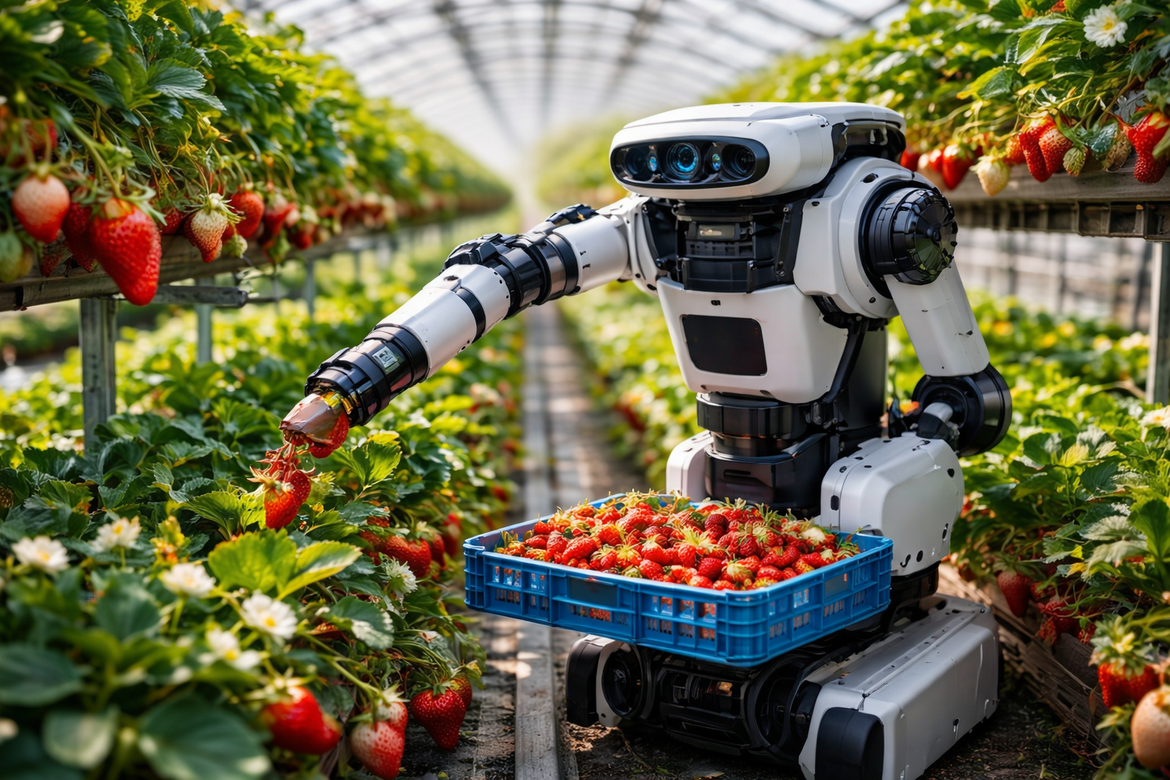
A strawberry-picking robot developed by researchers at the University of Essex has won a national robotics award in the United Kingdom, highlighting the growing role of artificial intelligence and automation in agriculture.
The technology, created through the Sustainable smArt Robotic Agriculture (SARA) project, received the Best Research Project (Industry Collaboration) award at the 2026 UK Research and Innovation (UKRI) AI & Robotics Research Awards.
The recognition reflects a broader push to apply robotics in agriculture as farms around the world confront labour shortages, rising costs, and pressure to improve sustainability.
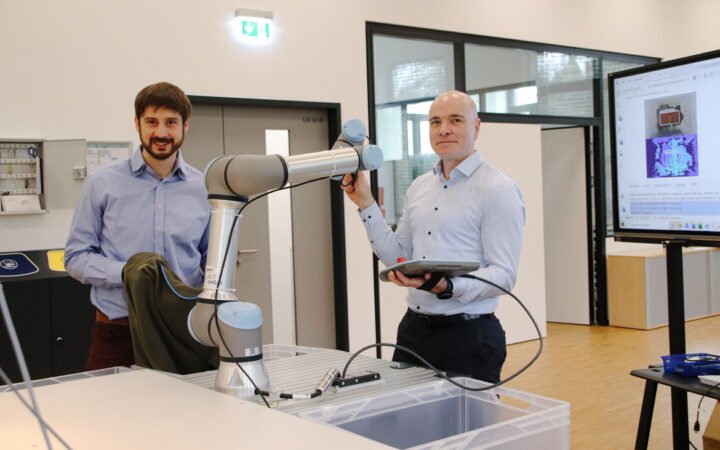
Developed by Professor Klaus McDonald-Maier and Dr Vishwanathan Mohan at the University of Essex, the project was built in collaboration with industry partners including Wilkin and Sons, JEPCO, and GyroPlant.
Robots for Labour-Intensive Farming
Harvesting delicate crops such as strawberries remains one of the most labour-intensive tasks in agriculture. Workers must carefully pick ripe fruit while avoiding damage to surrounding plants, often under time pressure during harvest seasons.
The Essex research team developed robotic systems capable of performing these tasks autonomously using AI-based perception and manipulation.
The robots combine computer vision with robotic arms to identify ripe fruit, navigate plant rows, and pick crops without damaging them. This capability is particularly valuable for soft fruits, where manual harvesting has historically been difficult to automate.
According to the project team, the technology is designed not only to replace repetitive labour but also to help farms maintain productivity as agricultural workforces shrink.
Automation in farming has become increasingly important in many regions where growers struggle to recruit seasonal workers for harvesting.
From Research Lab to Commercial Deployment
One notable aspect of the SARA project is its emphasis on collaboration with industry.
Rather than developing robotics solely in laboratory environments, researchers worked closely with growers to test systems directly in agricultural settings.
This approach helped ensure that the robots could operate effectively in real-world farming conditions, where lighting, weather, plant variability, and field layouts present challenges that are difficult to replicate in controlled environments.
The collaboration has already moved beyond academic research.
Researchers involved in the project have launched a spinout company, Versatile RobotX, to commercialize the technology and accelerate its deployment across agricultural operations.
The company aims to adapt robotic harvesting systems for multiple crop types and farming environments, extending the technology beyond strawberries.
Automation Meets Food Security
Agricultural robotics is increasingly viewed as a key technology for addressing global food production challenges.
Farmers face pressure to increase yields while reducing environmental impact and maintaining local food production systems. At the same time, climate variability and labour shortages continue to complicate traditional farming practices.
Robotic systems capable of performing repetitive agricultural tasks could help farms maintain productivity while reducing waste and improving efficiency.
The SARA project’s recognition at the UKRI awards reflects growing momentum behind these efforts.
For researchers and growers alike, the goal is not simply technological innovation but building systems that can operate reliably in working farms.
As agricultural automation continues to mature, robots like the strawberry-harvesting system developed at Essex may become a common feature in fields and greenhouses around the world.