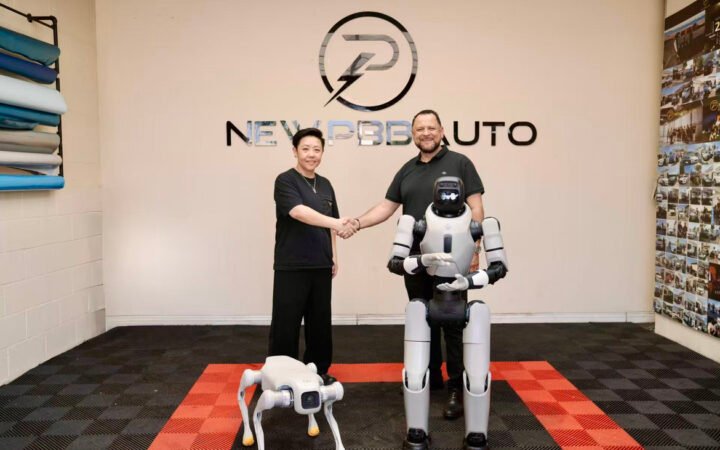
Google is expanding its push into robotics through a new partnership between its DeepMind division and Munich-based robotics company Agile Robots, signaling a broader strategy to bring artificial intelligence from digital environments into physical industrial systems.
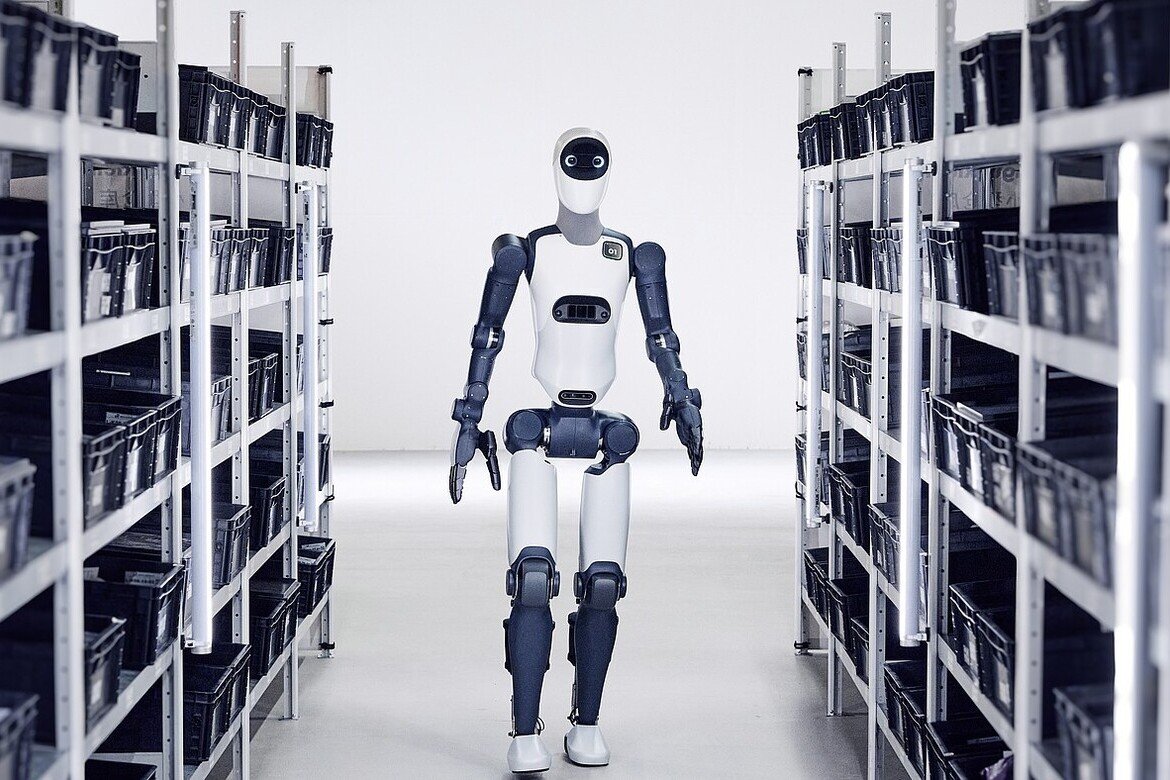
The collaboration will integrate Google’s Gemini Robotics foundation models with Agile Robots’ hardware platforms, including intelligent robotic arms and humanoid robots used in manufacturing environments. The goal is to improve robotic performance through large-scale deployment, real-world data collection and iterative model training.
The partnership reflects a growing consensus across the technology industry that robotics may become one of the most important applications of advanced AI models.
From Foundation Models to Physical Machines
DeepMind introduced Gemini Robotics and its extended-reasoning variant in 2025 as part of a broader effort to adapt generative AI models for physical control systems. Unlike traditional industrial automation software, these models are designed to translate high-level instructions into real-world robotic actions.
Integrating such models with physical hardware requires large amounts of real-world operational data, something software companies alone cannot easily generate.
Agile Robots offers a potential pathway to that data. The company has deployed more than 20,000 robotic systems globally, primarily focused on sensor-based industrial automation and advanced manipulation tasks.
Through the partnership, Gemini Robotics models will be tested and refined using these deployed systems. Engineers expect the combination of AI models and production environments to accelerate the development of robots capable of adapting to complex manufacturing scenarios.
According to Google DeepMind’s robotics leadership, the collaboration is intended to help build the next generation of AI systems capable of operating in the physical world.
Google’s Expanding Robotics Strategy
The partnership with Agile Robots is part of a wider series of robotics initiatives inside Google.
DeepMind has already announced collaborations with several robotics companies aimed at training AI models on real-world machines. Earlier this year the company revealed a research effort with Boston Dynamics to develop AI systems for the Atlas humanoid robot.
Google is also reorganizing its internal robotics efforts. Intrinsic, a robotics software company originally housed within Alphabet’s experimental “Other Bets” portfolio, has recently been moved closer to Google’s core operations. The company aims to build a standardized software platform for industrial robotics, sometimes described internally as an attempt to create the equivalent of Android for robots.
The increasing attention to robotics reflects a broader industry shift. While large language models initially transformed digital tasks such as search, coding and content generation, many researchers believe the next major frontier lies in enabling AI systems to act in the physical world.
Manufacturing as the First Large Market
For Google and its partners, manufacturing is likely to be the first large-scale proving ground for AI-powered robotics.
Industrial environments offer structured workflows, well-defined tasks and large amounts of operational data, making them ideal testing grounds for advanced autonomy systems.
Companies like Agile Robots have already built a significant presence in these environments, deploying robotic systems across factories and industrial facilities. Integrating AI models into these systems could allow robots to perform more flexible manipulation tasks, adapt to changing conditions and collaborate more effectively with human workers.
At the same time, the strategy positions Google to compete with other technology companies moving aggressively into robotics. Amazon continues to expand automation across its logistics network, while Tesla is investing heavily in humanoid robots designed for industrial and eventually consumer use.
Within the broader AI ecosystem, robotics is increasingly seen as the next stage of development for foundation models.
If successful, partnerships like the one between Google DeepMind and Agile Robots could help transform generative AI systems from tools that interpret language and images into platforms capable of controlling machines in the real world.