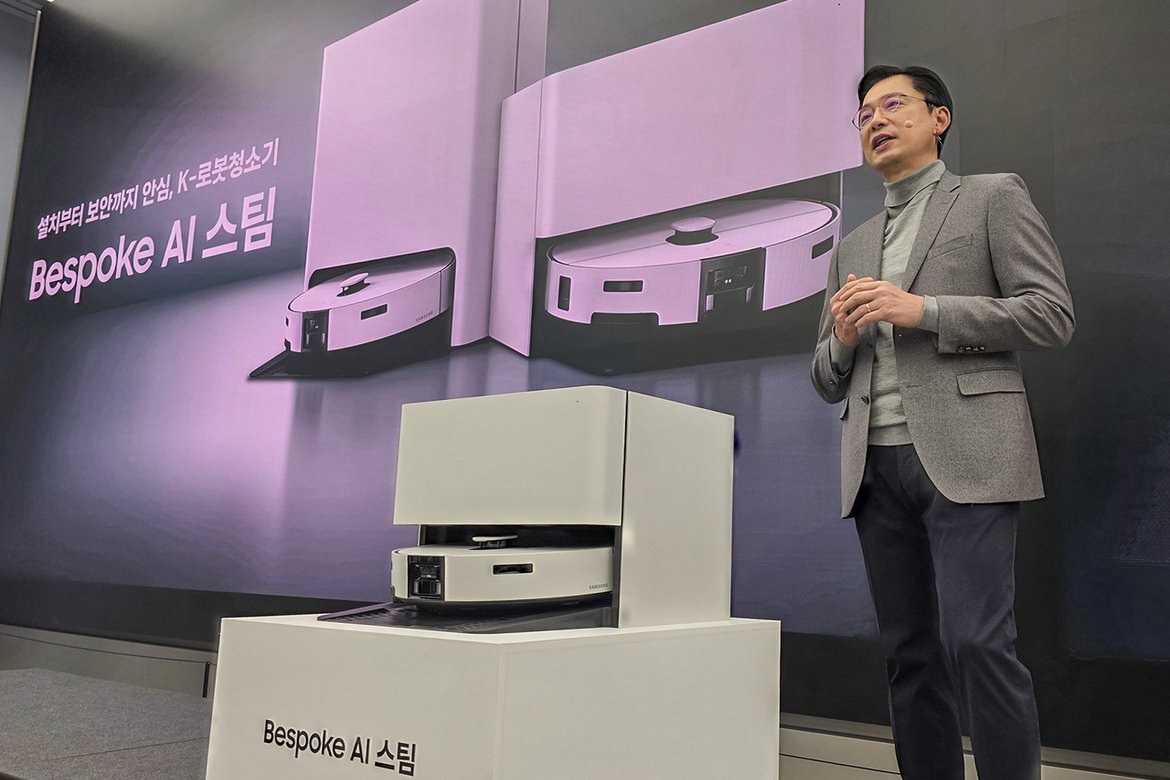

Samsung Electronics on Wednesday introduced a new AI-powered robot vacuum cleaner in South Korea, escalating competition in a domestic market that has increasingly been captured by Chinese manufacturers.
The product launch places Samsung in direct contention with Roborock, which industry data shows controls more than half of Korea’s robot vacuum segment. Chinese brands Ecovacs and Dreame follow with double-digit shares, leaving Korean incumbents such as Samsung and LG Electronics with a combined market position below 30 percent.
The imbalance underscores how quickly Chinese appliance makers have leveraged cost efficiency and rapid iteration to outpace traditional electronics leaders in smart home hardware. Samsung’s new Bespoke AI Steam model represents an attempt not only to introduce upgraded features, but to reframe competition around service infrastructure and platform integration.
Hardware Upgrades Meet AI Navigation
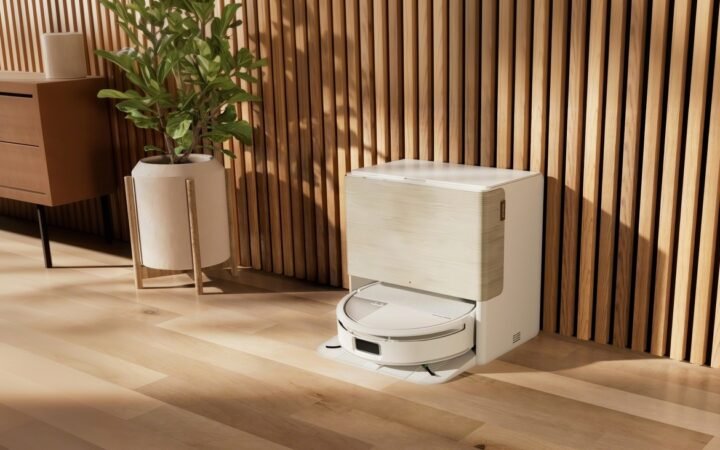
At a press briefing in Seoul, Samsung executives positioned the new vacuum as a step-change in performance. The device includes a 10-watt suction motor, roughly doubling the power of prior iterations, designed to improve fine dust and hair collection.
Beyond raw suction, Samsung emphasized edge and corner cleaning. A pop-out mop mechanism extends flush to walls for wet cleaning, while a deployable side brush reaches into tight corners. The unit can also cross thresholds up to 45 millimeters using an updated wheel system, a feature aimed at accommodating Korean apartment layouts with raised door frames and floor transitions.
The most notable changes are in perception. Equipped with RGB camera sensors and infrared LEDs, the vacuum uses upgraded AI-based object and spatial recognition to detect obstacles and even transparent liquids on the floor. That capability allows the device to either avoid spills or target them for cleaning, depending on user settings.
In effect, Samsung is aligning its robot vacuum more closely with broader trends in physical AI: combining visual perception, environmental mapping, and real-time decision-making to handle varied home conditions with less manual oversight.
Security and Service as Differentiators
Samsung’s strategy extends beyond cleaning performance. The company has embedded its Knox Matrix and Knox Vault security platforms into the device, highlighting data protection at a time when connected home appliances increasingly gather spatial and behavioral data.
Executives also stressed after-sales support as a competitive lever. Unlike many Chinese brands that compete primarily on price and hardware specifications, Samsung is leaning into installation services, regular maintenance, and nationwide customer support infrastructure.
The Bespoke AI Steam model includes a steam clean station that sterilizes mop pads at 100 degrees Celsius and a self-cleaning system for debris removal. An automatic water supply and drainage mechanism reduces manual intervention, reinforcing the product’s positioning as a high-end appliance rather than a standalone gadget.
Pricing reflects that premium approach. The device will retail between 1.41 million won and 2.04 million won depending on configuration. To broaden accessibility, Samsung is offering the product through its subscription-based AI club program, spreading payments over time instead of requiring a large upfront purchase.
A Broader Battle in Smart Home Robotics
Samsung’s renewed push highlights a structural shift in the robot vacuum market. Once considered a niche convenience device, robot vacuums have become one of the most commercially mature categories of home robotics. Market leadership has gravitated toward companies capable of rapid hardware iteration combined with increasingly sophisticated navigation software.
Chinese manufacturers have capitalized on that dynamic, using scale and cost advantages to capture more than 70 percent of the Korean market. Samsung’s response suggests that domestic players believe differentiation will depend on ecosystem integration, security assurances, and service reliability rather than pure hardware metrics.
“Our target is to become No. 1 in the domestic market,” Lim Sung-taek, head of Korea sales and marketing at Samsung Electronics, said at the launch event.
Whether Samsung can reverse market share trends will depend on how consumers weigh brand trust and long-term support against price competitiveness. But the launch signals that South Korea’s largest electronics company views home robotics not as a peripheral category, but as a strategic front in the broader AI-enabled appliance race.
Preorders begin Wednesday, with nationwide retail availability scheduled for early March.