
Munich-based robotics startup Sitegeist has raised €4 million in pre-seed funding to accelerate the deployment of AI-powered construction robots designed to automate concrete renovation. The investment reflects growing interest in applying physical AI to one of the least automated industries: infrastructure repair.
The funding round, led by venture firms including b2venture and OpenOcean, will support technology development, pilot deployments, and hiring as Sitegeist expands its robotic systems across active construction sites.
The investment highlights how robotics is beginning to address structural labor shortages and productivity bottlenecks in the global construction sector.
Automation Targets Infrastructure Repair Backlog
Aging infrastructure is emerging as one of the most urgent global challenges. Bridges, tunnels, and public buildings across Europe and North America require extensive renovation, with repair backlogs reaching hundreds of billions of euros.
Concrete removal and repair remain largely manual processes, requiring physically demanding labor and specialized skills. These tasks are difficult to scale, limiting the speed at which infrastructure can be restored.
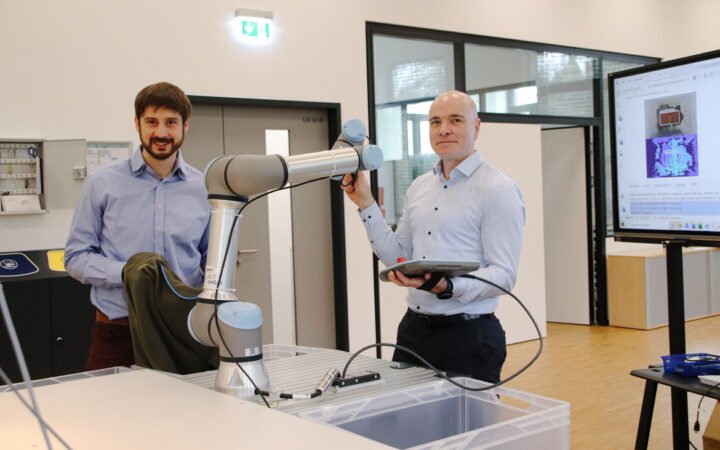
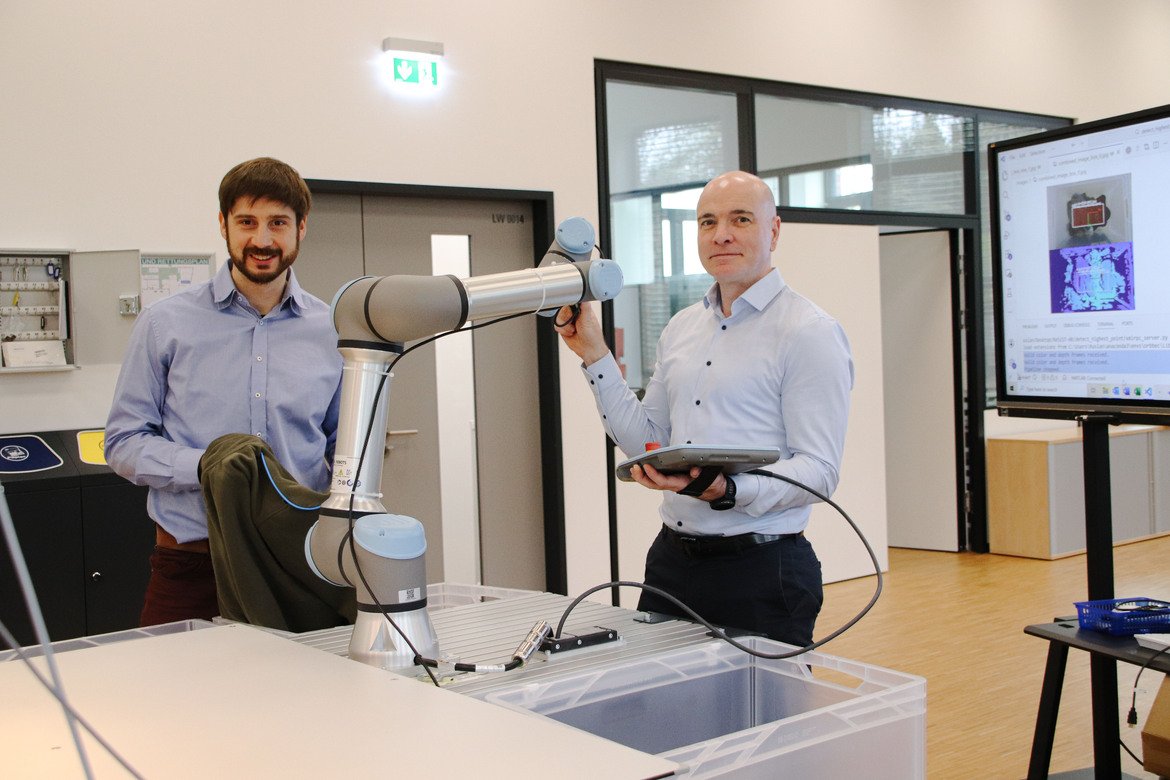
Sitegeist’s robots are designed specifically to automate concrete renovation tasks. Unlike traditional industrial robots, which operate in controlled environments, Sitegeist’s systems work directly on existing structures.
The robots use perception systems and AI-based decision tools to analyze surfaces, identify work areas, and perform renovation tasks without relying on pre-existing digital models.
This capability allows the robots to operate in unstructured environments, a key requirement for construction automation.
Bringing Physical AI to Complex Real-World Environments
Construction presents unique challenges for robotics. Unlike factories, where robots operate in predictable environments, construction sites are highly variable and constantly changing.
Sitegeist’s approach focuses on adaptive robotics systems capable of functioning in real-world conditions. The robots use sensors and AI models to interpret their environment and adjust their actions dynamically.
This allows deployment on active construction sites without extensive preparation or digital mapping.
The company’s modular robotic platform integrates into existing workflows, enabling construction firms to deploy automation incrementally rather than redesigning entire operations.
By automating physically demanding tasks, the robots can improve safety while increasing productivity.
Addressing Labor Shortages and Scaling Productivity
Labor shortages are a major constraint in construction. Skilled workers are increasingly difficult to recruit and retain, particularly for physically intensive renovation tasks.
Robotics offers a scalable solution by automating repetitive and hazardous work. This allows human workers to focus on higher-value activities such as planning, supervision, and specialized operations.
Investors view construction robotics as a major growth opportunity. Infrastructure repair is a large and persistent market, with demand expected to increase as infrastructure ages.
Sitegeist’s spin-out from the Technical University of Munich reflects the growing commercialization of robotics research. The company’s founding team combines expertise in robotics, artificial intelligence, and engineering.
Construction Robotics as the Next Frontier for Physical AI
The construction industry has historically lagged behind manufacturing in automation adoption. However, advances in AI perception, computing, and robotics hardware are enabling robots to operate in more complex environments.
Sitegeist’s funding reflects broader momentum in applying embodied AI to industries beyond factories and warehouses.
Construction automation could significantly improve productivity while addressing workforce shortages and safety challenges.
The ability to deploy robots directly on existing infrastructure without requiring digital models is a key technical advancement. This reduces deployment barriers and accelerates adoption.
As physical AI expands into construction, robotics may become a critical tool for maintaining and upgrading global infrastructure.
Sitegeist’s funding round highlights a growing recognition that robotics is not limited to manufacturing. It is becoming an essential technology for addressing some of the world’s most pressing infrastructure challenges.