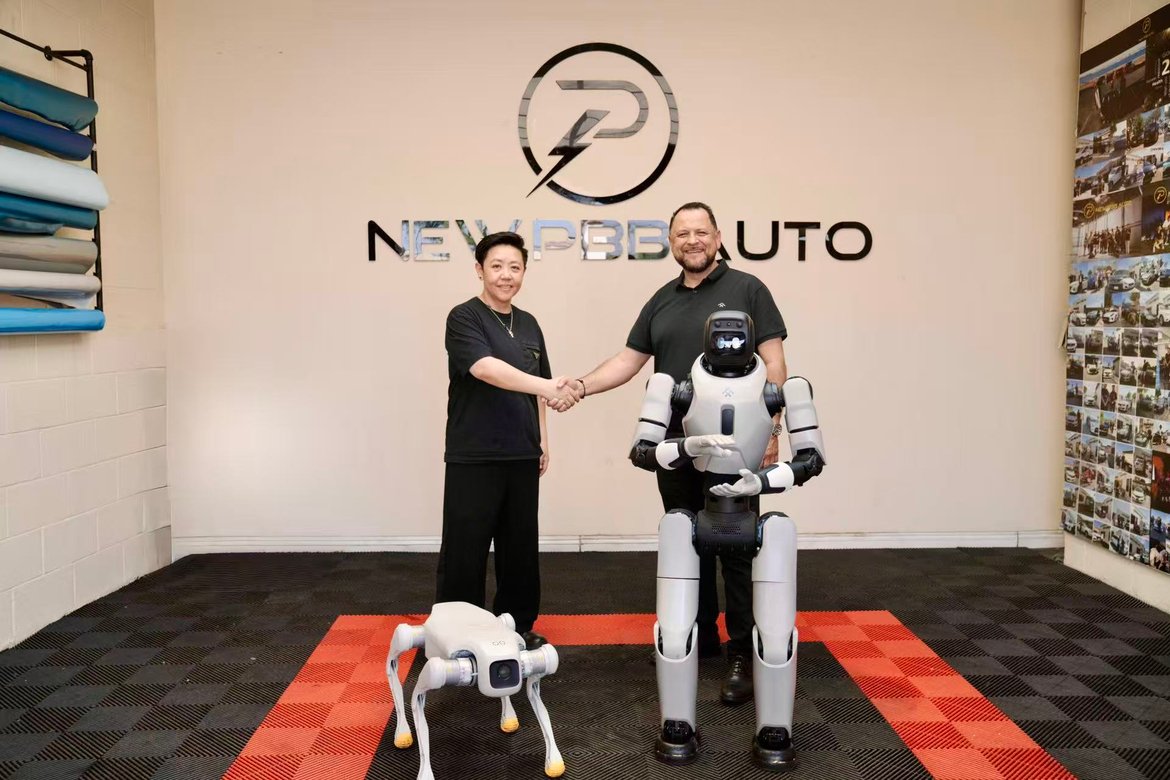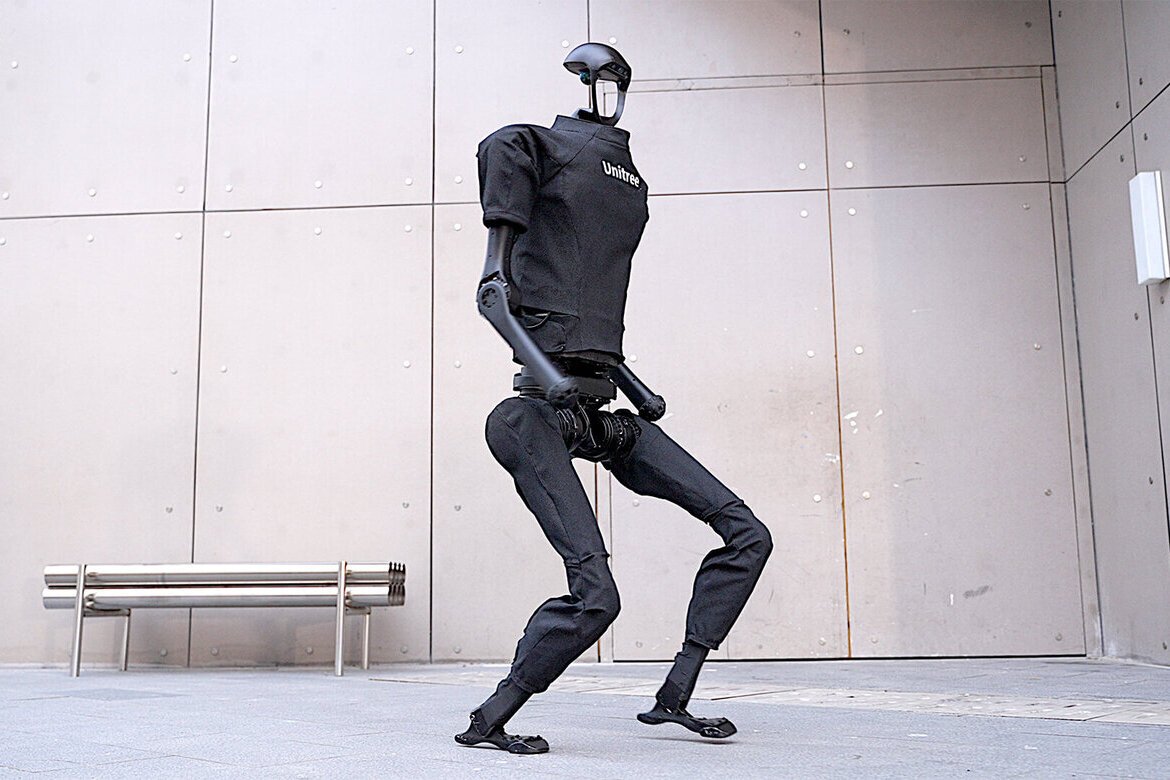
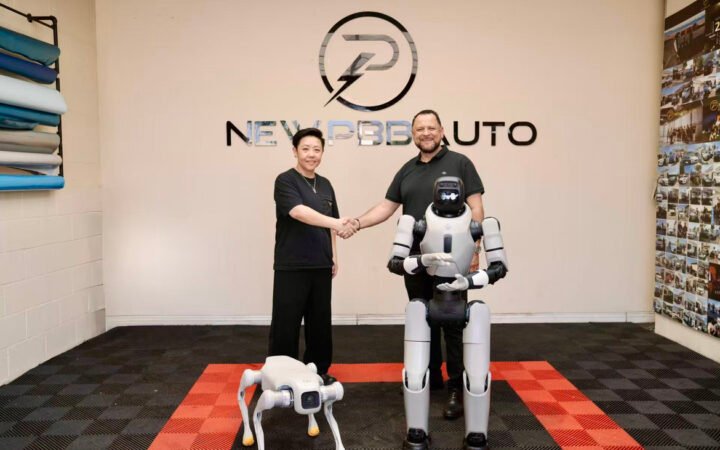
The planned initial public offering of Chinese robotics company Unitree Robotics is emerging as an early test of investor confidence in the humanoid robot industry. The company intends to raise about 4.2 billion yuan, roughly $610 million, in a Shanghai listing, positioning the move as one of the first large capital market bets on a sector that remains in its infancy.
Unitree is already the world’s second-largest shipper of humanoid robots, according to industry estimates. Yet the broader significance of the IPO lies less in the company’s current sales than in what it signals about the expanding market around physical AI, a category that includes humanoids, drones, service robots and autonomous vehicles.
Financial institutions increasingly see that market becoming one of the largest technology industries of the coming decades. Morgan Stanley estimates that the global physical AI economy could reach $25 trillion by the middle of the century, with roughly 6.5 billion robots operating worldwide. That figure would exceed the entire global population at the start of the 2000s.
The Supply Chain Behind the Robot Boom
While public attention often focuses on humanoid robot demonstrations, much of the economic value may lie deeper in the supply chain.
Research from major banks shows that nearly half of the manufacturing cost of a humanoid robot can come from actuators, the components that convert electrical energy into movement. These systems function as the mechanical muscles of robots and are expected to see massive demand if humanoids move into large-scale deployment.
Analysts estimate that by 2050 the industry could require tens of billions of motors and billions of vision sensors. Companies producing actuators, gearboxes, batteries and computing chips are therefore emerging as critical beneficiaries of the robotics boom.
Suppliers across Asia, Europe and the United States are positioning themselves accordingly. Chinese manufacturers such as Tuopu, Sanhua and Inovance are building robotics component capacity, while firms like Hyundai Mobis in South Korea and Schaeffler in Germany are expanding their role in advanced mechanical systems.
Another key dependency is rare earth materials. Humanoid robot production could require roughly 1.7 million tons of neodymium magnets by mid-century, potentially creating a market worth more than $160 billion.
A Market Still Searching for Its Breakthrough
Despite the growing investor interest, the humanoid robot sector remains small in absolute terms. Global sales of humanoid robots were estimated at just over two thousand units in 2024.
That figure could rise dramatically in the coming years. Some forecasts suggest annual sales may reach 50,000 units by 2026 as manufacturing costs decline and industrial deployments expand.
Even with that growth, the industry has yet to experience the type of transformative moment that generative AI saw with ChatGPT. Analysts note that robotics still lacks a universal software model capable of reliably performing diverse real-world tasks.
Until such a breakthrough emerges, the sector is likely to advance through incremental improvements in perception, motion control and autonomy rather than a single technological leap.
Geopolitics and the Physical AI Race
The global race to develop humanoid robots is increasingly shaped by geopolitics as much as technology.
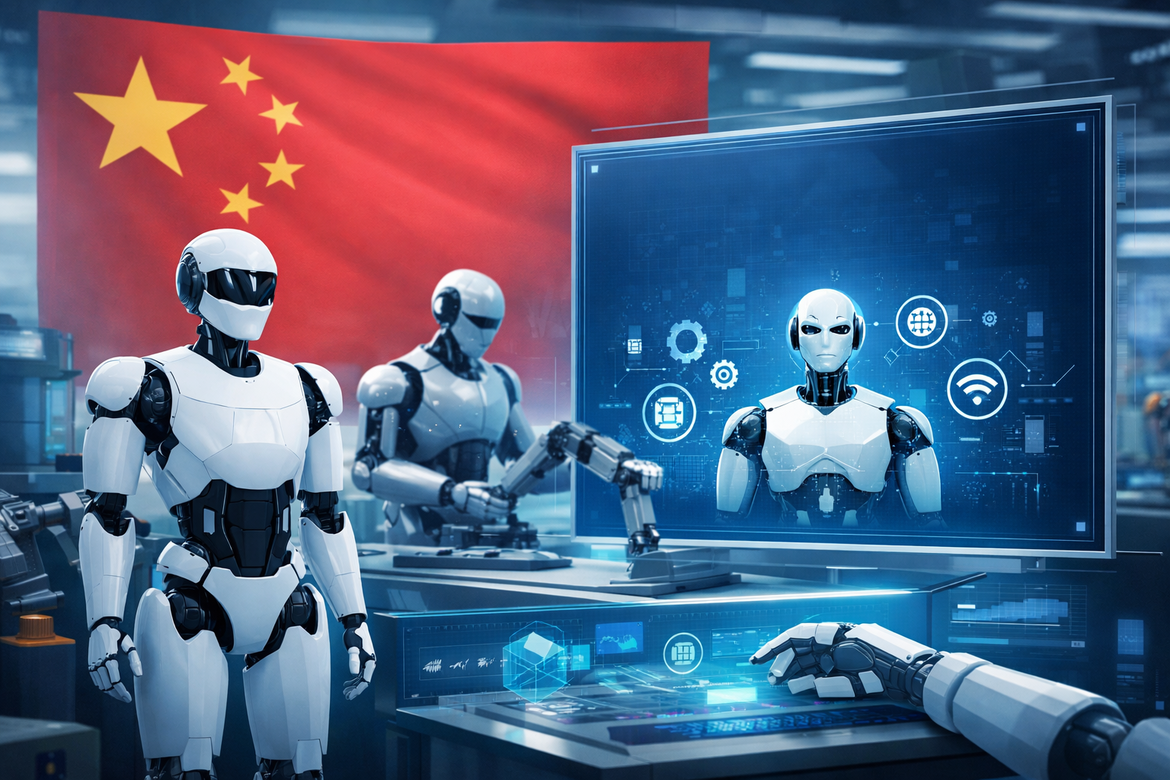
China has made robotics and physical AI a national priority, supporting domestic manufacturers and scaling production capacity. Chinese companies already account for a significant share of global humanoid robot sales.
Western governments are beginning to respond. Policymakers in the United States are exploring new initiatives to support domestic robotics development, including potential federal coordination efforts and closer engagement with leading chip suppliers.
At the same time, companies are adjusting supply chains to navigate tariffs and export controls. Some Chinese manufacturers are exploring production outside mainland China to maintain access to international markets, while Western firms are localizing manufacturing to meet policy requirements.
Large technology and industrial investors are also entering the field. Jeff Bezos has reportedly been assembling a massive investment initiative focused on modernizing traditional manufacturing with artificial intelligence and robotics technologies.
Meanwhile, established technology companies are betting on humanoids as a future computing platform. Tesla is investing heavily in its Optimus robot, with Elon Musk suggesting that China may ultimately become the company’s strongest competitor in scaling humanoid manufacturing.
From Demonstrations to Economic Infrastructure
For now, humanoid robots remain a small segment of the robotics industry, often showcased in carefully staged demonstrations or pilot factory deployments.
Yet the broader ecosystem around them is already expanding. Analysts predict that millions of humanoid robots could eventually work in industrial environments, performing repetitive or physically demanding tasks that currently rely on human labor.
If those projections prove accurate, the shift could reshape manufacturing supply chains, labor markets and geopolitical competition in advanced technologies.
Unitree’s IPO is therefore less about a single robotics company than about a larger industrial transition. Investors are beginning to treat humanoid robotics not as an experimental technology, but as the early foundation of a global physical AI economy.