
Chinese electric vehicle maker Xpeng has begun construction of a dedicated humanoid robot manufacturing facility in Guangzhou, positioning itself to achieve mass production of advanced robotic systems by 2026. The new site, located in the Guangtang Sci-Tech Innovation City Embodied Intelligence Industrial Park, represents one of the first full-chain humanoid robot production bases designed for industrial-scale deployment.
The facility will span approximately 110,000 square meters and include specialized infrastructure to support robotics manufacturing, including reinforced load-bearing structures, enhanced power supply, and production lines tailored to humanoid systems. Xpeng signed a strategic agreement with local government authorities to support the project, which has been designated as a priority development initiative.
The company’s expansion into robotics reflects a growing convergence between the automotive and robotics industries, as advances in artificial intelligence, sensors, and manufacturing techniques enable companies to apply vehicle technology to humanoid robots.
Leveraging Automotive Expertise to Scale Robotics Manufacturing
Xpeng’s robotics strategy builds on its experience in developing intelligent electric vehicles, where the company has already established capabilities in AI chips, software platforms, and large-scale manufacturing. These technologies are directly transferable to humanoid robots, which require similar systems for perception, motion control, and autonomous operation.
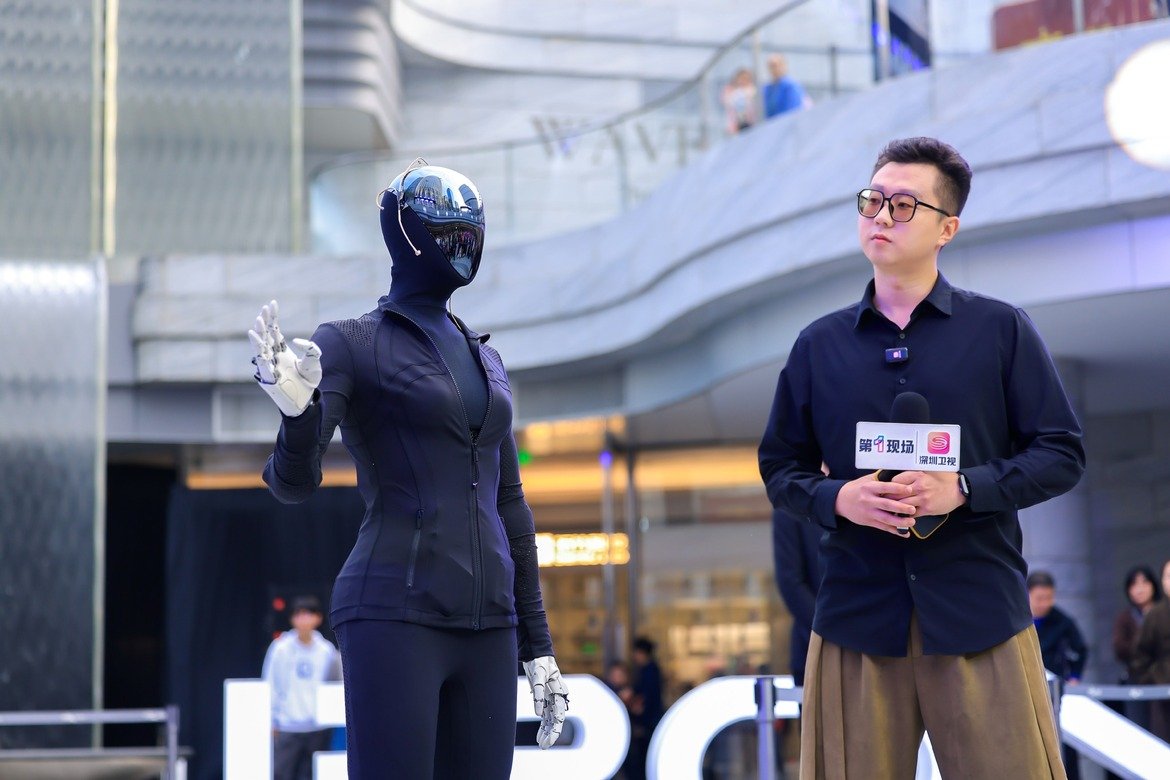
The company’s latest humanoid robot, known as IRON, integrates multiple AI chips delivering over 2,000 trillion operations per second of computing power. The system combines vision, language, and action models to enable robots to understand their environment, interact with humans, and perform physical tasks.
This architecture reflects a broader industry shift toward embodied AI systems powered by foundation models, allowing robots to interpret instructions and adapt to complex environments.
By building a vertically integrated manufacturing base, Xpeng aims to accelerate production and reduce costs, addressing one of the main barriers to large-scale robotics deployment.
Manufacturing Scale Becomes the Next Competitive Frontier
The humanoid robotics industry faces two major challenges: developing capable AI systems and scaling manufacturing to produce robots at industrial volumes. While significant progress has been made in robot intelligence, large-scale production remains limited.
Xpeng’s manufacturing facility is designed to address this bottleneck by integrating the entire production chain, from component manufacturing to final assembly. This approach mirrors strategies used in electric vehicle production, where vertical integration has enabled companies to scale rapidly.
Chairman He Xiaopeng has stated that achieving mass production is essential for making humanoid robots commercially viable. The company aims to deliver advanced robots at scale by the end of 2026, potentially making it one of the first companies to reach industrial-level production.
Scaling production could significantly reduce costs and accelerate adoption across industries, including manufacturing, logistics, and services.
Automakers Expand into Embodied AI and Robotics
Xpeng’s investment in humanoid robotics reflects a broader trend among automotive companies expanding into robotics and embodied AI. Automakers already possess many of the core technologies required for humanoid robots, including electric drivetrains, sensors, AI computing systems, and manufacturing expertise.
These capabilities allow automotive companies to leverage existing infrastructure and supply chains to accelerate robotics development.
Humanoid robots are increasingly viewed as an extension of autonomous vehicle technology, with similar AI systems enabling perception, navigation, and decision-making in physical environments.
By applying its automotive manufacturing expertise to robotics, Xpeng is positioning itself to compete in what could become a major new industrial sector. If successful, its Guangzhou facility could help establish scalable humanoid robot production, accelerating the transition of embodied AI from experimental systems to widely deployed industrial machines.