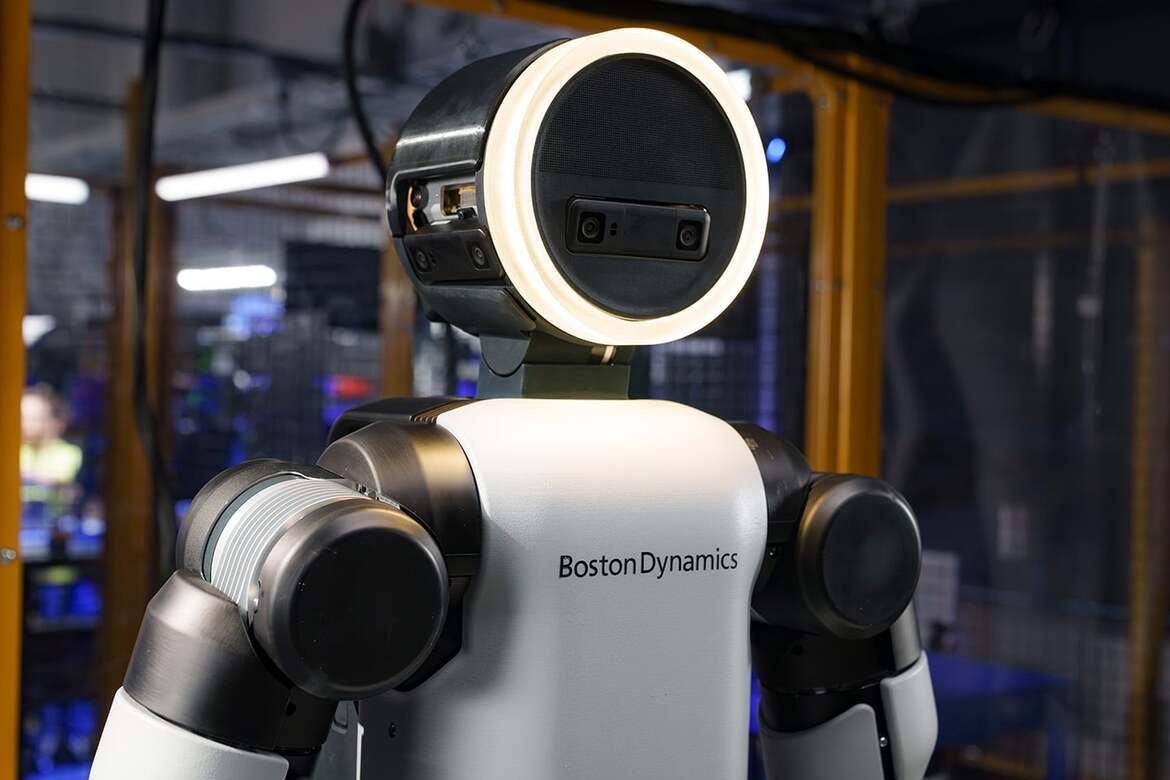
Hyundai Motor Group is emerging as a serious contender in the global race to commercialize humanoid robots, positioning its Atlas robot as a direct challenger to Tesla’s Optimus. The competition between the two automakers reflects a broader shift in the robotics industry, where companies with expertise in electric vehicles, artificial intelligence, and large-scale manufacturing are moving aggressively into humanoid systems.
Atlas gained widespread attention following demonstrations showcasing human-like agility, including complex movements such as jumping and rapid recovery from falls. Analysts say the robot’s technical capabilities and Hyundai’s industrial scale could make it one of the first humanoids deployed widely in manufacturing.
The rivalry highlights how robotics is becoming the next major frontier for automakers seeking growth beyond traditional vehicles.
Automakers Turn to Humanoid Robotics
Hyundai’s push into robotics accelerated after its acquisition of Boston Dynamics in 2021. The company has since invested heavily in robotics research, combining Boston Dynamics’ expertise in advanced mobility with Hyundai’s manufacturing and supply chain capabilities.
Atlas represents the centerpiece of that strategy. The robot features fully rotational joints, tactile sensing in its hands, and the ability to lift payloads of up to 50 kilograms. Hyundai plans to begin deploying Atlas robots in industrial settings around 2028, initially focusing on repetitive tasks such as preparing vehicle components for assembly.
Over time, the company expects the robots to take on more complex manufacturing roles, including direct assembly operations by 2030.
Humanoid robots offer a particular advantage in factories because they can operate in environments designed for humans, using existing tools and workflows without requiring major infrastructure changes.
Technical Differences Between Atlas and Optimus
Tesla’s Optimus robot has drawn global attention due to Elon Musk’s vision of deploying humanoid robots at massive scale. Tesla aims to begin selling Optimus commercially in 2026 and ultimately produce up to one million units annually.
Hyundai’s Atlas, however, is gaining recognition for its technical specifications. Analysts note that Atlas can carry heavier loads than many competing humanoid robots, including Optimus, potentially making it better suited for industrial environments such as automotive assembly plants.
The robot is designed to operate across a wide temperature range and perform demanding physical tasks, capabilities that could enable deployment in diverse industrial settings.
At the same time, the two companies take different approaches to robotics development. Tesla relies heavily on vertically integrated technology, including its own AI software and hardware platforms. Hyundai, by contrast, collaborates with external partners such as Nvidia for computing and Google DeepMind for AI research.
These different strategies could shape how each company scales robotics production and manages development costs.
Humanoid Robotics Becomes a Multi-Trillion-Dollar Market
The rivalry between Hyundai and Tesla reflects the growing economic significance of humanoid robotics. Analysts estimate the market could eventually reach trillions of dollars as robots expand from factory environments into logistics, services, and potentially even household assistance.
Automakers are particularly well positioned to enter the field because humanoid robots share many core technologies with electric vehicles, including batteries, electric motors, sensors, and AI computing systems.
Hyundai has announced major investments to support its robotics ambitions, including plans to build a dedicated robot manufacturing facility alongside an AI data center. Investors have responded enthusiastically, pushing the company’s market value higher following recent robotics demonstrations.
Despite the momentum, challenges remain. Humanoid robots must prove reliable and cost-effective before they can achieve widespread adoption. Manufacturing at scale and integrating robots safely into workplaces are complex engineering and operational tasks.
Still, the growing competition between Hyundai and Tesla suggests that the robotics industry is entering a new phase. As companies with large manufacturing capabilities enter the market, humanoid robots may move more quickly from research laboratories to real-world deployment.