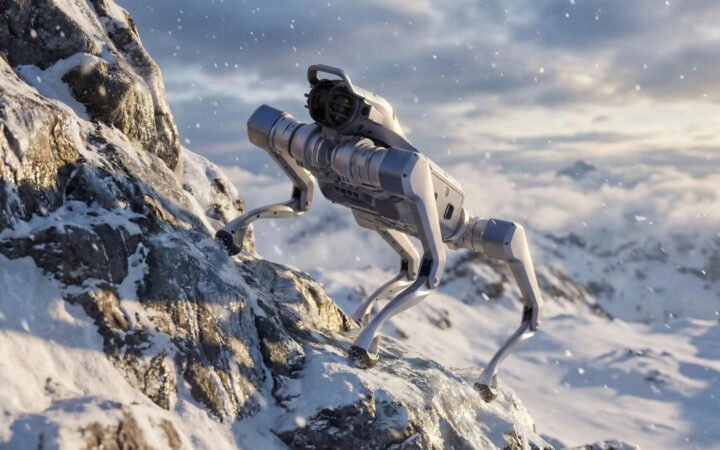
Hyundai Motor Group’s deployment of unmanned firefighting robots with South Korea’s National Fire Agency marks a turning point in how robotics is moving from industrial automation into core public safety infrastructure. While robots have long been associated with manufacturing efficiency, their role is expanding into frontline emergency response, where reliability and survivability can determine life-or-death outcomes.
The initiative reflects a broader shift in robotics deployment priorities. Increasingly, companies and governments are adopting robots not only to improve productivity, but to operate in hazardous environments where human risk is highest. The firefighting robots now entering service in South Korea illustrate how physical AI is evolving into a safety-critical technology, with implications far beyond emergency services.
Robots Designed for Conditions Too Dangerous for Humans
The firefighting robots are based on Hyundai Rotem’s HR-Sherpa unmanned vehicle platform, an electrified robotic system engineered for extreme operational conditions. Equipped with a front-mounted water cannon, thermal imaging cameras, and remote-control capability, the robots can suppress fires, assess structural hazards, and locate victims without exposing firefighters to immediate danger.
One of the most important technical features is a self-spraying thermal protection system. This mechanism continuously cools the robot’s exterior, allowing it to operate in environments with temperatures reaching up to 800°C. Such conditions are typically inaccessible to human responders and can quickly disable conventional vehicles or equipment.
The robots are also designed for mobility in unstable environments. With independent in-wheel motors and heat-resistant tires, they can traverse debris, collapsed structures, and uneven terrain commonly found at fire scenes. Infrared vision systems provide real-time situational awareness through smoke and flames, enabling remote operators to identify hazards and coordinate response strategies.
Two units have already been deployed in active rescue operations with specialized firefighting teams, with additional robots scheduled for deployment across regional emergency units. Their primary role is to perform initial suppression and reconnaissance tasks, helping reduce risks before human crews enter dangerous environments.
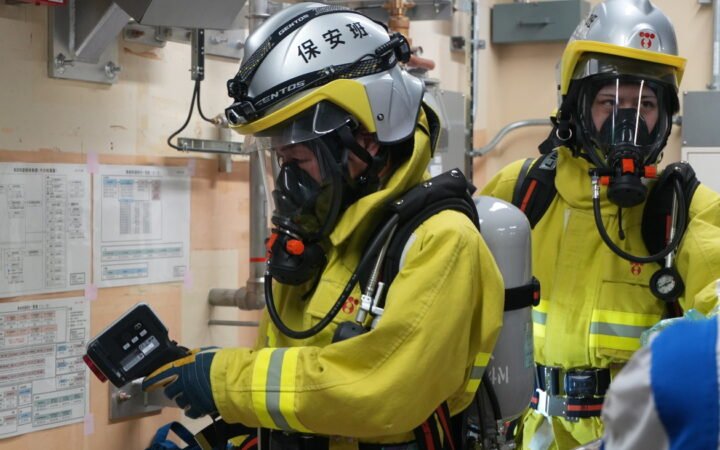
The deployment addresses a persistent safety challenge. Over the past decade, more than 1,800 firefighters in South Korea have been injured or killed in the line of duty, highlighting the need for technologies that reduce direct exposure to high-risk situations.
A Strategic Shift Toward Robotics as Critical Infrastructure
Hyundai’s firefighting robots illustrate how robotics is increasingly being treated as essential infrastructure rather than experimental technology. Historically, robotics investment focused on industrial productivity gains. Today, robots are being designed for resilience, autonomy, and reliability in unpredictable real-world environments.
The HR-Sherpa platform is part of Hyundai’s broader effort to develop modular robotic mobility systems capable of supporting multiple applications. In addition to firefighting, similar robotic platforms could be used for disaster response, hazardous material handling, and search-and-rescue operations.
This shift reflects advances across several core technologies, including sensor fusion, electrified mobility, and autonomous navigation. Improvements in perception systems allow robots to operate with greater awareness, while robust mobility platforms enable operation in environments where human access is restricted.
Equally important is the role of remote operation and autonomy. By allowing operators to control robots from safe distances while receiving real-time environmental data, robotics expands the operational reach of emergency responders without increasing human risk.
Hyundai Executive Chair Euisun Chung emphasized that the robots were developed specifically to protect human responders, describing them as partners capable of entering dangerous scenes ahead of firefighters.
What This Signals for the Future of Physical AI
The deployment signals a broader transition underway in the robotics industry. Physical AI systems are no longer confined to controlled factory settings. Instead, they are increasingly operating in dynamic, unpredictable environments where safety and adaptability are critical.
This transition has implications across multiple sectors. Emergency response, defense, infrastructure inspection, and industrial safety all represent areas where robotics can provide capabilities beyond human limitations. Robots can operate continuously, withstand hazardous conditions, and provide data-driven situational awareness in real time.
The move also reflects a maturation of robotics technology itself. Early robotics systems were limited by hardware reliability, battery capacity, and computational constraints. Recent advances in electrification, AI-based perception, and mobility systems have enabled robots to perform tasks that were previously impractical or unsafe.
For the robotics industry, deployments like Hyundai’s firefighting robots represent more than isolated experiments. They mark the emergence of robotics as part of the foundational systems that support modern society.
Robotics is no longer just reshaping factories. It is beginning to reshape how societies respond to risk, protect workers, and manage emergencies – a shift that underscores how physical AI is becoming infrastructure in its own right.