The race to bring artificial intelligence into the physical world is accelerating, and NVIDIA is positioning itself at the center of the emerging robotics stack.
At its recent announcements surrounding the GTC conference, the company unveiled a broader physical AI platform combining simulation software, world models, and robotics foundation models designed to support the development and deployment of intelligent machines. The initiative is backed by partnerships with major robotics companies including ABB Robotics, FANUC, KUKA, Agility Robotics, Figure, Universal Robots, and Yaskawa.
The effort reflects a wider shift across the robotics industry. As robots become more autonomous and adaptable, companies are moving beyond traditional automation toward systems that can perceive environments, reason about tasks, and act with greater flexibility.
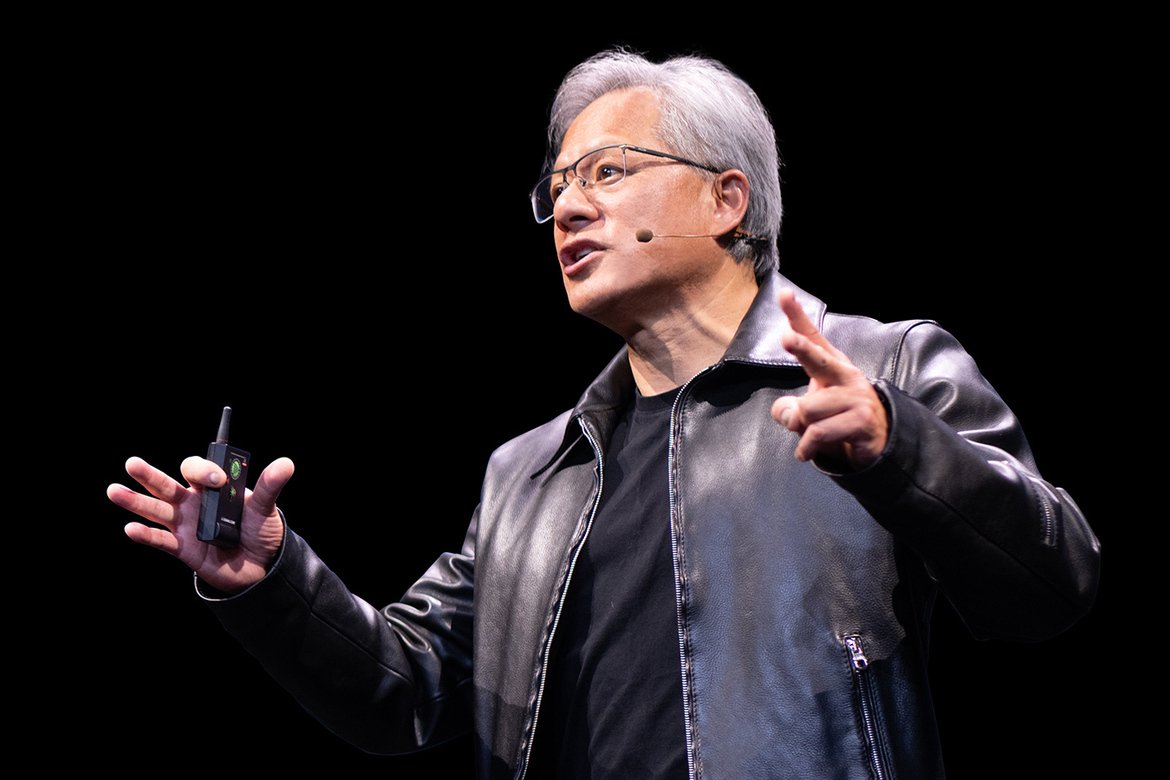
NVIDIA founder and CEO Jensen Huang framed the shift as a structural change in industrial technology. “Physical AI has arrived,” Huang said, arguing that many industrial companies will increasingly operate as robotics companies as intelligent machines become embedded in manufacturing, logistics, infrastructure, and transportation systems.
Building the Infrastructure for Robot Intelligence
The company’s robotics strategy centers on providing the underlying computational and software infrastructure required to train and operate intelligent robots at scale.
New components include updated NVIDIA Isaac simulation frameworks, the Cosmos family of world models, and Isaac GR00T robot foundation models designed to help robots learn generalized skills across different environments. Together, these tools allow developers to generate synthetic environments, train policies in simulation, and transfer those behaviors to real machines.
Simulation plays a central role. Industrial robotics companies including ABB, FANUC, Yaskawa, and KUKA are integrating NVIDIA’s Omniverse and Isaac technologies to create digital twins of production lines, allowing engineers to design and test robotic systems virtually before deploying them on factory floors.
The companies are also incorporating NVIDIA Jetson edge computing modules into their controllers to enable real-time AI inference directly on robots. With millions of industrial robots already operating globally, these integrations aim to gradually layer advanced intelligence onto existing automation infrastructure.
The approach reflects a broader industry consensus that robotics development will increasingly rely on large-scale simulation, synthetic data generation, and foundation models rather than traditional rule-based programming.
A Push Toward General Purpose Robot Brains
Another key focus of the initiative is the development of generalized robotic intelligence.
Companies such as Skild AI and FieldAI are using NVIDIA’s Cosmos world models and Isaac simulation environments to train AI systems that can operate across different robotic embodiments. Instead of building task-specific software for every application, developers are attempting to create “robot brains” capable of adapting to new environments and tasks with limited retraining.
One of the most visible deployment efforts involves Skild AI working with ABB Robotics and Universal Robots to integrate generalized AI systems into widely deployed industrial and collaborative robots. The goal is to expand automation into more dynamic tasks that traditionally required human adaptability.
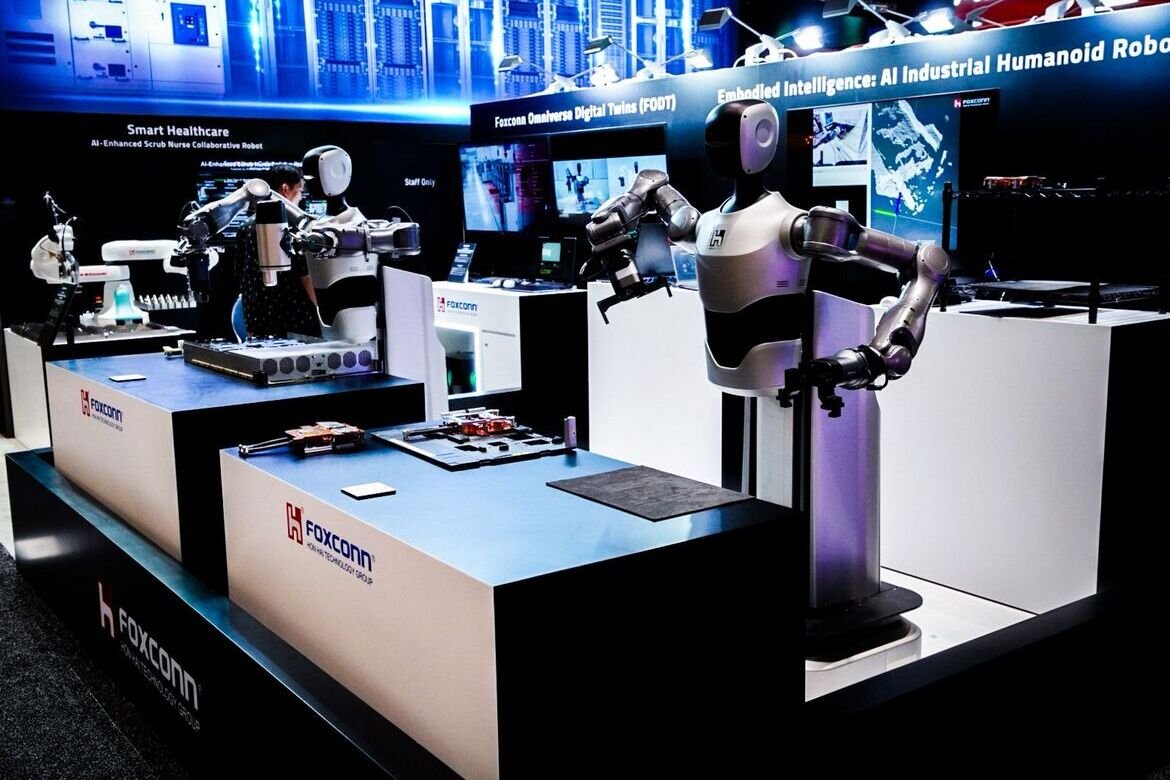
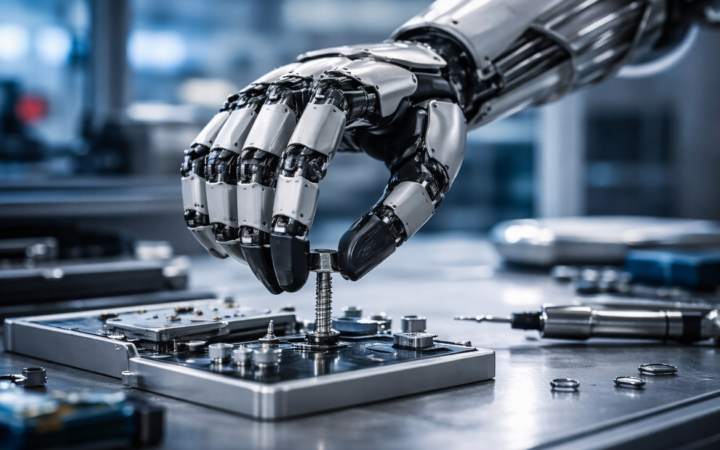
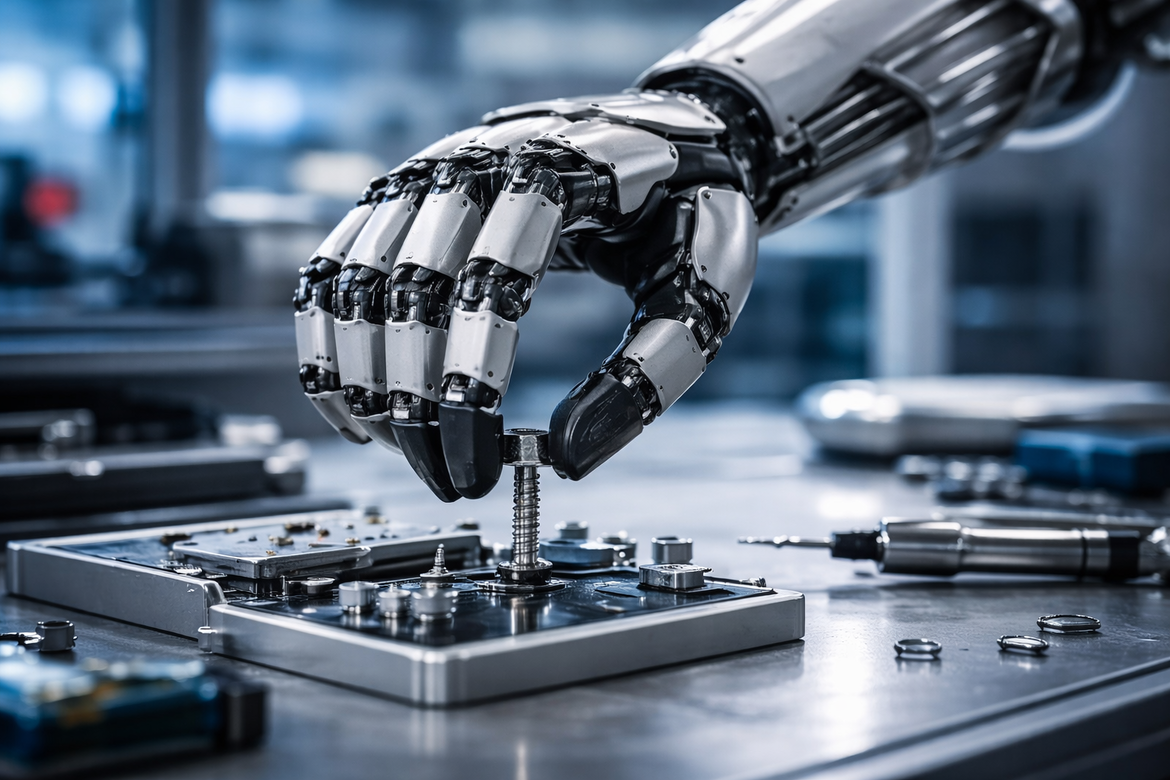
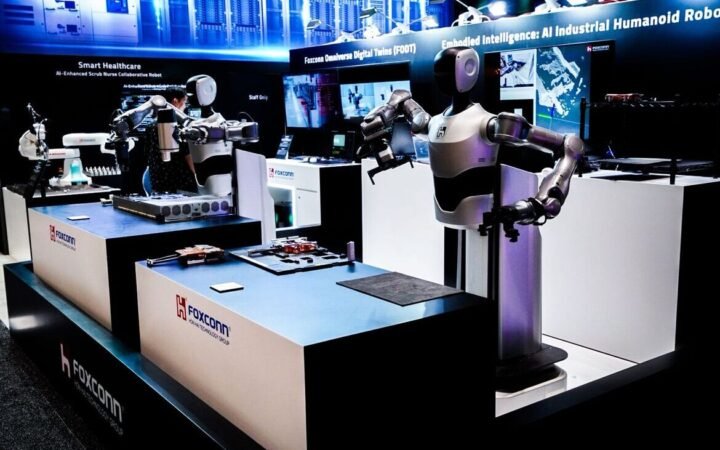
Skild AI is also collaborating with Foxconn on assembly systems used in NVIDIA’s Blackwell chip production lines. These systems rely on AI-driven dual-arm manipulators designed to perform highly precise electronics assembly operations.
The broader strategy aligns with NVIDIA’s belief that the next generation of robots will combine the reliability of industrial automation with the adaptability of modern AI systems.
Humanoid Robots and Surgical Systems Join the Platform
Beyond industrial automation, NVIDIA’s ecosystem now extends into humanoid robotics and healthcare.
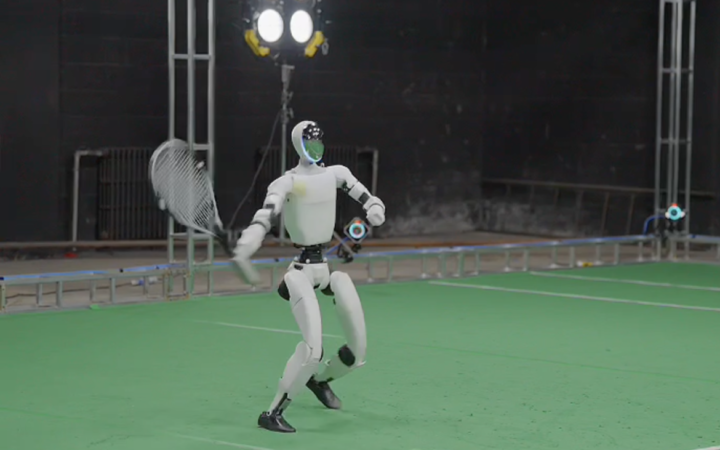
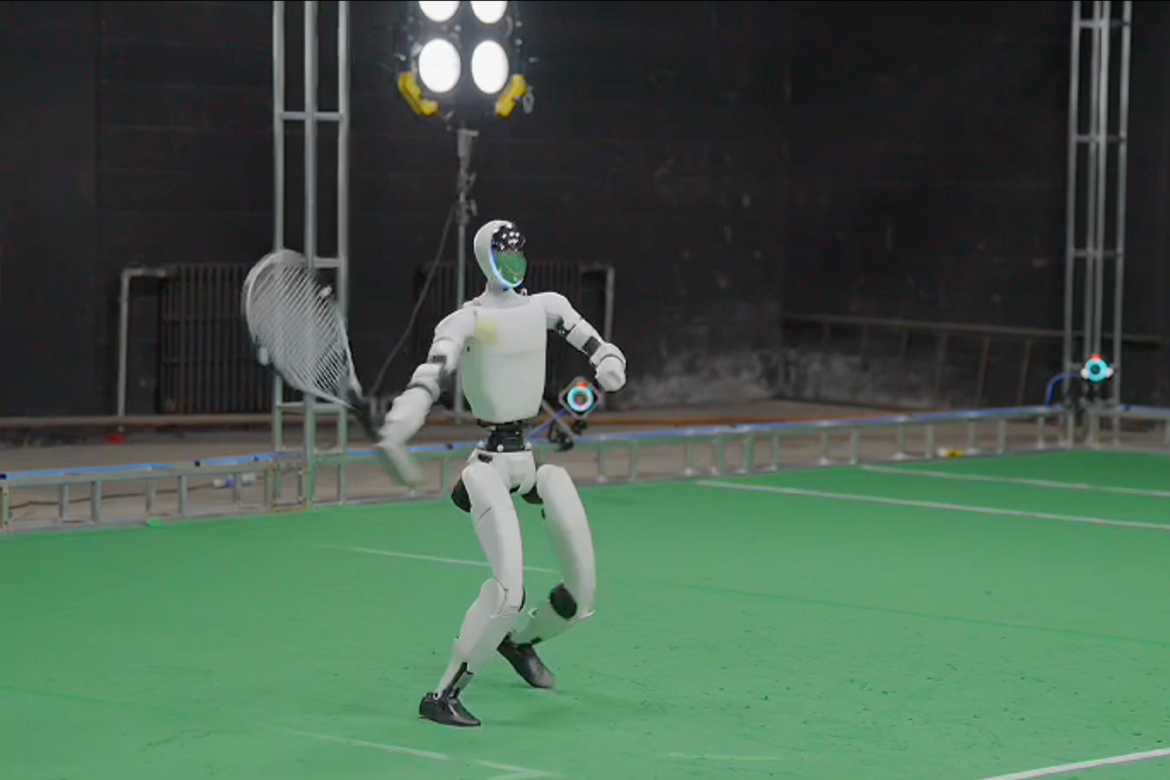
Developers including Agility Robotics, Figure, NEURA Robotics, and AGIBOT are using the company’s simulation tools and robotics models to accelerate development of humanoid robots capable of operating in human environments. Building such machines requires integrating perception, locomotion, dexterous manipulation, and decision-making within tightly constrained safety requirements.
Healthcare robotics is another area of expansion. Companies including CMR Surgical, Johnson & Johnson MedTech, and Medtronic are using NVIDIA simulation and computing platforms to train and validate AI-assisted surgical systems before clinical deployment.
These applications require particularly strict validation processes, making simulation and digital twin technology especially valuable.
The expansion of NVIDIA’s robotics ecosystem comes as demand for AI computing continues to surge. Huang recently projected that AI chip sales could eventually reach $1 trillion annually as industries transition toward what he described as a new computing era driven by AI systems embedded across both digital and physical infrastructure.
For robotics, the implication is clear: as machines become more capable of perceiving and interacting with the real world, the boundary between AI software and industrial hardware is increasingly dissolving. Companies that control the infrastructure connecting those layers may shape how quickly intelligent machines move from research labs into everyday operations.