RoboForce Raises $52 Million to Deploy Physical AI Robots for Industrial Labor

RoboForce has raised $52 million in a round led by YZi Labs to expand deployment of its TITAN physical AI robots. The company is targeting labor shortages across sectors including solar energy, logistics, mining, and data center construction.

By Rachel Whitman | Edited by Kseniia Klichova Published:
RoboForce Raises $52 Million to Deploy Physical AI Robots for Industrial Labor
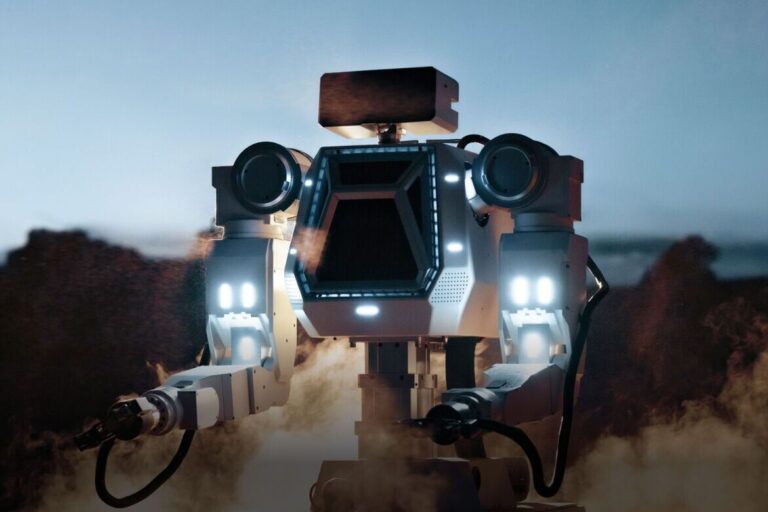
RoboForce’s TITAN industrial robot is designed for demanding field environments such as solar construction and logistics infrastructure, where companies face growing labor shortages. Photo: RoboForce

A new robotics startup focused on industrial labor automation has raised $52 million to accelerate deployment of physical AI systems designed for some of the most demanding jobs in modern infrastructure.

Silicon Valley-based RoboForce announced the funding round led by YZi Labs, with additional backing from investors including technology entrepreneurs and institutional partners. The company is developing a full-stack robotics platform aimed at replacing or augmenting human labor in sectors such as renewable energy construction, logistics, mining, and data center development.

The investment signals growing investor interest in what many industry leaders describe as the next phase of artificial intelligence: machines capable of operating in the physical world rather than purely digital environments.

RoboForce’s flagship system, known as TITAN, is designed to work in environments where heat, repetition, and safety risks make human labor increasingly difficult to sustain. The company says it has already received letters of intent representing demand for more than 11,000 robots as it transitions from pilot deployments to larger-scale production.

Automation for the Hardest Industrial Jobs

The company’s founding thesis emerged from firsthand observation of labor-intensive industrial work.

Co-founder and CEO Leo Ma, who previously worked on autonomous systems and mobility technologies, has described visiting numerous industrial sites where the same challenge repeatedly appeared: physically demanding jobs that were difficult to staff consistently.

Solar energy construction offers a clear example. Utility-scale solar installations require workers to secure millions of panels across large outdoor sites, often in extreme heat. In the United States alone, labor shortages contributed to delays affecting tens of gigawatts of solar capacity in recent years.

Similar gaps exist across logistics hubs, mining operations, and infrastructure construction. These jobs require endurance, precision, and safety compliance, but often struggle to attract or retain workers.

RoboForce is positioning its robots as a solution to this structural workforce gap. TITAN is designed for millimeter-level precision and sustained operation in harsh environments, allowing it to perform tasks such as assembly, installation, and materials handling in large industrial projects.

Building a Physical AI Data Flywheel

Beyond the hardware itself, the company’s strategy centers on what it calls a “physical AI data flywheel”.

Each deployed robot collects operational data from real-world environments. That data feeds back into RoboForce’s foundation model, allowing the system to improve its capabilities over time and adapt to new industrial tasks.

The concept mirrors trends in autonomous vehicles and large-scale AI systems, where real-world data becomes a key competitive advantage. The more robots operating in the field, the faster the learning cycle accelerates.

RoboForce is developing its platform in collaboration with NVIDIA’s robotics ecosystem. Its systems use NVIDIA Jetson Thor for edge computing while relying on Isaac simulation tools, Isaac Lab training frameworks, and Cosmos world models to train robotic behaviors before deploying them in physical environments.

The approach allows robots to practice tasks in simulation and refine them with real-world feedback, narrowing the gap between experimental demonstrations and production deployment.

The company’s visibility increased when NVIDIA CEO Jensen Huang highlighted RoboForce’s technology during a keynote presentation at GTC, framing AI-powered robotics as a key driver of a broader industrial transformation.

Investors Bet on Physical AI Infrastructure

For YZi Labs, which manages more than $10 billion in assets, the investment reflects a growing conviction that robotics will become a central layer of future infrastructure.

Ella Zhang, managing partner and head of the firm, said the investment aligns with the belief that the next wave of AI innovation will extend beyond digital applications into machines that interact directly with the physical world.

Zhang will join RoboForce’s board as part of the investment.

The company was founded in 2023 by engineers and researchers from organizations including Carnegie Mellon University, the University of Michigan, Amazon Robotics, Google, Waymo, Tesla Robotics, and ABB.

The funding will be used to expand the company’s robot foundation models, scale manufacturing of its robotic systems, and convert existing pilot programs into full production deployments.

For the broader robotics sector, the deal reflects a wider shift in how automation is framed. Rather than focusing solely on factory efficiency, a growing number of companies are targeting labor-intensive sectors where workforce shortages threaten economic growth.

If those systems prove reliable at scale, robots may increasingly become a structural component of infrastructure development itself – helping build the energy systems, data centers, and logistics networks that underpin the global economy.

ABB Robotics Launches OmniVance Autonomous Surface Finishing Cell for Small Manufacturers

ABB Robotics has launched the OmniVance Collaborative Surface Finishing Cell, a plug-and-play automated sanding and polishing system designed for small and medium-sized manufacturers without in-house robotics expertise, reducing programming time by up to 90%.

By Rachel Whitman | Edited by Kseniia Klichova Published:

ABB Robotics has launched the OmniVance Collaborative Surface Finishing Cell, its first fully automated system for sanding and polishing, targeting small and medium-sized manufacturers that need industrial-grade surface finishing capability without the investment or expertise required by conventional bespoke automation. The cell is built around ABB’s GoFa collaborative robot and is delivered as a complete, CE-certified plug-and-play unit requiring no additional engineering to begin production.

The launch addresses a structural gap in manufacturing automation: surface finishing is a required step across virtually every production sector, but the skilled labor needed to perform it consistently is increasingly scarce. Deloitte and The Manufacturing Institute project 1.9 million manufacturing jobs will go unfilled by 2033, with finishing tasks among those most exposed to labor shortfall.

Design and Operational Specifications

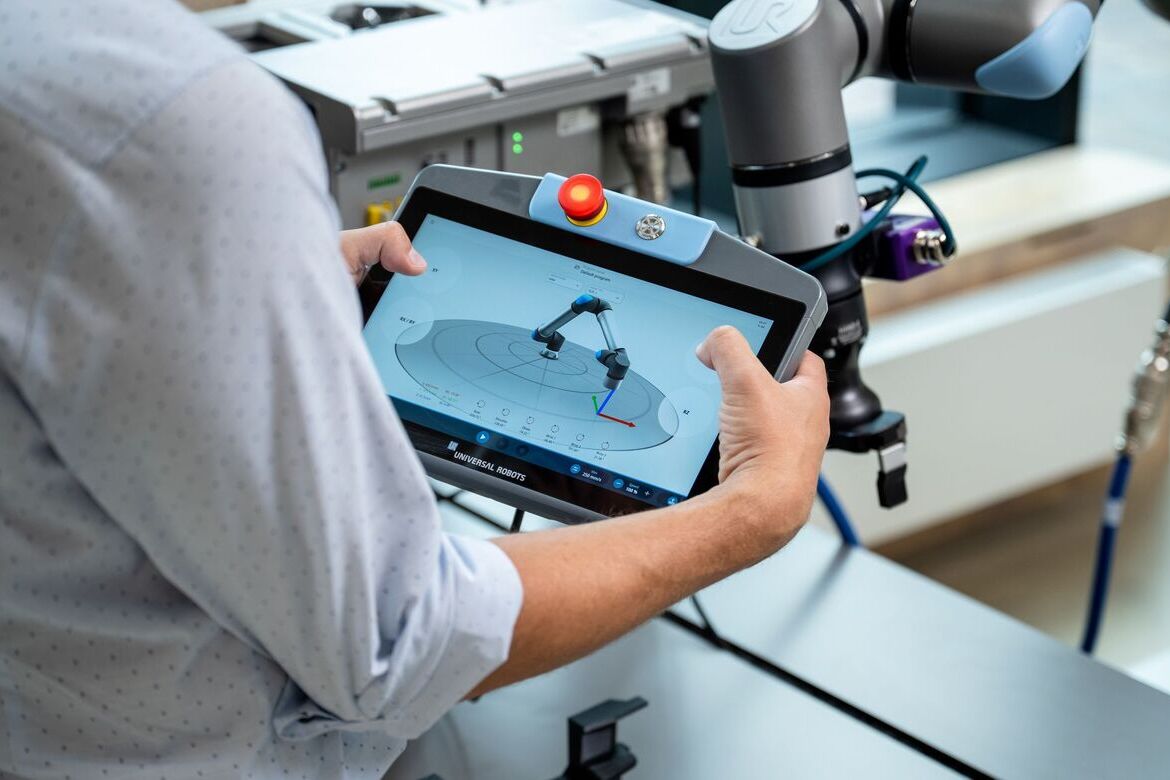
The OmniVance cell is entirely self-contained, including the GoFa cobot, safety components, and integrated dust extraction readiness. It requires no custom programming to operate. ABB’s software interface uses a tablet-style design with lead-through 3D path recording, 2D preset path creation, and intuitive path editing built into Wizard Easy Programming blocks. The company says this approach reduces programming time by up to 90% compared to conventional robotic programming, making the system accessible to operators without robotics backgrounds.

The cell supports tool and accessory changes for high-mix production environments, allowing manufacturers running varied part types to adapt the system without reengineering the installation. By automating repetitive sanding and polishing tasks, the cell is designed to increase throughput, reduce scrap and rework rates, and free skilled workers for higher-value operations.

The SME Automation Gap

ABB frames the OmniVance launch as a response to a specific market failure: smaller manufacturers face dual pressure from increasingly complex production demands and labor shortages, but existing automation options have not served them well. Customized robotic cells require in-house engineering expertise and significant capital. Off-the-shelf tools lack the capability and scalability for industrial production standards.

“Many businesses are wary of investing in complex, bespoke automation, while off-the-shelf tools lack the scalability and capability they require,” said Craig McDonnell, Managing Director of Business Line Industries at ABB Robotics. “With OmniVance, we’re introducing industrial-grade robotics in a simple, affordable, and scalable solution.”

The OmniVance launch is part of a broader industry pattern in which major robotics manufacturers are developing application-specific, pre-configured cells designed to lower the entry threshold for automation adoption among manufacturers that have historically been priced or skilled out of the market.

News, Robots & Robotics, Science & Tech

Roomba Co-Founder Unveils Ami, a Companion Robot Built for Emotional Connection Over Utility

Colin Angle, co-founder of iRobot and creator of the Roomba, has unveiled Familiar Machines & Magic and its debut product Ami, a four-legged companion robot designed to build emotional bonds with its owner rather than perform household tasks.

By Laura Bennett | Edited by Kseniia Klichova Published:
Roomba Co-Founder Unveils Ami, a Companion Robot Built for Emotional Connection Over Utility
A four-legged companion robot resembling a stylized animal, designed to respond to human emotional cues through movement, sound, and touch rather than task execution. Photo: Familiar Machines & Magic

Colin Angle, co-founder of iRobot and the engineer behind the Roomba, has publicly unveiled his new company Familiar Machines & Magic and its debut product, a companion robot codenamed Ami. The announcement was made at the Wall Street Journal’s The Future of Everything event this week. A commercial launch is not expected until 2027 at the earliest, and pricing has not been disclosed.

Ami is a four-legged robot with a visual design that sits between a dog and a bear. It has 23 degrees of freedom, enabling movement across its head, ears, and eyes. It cannot grasp objects or climb stairs. That limited physical capability is deliberate – Ami is not designed to be useful in the conventional sense. It is designed to be present.

What Ami Does

The robot uses on-device generative AI to learn about its owner over time and respond to emotional cues – adjusting its behavior based on what it observes through onboard cameras and microphones. It does not speak. Instead it produces purring sounds and other pet-like audio, reinforcing the companion animal frame rather than a functional assistant one.

The coat is touch-sensitive, designed to respond to petting. All processing runs locally; the robot does not require an internet connection and does not stream audio or video externally – a privacy consideration that Familiar Machines & Magic is positioning as a feature for a device intended to operate continuously in private domestic spaces.

“The next era of robotics is not just about dexterity or humanoid form – it’s about machines that can build and sustain human connection,” Angle said in a statement.

The Team and the Market Context

Familiar Machines & Magic draws on staff with backgrounds at Disney Research, MIT, Amazon, Boston Dynamics, Bose, and Sonos – a combination that reflects the product’s intersection of robotics engineering, consumer electronics, and experiential design.

Ami enters a small but growing category of companion robots targeting loneliness, particularly among elderly users. Companies including ElliQ and Abi are developing AI-powered companions for elder care applications, and the category has attracted increasing attention as aging demographics in developed markets create sustained demand for non-pharmaceutical interventions in social isolation.

The commercial risk for Ami is the same one that has historically constrained companion robot products: consumer willingness to pay for something that performs no measurable task. Angle’s track record with the Roomba – a product that succeeded by solving a specific, repeatable domestic problem – makes Familiar Machines & Magic’s pivot toward emotional utility a meaningful strategic departure. Whether the market for robot companionship has matured enough to support a premium consumer product will be the test the Ami launch faces when it arrives.

VDMA Maps Four Scenarios for Humanoid Robotics in 2040 as Europe Weighs Its Strategic Position

Germany’s VDMA has published four scenarios for humanoid robotics by 2040, ranging from mass-market adoption to industrial stagnation, as Europe’s machinery industry weighs how to compete against Chinese and U.S. manufacturers with deeper capital and AI investment.

By Daniel Krauss | Edited by Kseniia Klichova Published:
VDMA Maps Four Scenarios for Humanoid Robotics in 2040 as Europe Weighs Its Strategic Position
Industrial engineers and robotics specialists reviewing humanoid robot deployment scenarios at a European machinery industry conference. Photo: HANNOVER MESSE

Germany’s VDMA, the network organization representing Europe’s machinery and equipment manufacturing industry, has published a futures study outlining four scenarios for humanoid robotics by 2040. Developed with strategy consultancy Z_Punkt and contributions from robotics associations, research institutes, academia, and end users, the study is not a market forecast but a structured framework for industry dialogue about how the humanoid sector might develop across different regulatory, economic, and technological trajectories.

Anne Wendel, Director of Robotics, Automation and Machine Vision at VDMA, told RobotsBeat that most participants in the process expect the industry to land in one of two scenarios – widespread everyday deployment or certified B2B service robots – rather than remaining confined to a niche. But she added a grounding note: “We hear a lot about pilot projects and impressive videos from U.S. or Chinese manufacturers. But let’s be honest: I haven’t seen any humanoid robot truly interacting with people in industry yet. Carrying empty baskets is one thing; deploying them in real, unfixed industrial environments is another.”

The Four Scenarios

The first scenario, Trustworthy Helpers, describes a 2040 in which humanoid robots are affordable, certified, and present in homes and workplaces at scale, operating under strict data protection and safety standards. Europe’s opportunity in this future lies in certification, safety services, and scalable production. The risk is platform dependency – becoming a sales market for AI ecosystems developed elsewhere.

The second scenario, Premium Niche, sees humanoids as high-margin status goods with limited volumes. Europe’s component excellence in precision drives, dexterous hands, and advanced perception would be advantageous, but without AI investment the continent risks being reduced to a hardware supplier for foreign-controlled platforms.

The third scenario, B2B Bot, envisions humanoids as certified workers in logistics, healthcare, and industry, deployed selectively in labor-shortage environments. Europe’s regulatory tradition and integration capability are assets here, but high liability exposure in human-proximity settings is a structural risk.

The fourth scenario, Humanoid Winter, describes a market confined to industrial niches by safety incidents, fragmented standards, and weak public acceptance. Growth stalls, and Europe’s cautious regulatory culture – an asset in the B2B Bot scenario – becomes a liability that accelerates falling behind in physical AI capability.

Europe’s Structural Position

Wendel identified labor shortage as the primary demand driver for humanoids across both Europe and the U.S., and framed the automation question in terms of industrial competitiveness rather than job displacement. “It’s not about killing jobs – we’re beyond that discussion. It’s about keeping jobs in Europe. Without investment in robotics and automation, we will keep losing competitiveness.”

Europe’s structural advantages are real: a full value chain from components to integration, around 3,400 specialized manufacturers in the VDMA network, and existing leadership in safety standards and data protection frameworks that could become global benchmarks. The gap is capital. “China and the U.S. are investing massively. China already scales production at lower costs, and the U.S. has venture capital and AI giants like Nvidia driving expectations. Europe has the technology, the research, and the component manufacturers, but we lack venture capital,” Wendel said.

The VDMA study recommends five actions for Europe: investing in physical AI and cross-industry ecosystems, creating regulatory sandboxes to accelerate real-world testing, strengthening safety standards to avoid incidents that could set back the entire sector, mobilizing private capital through tax incentives and simplified SME access to funding, and leveraging existing component strengths to establish positions in the higher-margin subsystems of the humanoid stack.

The window for European manufacturers to establish competitive positions in humanoid robotics is open, but the study’s framing implies it will not remain so indefinitely.

News, Policy & Regulation, Robots & Robotics, Science & Tech

Hyundai Pressures Boston Dynamics to Scale Atlas Production as C-Suite Exits Mount

Hyundai is pressing Boston Dynamics to deliver tens of thousands of Atlas humanoid robots for its automotive plants, as the company navigates a series of senior leadership departures and attempts to ramp from four robots per month toward a stated capacity of 30,000 per year.

By Rachel Whitman | Edited by Kseniia Klichova Published:
Hyundai Pressures Boston Dynamics to Scale Atlas Production as C-Suite Exits Mount
An Atlas humanoid robot performing autonomous tasks on a factory floor during a production readiness demonstration at a robotics manufacturing facility. Photo: Boston Dynamics

Hyundai is pressuring Boston Dynamics to rapidly scale production of its Atlas humanoid robot, with the Korean automaker seeking tens of thousands of units for its automotive plants in the coming years, according to a report from Semafor citing former employees. The pressure comes as Boston Dynamics navigates a significant leadership transition: CEO Robert Playter retired in February, followed by the departures of the chief operating officer and chief strategy officer. Senior researchers and engineers have also reportedly left the company.

Boston Dynamics’ statement on the changes framed them as preparation for scale: “These changes are designed to help us prepare for the next chapter of Boston Dynamics, where we will need a structure that supports our ability to mass manufacture robots and rapidly drive scale in this emerging industry.”

The Gap Between Ambition and Current Output

The scale of Hyundai’s demand creates a stark contrast with Boston Dynamics’ current production reality. At CES earlier this year, the company announced a new robotics factory capable of producing 30,000 Atlas robots per year and presented a production-ready version of the Atlas platform. Boston Dynamics is currently producing approximately four Atlas robots per month as it works through the manufacturing ramp-up process.

Closing that gap – from roughly 48 units annually to 30,000 – within a timeframe that satisfies Hyundai’s requirements represents one of the most demanding manufacturing scale challenges in the current humanoid robot industry. The board of directors is reportedly concerned that competitors, with Tesla likely prominent among them, are narrowing the technological and commercial lead Boston Dynamics has held for years in bipedal robotics.

The Strategic Pivot to Commercial Scale

Atlas project general manager Zachary Jackowski, speaking on the Automated podcast last month, addressed both Playter’s departure and the transition from research robot to sellable product. He drew a parallel between the current moment in robotics and the impact of large language models on software. “The magic is the generality,” he said – the ability of modern AI-driven robots to adapt across tasks rather than being confined to single programmed functions.

The retirement of the research-focused Atlas platform and the shift to a commercially oriented successor reflects a deliberate strategic repositioning. Boston Dynamics built its reputation on robotics research and viral demonstration videos. What Hyundai is now demanding is something different: a manufacturable product, delivered at automotive industry scale, on an automotive industry timeline.

Whether the leadership restructuring accelerates or disrupts that transition will become clearer as Boston Dynamics moves through the production ramp-up. The company’s ability to bridge from four units a month to the volumes Hyundai is seeking will be one of the more consequential tests of industrial-scale humanoid manufacturing in the near term.

Business & Markets, News, Robots & Robotics

Hangzhou Deploys World’s First Robot Traffic Police Team at West Lake Tourist Sites

Hangzhou has deployed a team of 15 traffic management robots at West Lake tourist sites, marking the first coordinated team deployment of robot traffic police in real-world operations, following a two-month pilot at major sporting events.

By Laura Bennett | Edited by Kseniia Klichova Published:
Hangzhou Deploys World’s First Robot Traffic Police Team at West Lake Tourist Sites
A robot traffic police unit operating at a busy urban intersection, directing vehicles and pedestrians while synchronized with intersection signal control systems. Photo: Hangzhou, China

Hangzhou has deployed a team of 15 traffic management robots at West Lake tourist sites and surrounding roads in Zhejiang Province, making it the first city in the world to operate a coordinated robot traffic police team in live public conditions. The robots, named Hangjingzhixing, were deployed on the first day of China’s Labor Day holiday on May 1, a period of peak tourist traffic at one of the country’s most visited destinations.

While individual robots have previously been used for traffic management in China, the Hangzhou deployment represents the first instance of a purpose-built team operating together across multiple intersections in a real urban environment, according to the Chinese Ministry of Public Security.

Operational Capabilities

Each robot operates continuously for eight to nine hours daily and performs three primary functions: violation detection, traffic direction, and tourist assistance.

On violation detection, the robots use high-performance visual recognition algorithms to identify infractions in real time – including bicycles crossing stop lines, riders not wearing helmets, illegal passengers, and pedestrians entering roadways. Upon detecting a violation, the robot issues a verbal warning directly to the individual. If the behavior continues after three warnings, the incident is transmitted in real time to the Hangzhou Traffic Management Department for human follow-up.

For traffic direction, the robots are synchronized with intersection signal control systems at 0.001-second intervals and carry a gesture database compliant with Chinese Ministry of Public Security standards. They can execute eight traffic direction commands including straight ahead, stop, and left turn.

Tourists can interact with the robots directly by pressing a button and asking questions verbally, receiving real-time traffic updates and location information through audio and on-screen display.

From Event Pilots to Permanent Deployment

The Hangzhou team was not launched without preparation. The robots were piloted over two months at the West Lake Half Marathon and the Hangzhou Women’s Half Marathon, accumulating operational experience in high-density crowd conditions before their public debut during the Labor Day holiday.

The staged rollout – from controlled event environments to permanent urban deployment – reflects a broader pattern in China’s approach to public robotics deployment, where sporting events and tourism periods serve as real-world testing grounds before integration into routine operations.

A source from the Hangzhou Public Security Bureau Traffic Management Department indicated that the robot team is designed to handle routine and repetitive enforcement tasks, freeing human officers to concentrate on accident response, major violations, and road safety inspections. Major Chinese cities are expected to evaluate similar deployments following Hangzhou’s lead.

News, Robots & Robotics, Science & Tech