
Renault has begun deploying a new generation of factory robots at its electric vehicle manufacturing complex in northern France, marking another step in the automotive industry’s shift toward AI-assisted production.
The robots, known as Calvin-40, have recently appeared on the Renault assembly line in Douai, where they perform repetitive tasks such as placing tires onto conveyor systems that feed the Renault 5 electric vehicle production line.
While only a handful of units are currently operating, Renault plans to dramatically expand their presence. Over the next 18 months, the company intends to deploy as many as 350 robots across its ElectriCity production network.
The initiative reflects a broader push by automakers to increase automation as EV production scales globally.
Automating Repetitive Work on the Assembly Line
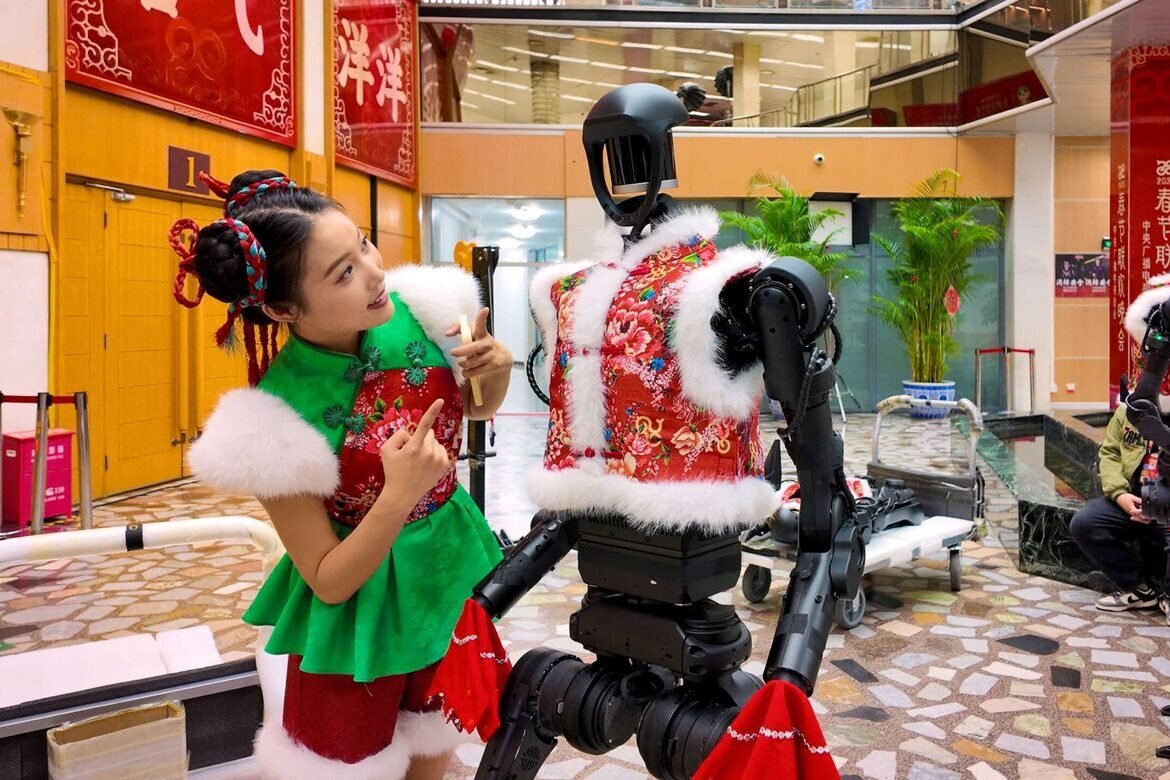
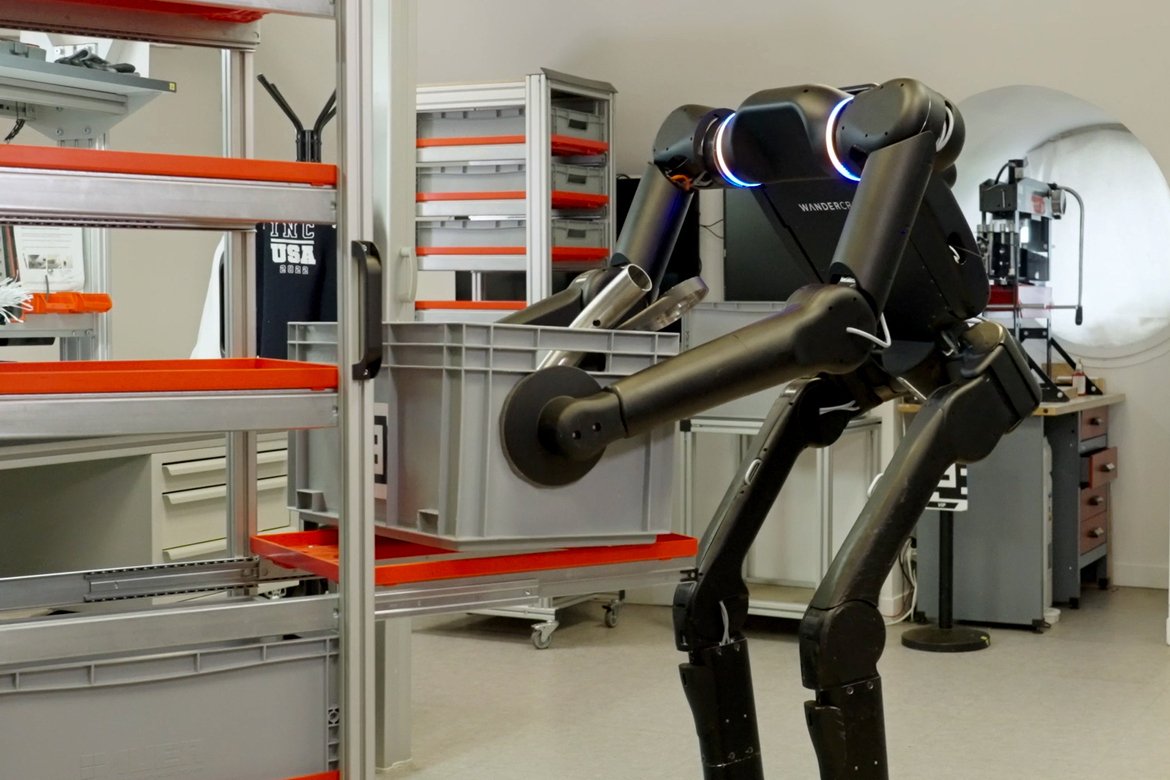
The Calvin-40 machines were developed by French robotics company Wandercraft and are designed specifically for industrial environments.
Unlike traditional industrial robots that operate within fixed cages or workstations, these machines are built to move within factory spaces and interact with storage racks, conveyor systems, and other equipment.
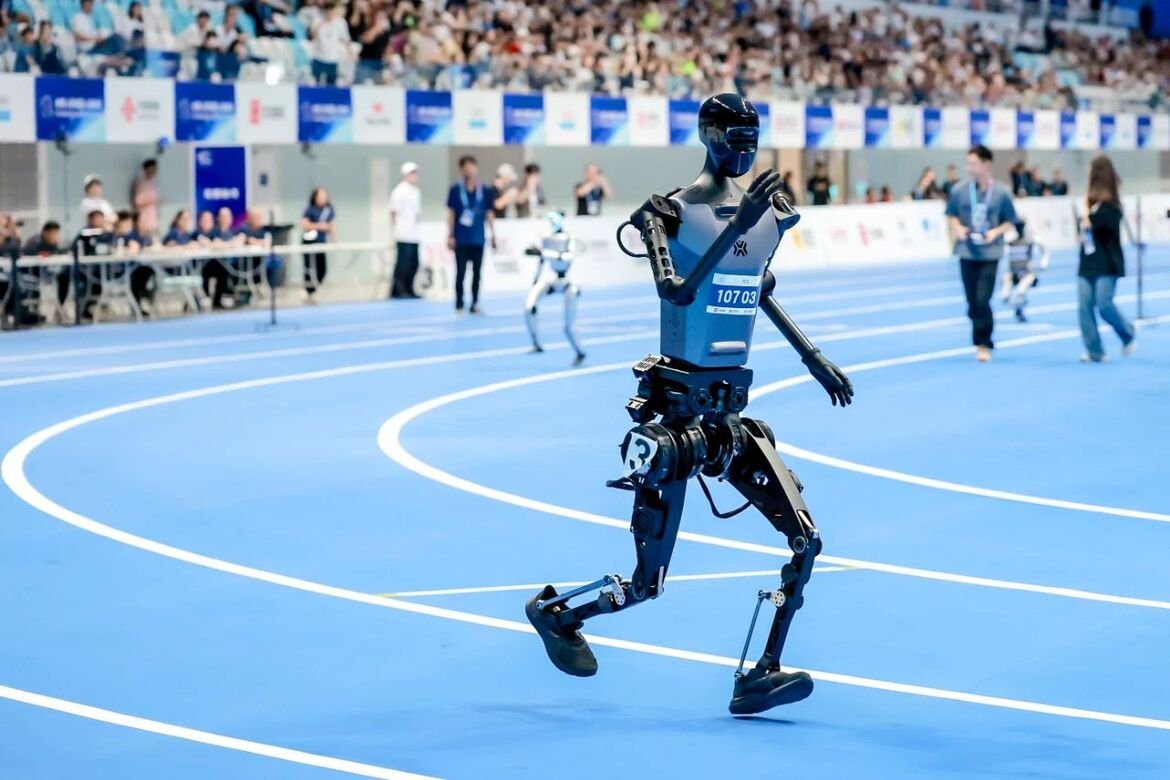
Each robot stands on two legs and uses articulated arms capable of lifting loads of up to 40 kilograms. The robots retrieve parts such as tires or body components from storage bins and place them into the assembly flow.
A camera system mounted on the robot helps it track objects and monitor its work. Visual indicators on the machine provide operators with real-time status information.
According to Renault, tasks now performed by Calvin-40 robots previously required workers to repeat the same lifting and positioning motions hundreds of times per shift.
By shifting these operations to machines, the company hopes to reduce worker fatigue while maintaining a steady pace of production.
Training Robots for Manufacturing Speed
Developing robots capable of operating reliably in a factory environment required extensive AI training.
While the physical design of the Calvin-40 robot was completed relatively quickly, engineers spent several months refining the system’s software so it could operate at the speed required on an automotive production line.
Training involved teaching the robots how to recognize parts, retrieve components from storage racks, and place them accurately onto moving conveyor systems.
Even with these improvements, Renault says the robots are not yet fast enough to operate in every stage of final vehicle assembly. Some sections of the production line still require speeds beyond what the current generation of robots can achieve.
For now, the machines are focused on specific repetitive tasks where automation can deliver immediate productivity gains.
A Practical Approach to Factory Robotics
Renault’s approach differs from the strategy adopted by some technology companies that showcase humanoid robots in demonstration environments.
Instead of building futuristic prototypes first, Renault has focused on introducing practical automation directly into its factories.
The company has also invested financially in Wandercraft to adapt the robots for automotive manufacturing requirements.
Renault executives say the long-term goal is to accelerate vehicle production while reducing manufacturing costs.
The company aims to cut the time required to build a car by roughly one-third and reduce production expenses by about 20 percent within the next five years.
Automation technologies like the Calvin-40 robots will play a key role in reaching those targets.
Automation and the Future of EV Production
As electric vehicle demand grows, automakers are under increasing pressure to scale manufacturing capacity efficiently.
Factories must manage complex supply chains, new battery technologies, and increasingly competitive production costs.
Industrial robots have long played a role in automotive manufacturing, but newer AI-driven systems are beginning to extend automation into tasks that previously required human flexibility.
Renault’s deployment of the Calvin-40 robots highlights how manufacturers are experimenting with new forms of automation that combine mechanical capability with AI-driven perception and control.
While the robots currently handle relatively narrow tasks, their growing presence on factory floors signals how automation is gradually expanding deeper into the production process.
For automakers racing to scale EV production, that evolution could reshape how cars are built in the years ahead.