Toyota Introduces Swarm Automation System for Hybrid Warehouse Operations

Toyota Material Handling Europe has launched a coordinated AGV system designed to operate across mixed fleets. The platform reflects a shift toward scalable, software-driven warehouse automation.

By Daniel Krauss | Edited by Kseniia Klichova Published: Updated:
Toyota Introduces Swarm Automation System for Hybrid Warehouse Operations
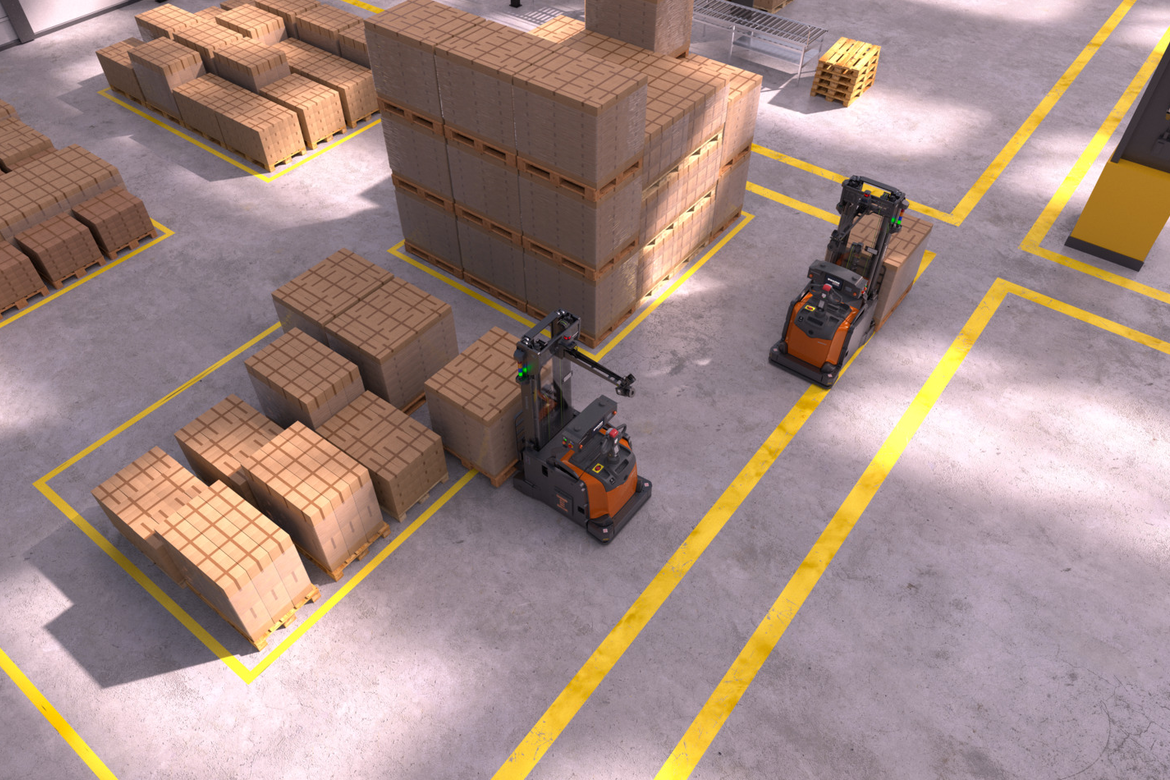
Toyota’s Swarm Automation Transport system coordinates automated and manual warehouse vehicles through a unified software platform, highlighting a shift toward hybrid logistics automation. Photo: Toyota Material Handling

Toyota Material Handling Europe has introduced a coordinated automated transport system aimed at simplifying how warehouses adopt and scale automation. The new platform, called Swarm Automation Transport, combines autonomous vehicles with centralized control software to manage material flows across mixed fleets.

The launch reflects a broader transition in warehouse robotics, where the focus is shifting from isolated automation deployments to systems that can operate alongside existing infrastructure. Rather than requiring full replacement of manual processes, the approach allows companies to introduce automation incrementally.

Coordinated Fleets Instead of Isolated Robots

At the core of the system is the integration of Toyota’s automated counterbalance stacker with its T-ONE software platform. The software orchestrates multiple vehicles, enabling them to coordinate tasks such as pallet transport, stacking, and replenishment across different parts of a facility.

This coordination model moves beyond traditional AGV deployments, where individual units are often assigned fixed routes or narrowly defined tasks. By contrast, the Swarm system enables dynamic task allocation across a fleet, allowing operations to adapt to changing warehouse conditions.

The platform is designed to handle a range of pallet formats, including euro pallets and bottom-deck configurations, and supports different loading orientations. This flexibility is critical in environments such as retail distribution and manufacturing, where standardization is often limited.

Importantly, the system can operate in hybrid environments alongside manual forklifts and other equipment. This reduces the operational disruption typically associated with automation rollouts and allows warehouses to scale deployment based on demand and budget constraints.

Integration and Scalability as Primary Drivers

Toyota positions the system as part of a broader ecosystem rather than a standalone product. The Swarm platform integrates with other automated equipment, including reach trucks, enabling vertical storage operations up to higher rack levels when combined.

This layered approach reflects a growing emphasis on interoperability in warehouse automation. Instead of deploying single-purpose machines, operators are increasingly seeking systems that can connect multiple processes into a unified workflow.

The focus on scalability is also evident in the system’s design. Companies can begin with a limited number of vehicles handling repetitive transport tasks, such as buffer zone movement or replenishment, and expand the fleet over time as operational requirements evolve.

Energy and safety considerations are built into the platform as well. Lithium-ion battery systems with automatic charging support continuous operation, while a combination of sensors, scanners, and bumpers provides 360-degree awareness in mixed-traffic environments.

The introduction of Swarm Automation Transport underscores a shift in how industrial automation is being deployed. Rather than pursuing full autonomy in a single step, manufacturers are increasingly adopting hybrid models that blend automated and manual operations under shared control systems.

For Toyota, the system reinforces its strategy of lowering the barrier to entry for automation by emphasizing compatibility and gradual adoption. For warehouse operators, it reflects a pragmatic path forward, where the value of automation lies not just in replacing labor, but in coordinating complex operations more effectively.

As logistics networks continue to expand in scale and variability, such coordination systems may become a defining layer in how physical workflows are managed, linking individual machines into cohesive, software-driven operations.
Automation, Business & Markets, News, Robots & Robotics

Humanoid Robot Prices Fall Sharply as Market Splits into Three Tiers

Humanoid robot prices have dropped more than 70% in two years, signaling a shift toward commercialization. The market is now dividing into premium, mid-range, and volume-driven segments.

By Rachel Whitman | Edited by Kseniia Klichova Published:
Humanoid Robot Prices Fall Sharply as Market Splits into Three Tiers
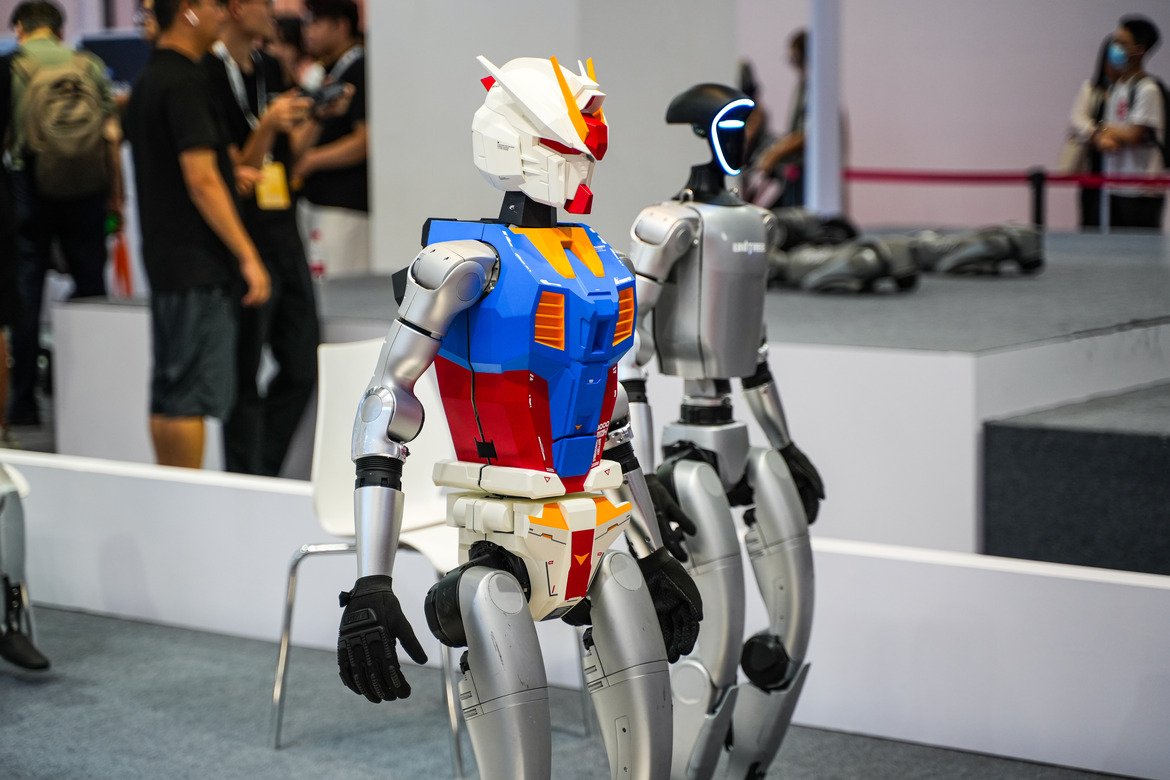
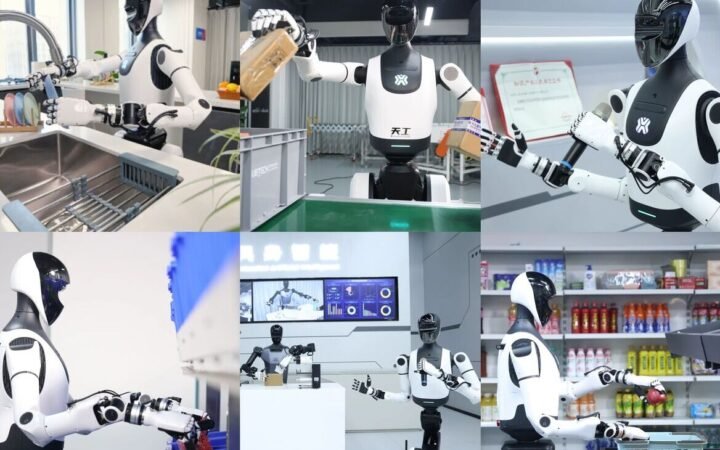
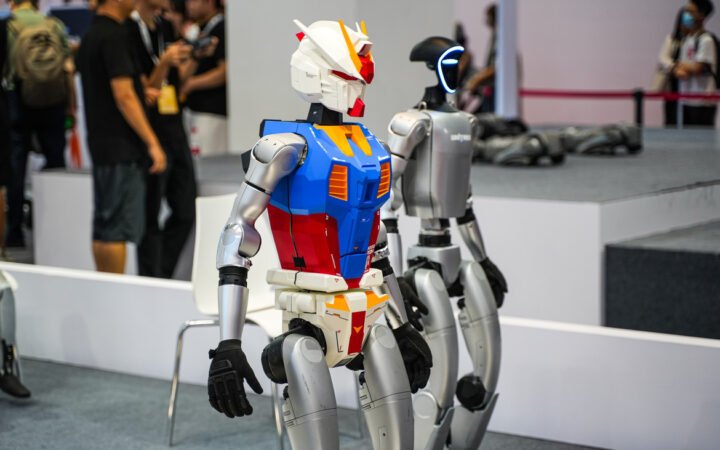
Humanoid robots are becoming more affordable as production scales, signaling a transition from experimental systems to commercially viable machines. Photo: Unitree Robotics

The humanoid robotics industry may be approaching its first meaningful commercial inflection point, driven not by a single breakthrough but by a rapid decline in prices. New data from manufacturers indicates that average system costs have fallen dramatically over the past two years, reshaping expectations around adoption and market structure.

Reported pricing for some platforms has dropped from roughly $85,000 in 2023 to about $25,000 in 2025, reflecting a broader trend across the sector. While high-end systems still command significantly higher prices, the overall range has expanded, with entry-level humanoids now approaching levels previously associated with industrial equipment rather than research prototypes.

The shift suggests that humanoid robots are beginning to follow the economic trajectory seen in other hardware-driven industries, where scaling production and standardizing components lead to rapid cost compression.

From Experimental Platforms to Manufactured Products

For much of the past decade, humanoid robots existed primarily as research systems, built in small volumes and priced accordingly. Their role was to demonstrate capability rather than deliver consistent operational value.

That dynamic is changing as companies move into early production runs. Standardized components, improved supply chains, and iterative design cycles are reducing costs while increasing reliability. Even companies still developing their platforms are publicly targeting price points in the $20,000 to $30,000 range once manufacturing reaches scale.

This transition marks a critical shift. As humanoids become manufactured products rather than bespoke systems, they enter a different set of economic constraints. Pricing, margins, and return on investment begin to matter as much as technical capability.

A Three-Tier Market Begins to Form

As prices fall, the market is starting to segment into distinct tiers, each defined by a different strategy.

At the high end, premium systems focus on maximum performance, targeting industrial and enterprise environments where reliability and capability justify higher costs. These platforms often exceed $150,000 and emphasize advanced manipulation, safety, and integration.

In the middle, a growing category of “good enough” humanoids is emerging. These systems aim to balance performance with affordability, making them viable for applications such as logistics, warehousing, and light manufacturing. With projected pricing around $20,000 to $30,000, this segment is widely expected to drive the majority of unit volume.

At the lower end, a volume-driven approach is taking shape. Some manufacturers are aggressively reducing costs to accelerate adoption, offering simplified systems at significantly lower price points. This strategy prioritizes scale and rapid iteration, echoing patterns seen in industries such as electric vehicles and solar energy.

Price Compression Creates Strategic Pressure

The rapid decline in prices introduces both opportunity and risk. Lower costs could accelerate adoption in sectors facing labor shortages, where even modest improvements in productivity can justify investment.

At the same time, price compression is likely to strain margins and intensify competition. For companies in the United States and Europe, competing on cost alone may prove difficult, potentially pushing them toward premium positioning strategies that emphasize performance, safety, and integration.

This dynamic mirrors developments in other manufacturing sectors, where different regions specialize in either high-end engineering or cost-efficient production. Whether humanoid robotics follows a similar path remains uncertain, given that large-scale demand has yet to fully materialize.

The emergence of tiered pricing signals that humanoid robotics is entering a more mature phase. The industry is moving beyond demonstrations toward real economic constraints, where success depends not only on what robots can do, but on whether they can do it at a cost that makes sense.

Falling prices are a necessary step toward widespread deployment, but they do not guarantee it. The next phase will test whether humanoid robots can deliver consistent performance in real-world environments and generate measurable returns.

If they can, the current decline in prices could unlock large-scale adoption across industries. If not, it may instead mark a transition from early optimism to a more selective and competitive market.

Business & Markets, News, Robots & Robotics

Europe Bets on Humanoid Robots to Reclaim Ground in Global Tech Race

European companies are accelerating investment in humanoid robotics as the region seeks to regain technological momentum. Industrial expertise and automotive supply chains are emerging as key advantages.

By Daniel Krauss | Edited by Kseniia Klichova Published: Updated:
Europe Bets on Humanoid Robots to Reclaim Ground in Global Tech Race
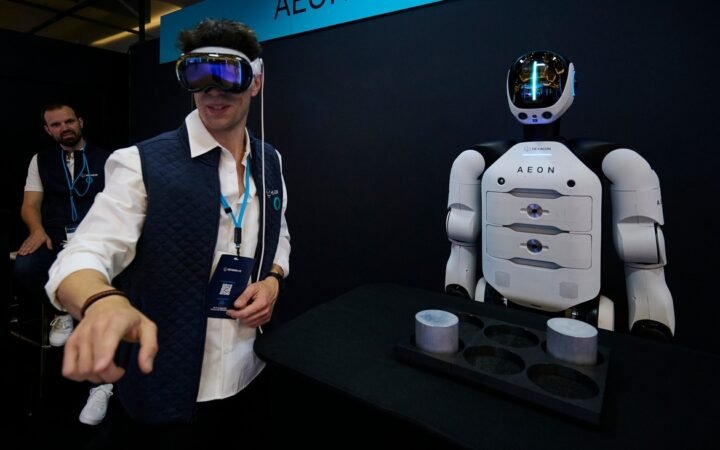
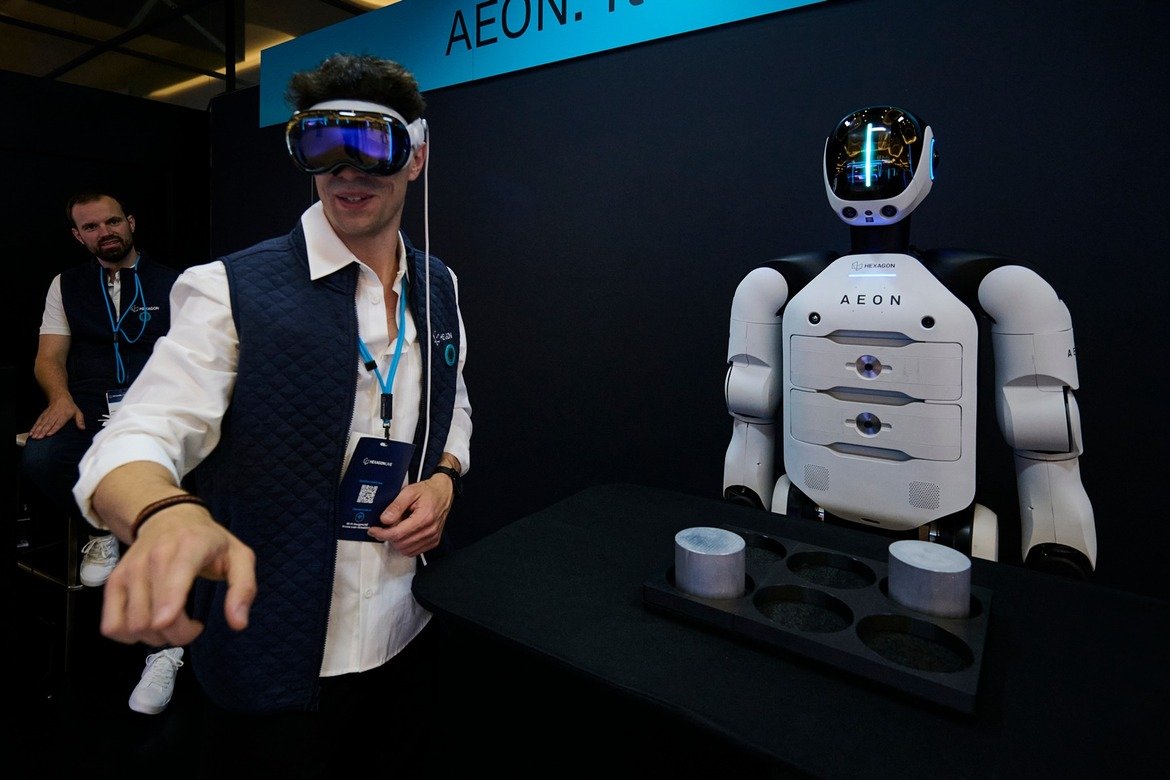
European robotics firms are advancing humanoid systems for industrial use, positioning the region’s manufacturing base as a foundation for scaling embodied AI. Photo: Hexagon

Europe is increasingly positioning humanoid robotics as a strategic pathway to remain competitive in a global technology landscape dominated by the United States and China. While the region has lagged in areas such as large-scale artificial intelligence platforms and electric vehicles, it retains deep industrial capabilities that are now being redirected toward embodied AI.

Recent developments across the continent suggest that humanoid robots are no longer confined to research labs or demonstrations. Instead, they are moving into early industrial testing, supported by a combination of established manufacturing expertise and growing investor interest.

Industrial Strength Becomes a Robotics Advantage

Companies such as Hexagon AB are advancing humanoid systems designed for industrial environments. Its Aeon robot is currently undergoing trials with manufacturing clients including BMW Group, with plans to scale production significantly by the end of the decade.

Executives at Hexagon have indicated that production could expand from small batches today to thousands of units within a few years, suggesting confidence that demand will follow once systems reach commercial readiness. The company expects to bring its humanoid platform to market as early as 2026, a timeline that reflects accelerated development cycles compared with traditional industrial robotics.

At the same time, Neura Robotics GmbH has raised approximately €1 billion in fresh capital, with backing from major technology players including Amazon and Qualcomm. The funding signals growing confidence that European robotics firms can compete in a category increasingly defined by scale and integration.

For many of these companies, humanoid robotics represents a natural extension of existing capabilities. Europe’s industrial base, particularly in precision engineering and automation, provides a foundation that can be adapted to new robotic form factors.

Automotive Supply Chains Drive Momentum

The region’s automotive ecosystem is playing a central role in this transition. Suppliers such as Bosch and Schaefflerare investing in robotics as they seek new growth avenues amid slowing demand in traditional vehicle markets.

Humanoid robots share key components with electric vehicles, including batteries, motors, sensors, and control systems. This overlap allows manufacturers to repurpose supply chains and engineering expertise, reducing barriers to entry compared with entirely new technology domains.

The trend is not limited to Europe. Companies such as Hyundai Motor Company have already moved aggressively into the space, notably through the acquisition of Boston Dynamics. Demonstrations of advanced humanoid systems at events like Consumer Electronics Show have further amplified industry momentum and investor attention.

For European firms, the challenge is not starting from zero, but accelerating quickly enough to match competitors that have already made significant investments in AI and robotics platforms.

A Narrow Window to Scale

Analysts increasingly view humanoid robotics as a potential trillion-dollar market over the next decade, driven by labor shortages, aging populations, and the need for flexible automation. For Europe, the sector offers a rare opportunity to establish leadership in a next-generation technology category.

However, the window may be limited. Success will depend not only on technical capability but also on the ability to scale production and integrate software, hardware, and data systems into cohesive platforms.

Unlike earlier waves of automation, humanoid robotics requires coordination across multiple domains, from mechanical engineering to AI software and manufacturing. Europe’s strength lies in its ability to combine these elements, but execution will determine whether that advantage translates into global leadership.

The emerging push into humanoid robotics reflects a broader recalibration of Europe’s technology strategy. Having missed earlier waves in platform-scale AI, the region is now focusing on areas where physical engineering and industrial integration matter as much as software.

If humanoid systems move from pilot deployments to widespread adoption, Europe’s existing strengths could become a competitive edge. If not, the region risks repeating the pattern seen in previous technology cycles, where early capability did not translate into long-term dominance.

Business & Markets, News, Robots & Robotics, Science & Tech

Saronic Raises $1.75 Billion to Scale Autonomous Ship Production

Saronic has raised $1.75 billion to expand autonomous ship production and shipyard infrastructure. The funding highlights a shift toward software-defined maritime manufacturing at industrial scale.

By Laura Bennett | Edited by Kseniia Klichova Published:
Saronic Raises $1.75 Billion to Scale Autonomous Ship Production
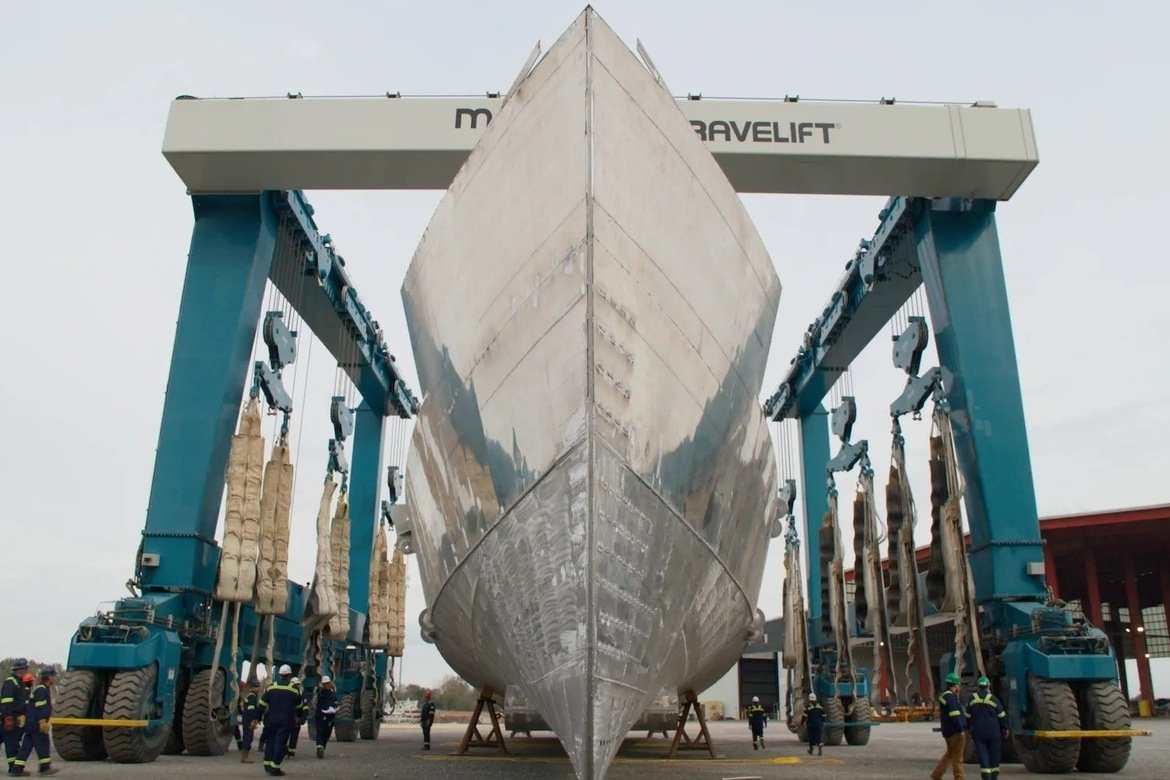
Saronic’s autonomous vessels are designed for scalable production, reflecting a shift toward software-defined shipbuilding and AI-driven maritime operations. Photo: Saronic

Saronic has raised $1.75 billion in a Series D round, pushing its valuation to $9.25 billion and positioning the company among the most heavily funded players in autonomous maritime systems. The investment underscores growing demand for AI-driven vessels, but more importantly, highlights a broader shift toward rebuilding industrial capacity around software-defined platforms.

Unlike many robotics startups focused primarily on autonomy software, Saronic is pursuing a vertically integrated model that combines vessel design, manufacturing, and deployment. The approach reflects increasing recognition that scaling physical AI systems requires not just intelligence, but production infrastructure.

Rebuilding Shipbuilding Around Autonomy

Saronic’s strategy centers on what it describes as an autonomy-first design philosophy. Rather than retrofitting existing vessels with autonomous capabilities, the company is developing ships from the ground up to operate without crews, integrating AI systems into core architecture.

This design approach is paired with investment in manufacturing. A key component is the development of “Port Alpha”, a next-generation shipyard intended to support high-throughput production of autonomous vessels. The company is also expanding existing facilities in Louisiana and Texas, signaling an effort to establish new shipbuilding capacity rather than rely on legacy infrastructure.

The emphasis on production reflects a structural challenge in the maritime sector. Shipbuilding capacity in the United States has declined over decades, limiting the ability to scale new platforms. By combining software-defined systems with modern manufacturing, Saronic is attempting to address both technological and industrial constraints simultaneously.

From Prototype Systems to Fleet-Scale Deployment

The funding will also support expansion of Saronic’s portfolio of autonomous surface vessels, ranging from smaller platforms such as the 24-foot Corsair to larger systems like the 180-foot Marauder. These vessels are designed for missions requiring extended range, endurance, and payload capacity, particularly in defense and maritime security contexts.

The company’s recent trajectory suggests a transition from prototype development to production. It reported completing the first hull of its Marauder platform within months of acquiring a shipyard, indicating an accelerated manufacturing timeline compared with traditional shipbuilding cycles.

This shift is reinforced by growing engagement with government customers, including a production contract with the U.S. Navy. Such partnerships provide both validation and demand signals, particularly as defense organizations explore autonomous systems to extend operational reach without increasing personnel requirements.

Investors in the round, led by Kleiner Perkins, emphasized that the combination of autonomy and manufacturing scale is relatively rare. The ability to produce systems consistently, rather than demonstrate isolated technical capability, is increasingly seen as a defining advantage in physical AI sectors.

Scaling Production as the New Competitive Edge

Saronic’s funding round reflects a broader trend in robotics and autonomous systems: the convergence of software innovation with industrial-scale production. As autonomy matures, the bottleneck is shifting from algorithmic capability to the ability to manufacture, deploy, and sustain systems in large numbers.

In the maritime domain, where platforms are capital-intensive and operational timelines span decades, this shift is particularly pronounced. Companies that can integrate AI with production infrastructure may be better positioned to define the next generation of naval and commercial fleets.

For Saronic, the challenge now lies in translating capital and ambition into sustained output. If successful, the company’s model could reshape not only how ships operate, but how they are built in the first place.

Business & Markets, News, Robots & Robotics, Science & Tech

Florida Polytechnic Deploys Starship Robots with Integrated Campus Payment System

Florida Polytechnic University has launched autonomous delivery robots integrated with a campus-wide point-of-sale system. The deployment signals a shift toward fully connected service robotics in everyday environments.

By Laura Bennett | Edited by Kseniia Klichova Published:
Florida Polytechnic Deploys Starship Robots with Integrated Campus Payment System
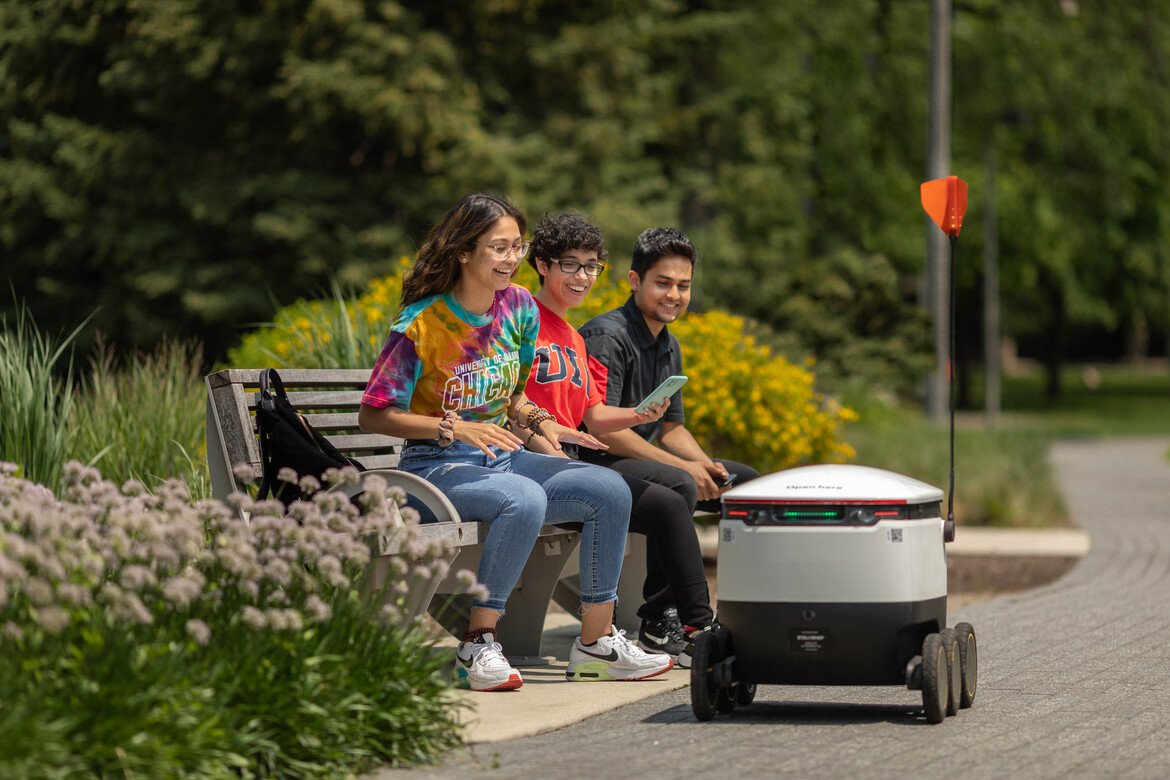
Starship delivery robots operate across Florida Polytechnic’s campus as part of a system that links ordering, payment, and autonomous delivery into a unified service platform. Photo: Starship Technologies

Florida Polytechnic University has deployed a fleet of autonomous delivery robots integrated directly with its campus dining payment system, marking what partners describe as the first point-of-sale integration of its kind in a university setting. The rollout connects ordering, payment processing, and physical delivery into a single workflow, offering a glimpse into how service robotics is evolving beyond standalone applications.

The initiative, launched in partnership with Starship Technologies and campus dining operator Chartwells Higher Education Dining Services, enables students and staff to order food through a mobile app and receive it via autonomous robots navigating campus sidewalks. The system is tied into existing meal plans and digital payment tools, allowing transactions and fulfillment to occur within the same infrastructure.

While robot delivery on campuses is no longer new, the integration of payment systems represents a deeper level of operational alignment between software platforms and physical automation.

From Delivery Feature to Integrated Service System

The deployment is built around Starship’s broader “360” platform, which combines autonomous delivery with point-of-sale infrastructure, mobile ordering, and self-service kiosks. Instead of treating delivery robots as an add-on, the system positions them as one component within a unified service architecture.

In practice, this means orders placed through campus dining channels are automatically routed through a centralized system that manages preparation, payment, and dispatch. Once ready, robots navigate to pick-up locations, travel across campus using a combination of sensors and computer vision, and deliver meals directly to users, who unlock the compartments via a mobile app.

The robots are designed to operate in typical campus conditions, including crossing streets, climbing curbs, and functioning in variable weather. Their navigation systems rely on real-time mapping and obstacle avoidance, allowing them to move within pedestrian environments without dedicated infrastructure.

This level of integration reduces friction across the service chain. Menu customization, payment authorization, and delivery tracking are handled within a single interface, aligning digital transactions with physical fulfillment.

Campuses as Early Platforms for Embodied AI

University campuses have increasingly become testing grounds for service robotics, offering controlled environments with high demand density and predictable logistics patterns. The Florida Polytechnic deployment extends that role by incorporating deeper enterprise-style integration.

Rather than focusing solely on mobility or delivery performance, the project emphasizes system-level coordination. The robots operate as endpoints within a broader software ecosystem, similar to how warehouse robots are integrated into logistics platforms.

This reflects a wider shift in robotics adoption. Value is increasingly derived from how well robots connect to existing systems, rather than from standalone capabilities. In this case, linking autonomous delivery to point-of-sale infrastructure enables a continuous workflow from order placement to fulfillment.

The approach also mirrors trends in enterprise automation, where digital platforms orchestrate multiple layers of operation. By embedding robots into those platforms, organizations can extend automation into physical services without redesigning the entire environment.

The Florida Polytechnic rollout remains a campus-scale deployment, but its implications extend beyond food delivery. As point-of-sale systems, mobile applications, and autonomous machines converge, service robotics may become less visible as a separate technology and more embedded within everyday infrastructure.

For Starship Technologies, the integration signals a move toward platform-based offerings rather than individual robotic services. For institutions like Florida Polytechnic, it demonstrates how automation can be introduced not as a standalone feature, but as part of a coordinated digital and physical system.

News, Robots & Robotics, Science & Tech

SAP and Humanoid Connect Enterprise AI to Warehouse Robotics in Live Trial

SAP, Humanoid, and Martur Fompak have completed a live warehouse trial linking enterprise AI agents to a humanoid robot. The test highlights how software-driven decisions can directly control physical labor systems.

By Rachel Whitman | Edited by Kseniia Klichova Published:
SAP and Humanoid Connect Enterprise AI to Warehouse Robotics in Live Trial
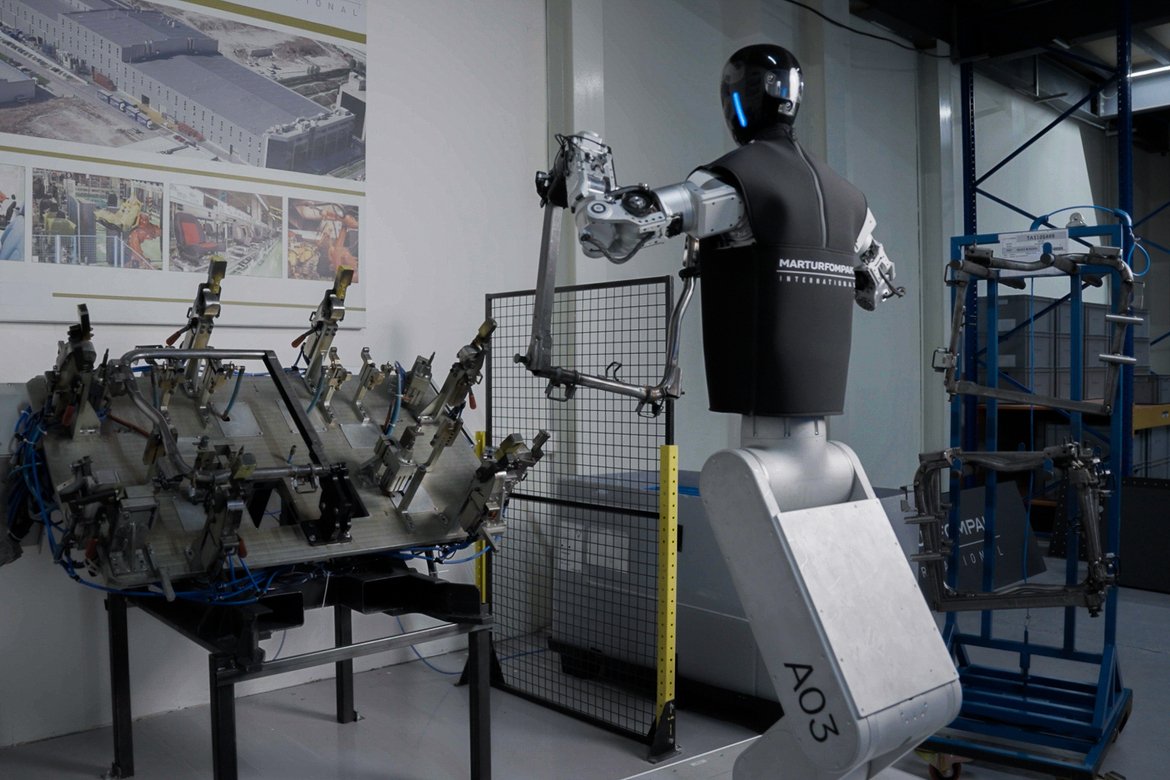
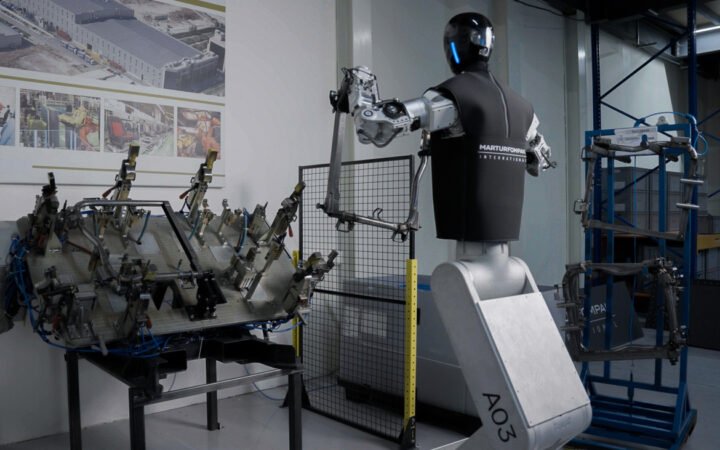
A humanoid robot executes warehouse picking tasks directed by an enterprise AI agent during a live trial, illustrating the convergence of digital decision-making and physical automation. Photo: Humanoid

A live warehouse trial involving SAP, robotics firm Humanoid, and automotive supplier Martur Fompak is offering a clearer view of how enterprise software systems may begin to directly control physical labor. The project connects SAP’s AI agent framework with a mobile humanoid robot, enabling task execution that originates from business logic rather than pre-programmed robotic routines.

The result is less about a single robot completing a task and more about a shift in system architecture. For decades, enterprise software has optimized operations in the digital layer, while robots have executed fixed workflows on the factory floor. This trial suggests those layers are beginning to merge.

From Enterprise Decisions to Physical Actions

At the center of the integration is a connection between SAP’s Joule AI agent and Humanoid’s KinetIQ robotics stack. In the proof of concept, a cloud-based software agent generated instructions based on operational needs and dispatched them directly to a physical robot.

The HMND 01 Alpha Wheeled robot then executed a logistics workflow inside a warehouse environment. It autonomously navigated to a designated pallet, retrieved a standardized container, and delivered it to a trolley as part of an order fulfillment cycle. The robot repeated the process across multiple iterations, handling different container types and operating within existing facility constraints.

This model differs from traditional automation, where tasks are predefined and robots follow rigid sequences. Instead, the system treats the robot as an endpoint of enterprise decision-making, allowing workflows to adapt dynamically based on business inputs.

SAP described the approach as embedding business context into robotic behavior, enabling machines to respond to operational priorities in real time rather than executing isolated tasks.

Embodied AI Moves into Enterprise Infrastructure

The trial reflects a broader convergence between two previously separate domains: enterprise AI and embodied AI. Software agents have long been capable of making decisions across functions such as procurement, scheduling, and inventory management. What has been missing is a direct link between those decisions and physical execution.

By connecting an enterprise agent to a humanoid system, the project demonstrates how digital instructions can translate into real-world actions without human mediation. In this case, warehouse picking becomes an extension of enterprise planning systems rather than a standalone robotic function.

The robot operated with a dual-arm payload capacity of 8 kilograms and was tested under real operational conditions over a multi-week deployment. The structured rollout included simulation and physical twin development, followed by on-site setup, training, and optimization, reflecting a methodology closer to enterprise software deployment than traditional robotics testing.

Executives involved in the project framed the outcome as a transition point. The ability to integrate robots into enterprise systems, measure them against operational metrics, and deploy them within existing workflows suggests that humanoid platforms are moving beyond experimental pilots.

A Bridge Between Pilots and Scaled Deployment

Despite the progress, the trial remains a proof of concept. The next phase will focus on extended validation in live production environments, where reliability, uptime, and integration complexity become more visible.

Still, the implications are notable. If enterprise systems can reliably orchestrate fleets of robots as extensions of digital processes, automation could shift from task-specific deployments to system-wide coordination. In such a model, robots are not programmed individually but managed as part of a broader computational infrastructure.

For Humanoid, the project provides evidence that its platform can operate within industrial constraints. For SAP, it demonstrates a pathway to extend enterprise AI beyond software into physical operations.

More broadly, the trial highlights an emerging pattern in robotics: the value of a robot is increasingly tied not just to its hardware capabilities, but to how seamlessly it integrates into existing digital systems. As that integration improves, the boundary between decision-making and execution may continue to narrow.

Artificial Intelligence (AI), Business & Markets, News, Robots & Robotics