Unitree Robotics has filed for an initial public offering in Shanghai, seeking to raise roughly 4.2 billion yuan ($600-610 million) in what could become one of the most closely watched robotics listings in China’s capital markets.
The Hangzhou-based company submitted its application to the Shanghai Stock Exchange’s STAR Market, a tech-focused board designed to help emerging technology firms raise domestic capital.
The offering will serve as an early test of investor appetite for humanoid robotics – an industry that Chinese policymakers increasingly view as a strategic frontier in artificial intelligence.
Unitree’s public debut comes as robotics companies worldwide race to commercialize machines capable of operating in real-world environments, from factories to public spaces.
Humanoids Drive Unitree’s Growth
Founded in 2016, Unitree initially gained recognition for its quadruped robots, which became widely used in research labs and industrial inspections.
In recent years, however, humanoid robots have become the company’s fastest-growing segment.
According to its IPO prospectus, humanoid robots accounted for more than half of Unitree’s core business revenueduring the first three quarters of 2025, up sharply from the previous year.
The shift toward humanoids has also fueled rapid financial growth. Unitree reported operating income of about 1.7 billion yuan in 2025, representing a year-on-year increase of more than 300 percent, while net profit rose even faster.
Unitree shipped more than 5,500 robots last year, capturing roughly one-third of the global humanoid robot market, according to company disclosures.
Despite the growth, profitability has been influenced by the introduction of lower-priced humanoid models designed to expand the company’s reach.
From Research Labs to Public Stage
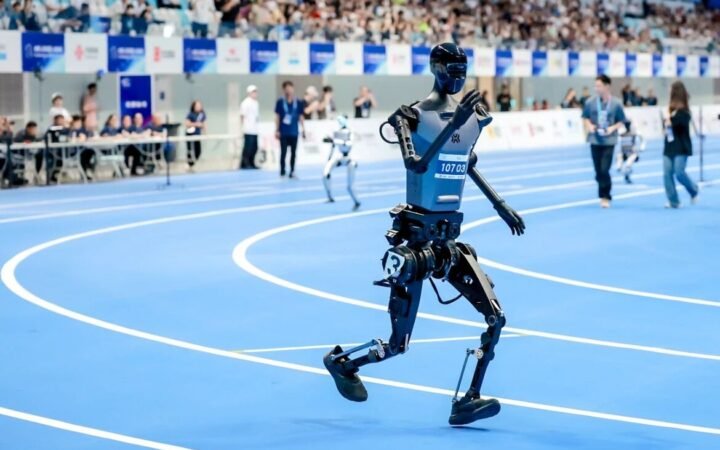
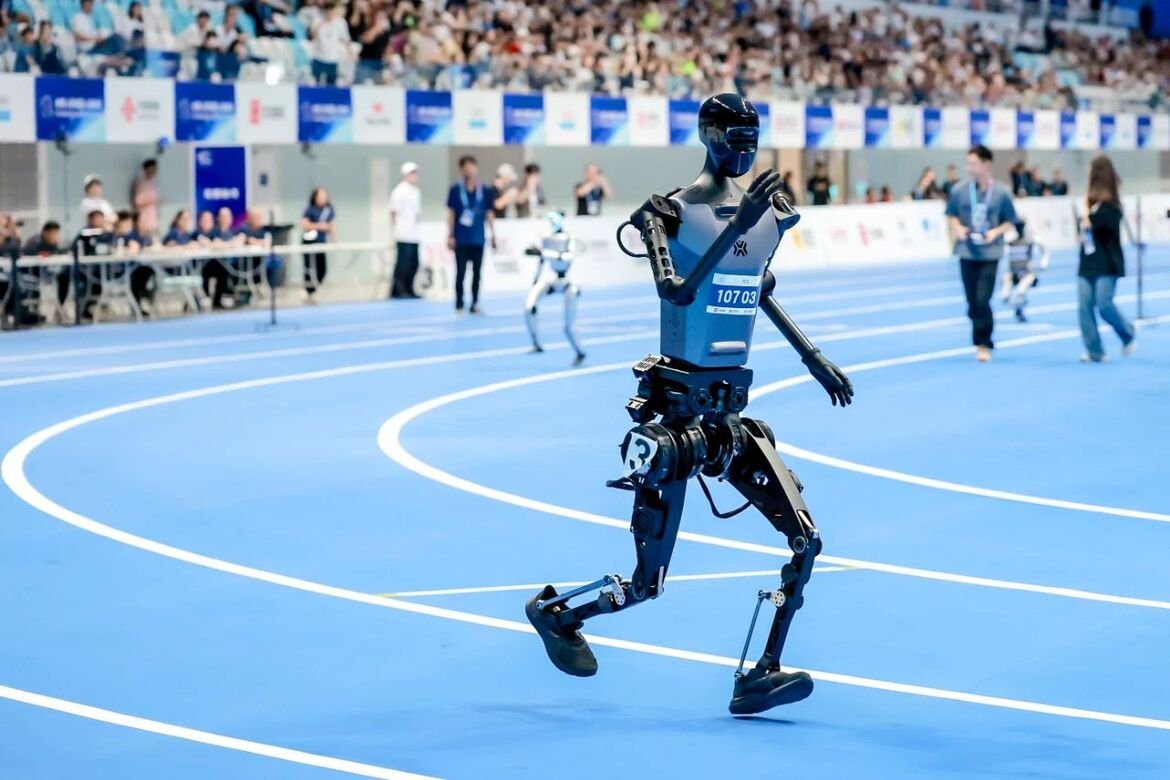
Unitree robots have become increasingly visible in China’s public events and media, reflecting both technological progress and national interest in robotics development.
Earlier this year, a group of Unitree humanoid robots appeared in China’s Spring Festival Gala broadcast, performing a synchronized martial arts routine involving complex choreography, flips, and coordinated weapon movements alongside human performers.
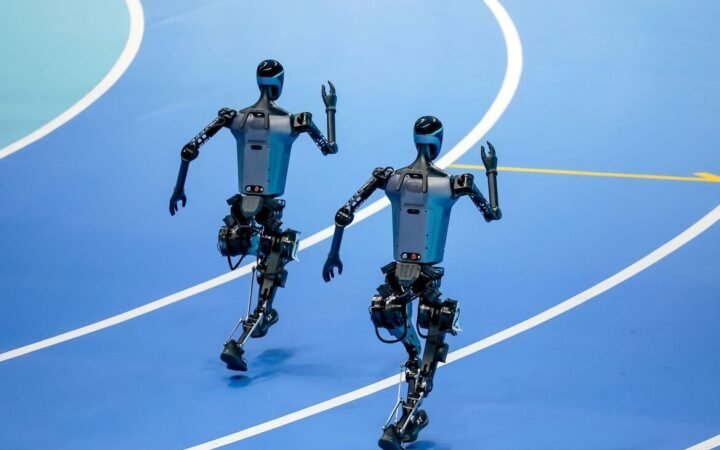
The performance showcased advances in robot balance, coordination, and dynamic movement – areas that have historically limited humanoid robots.
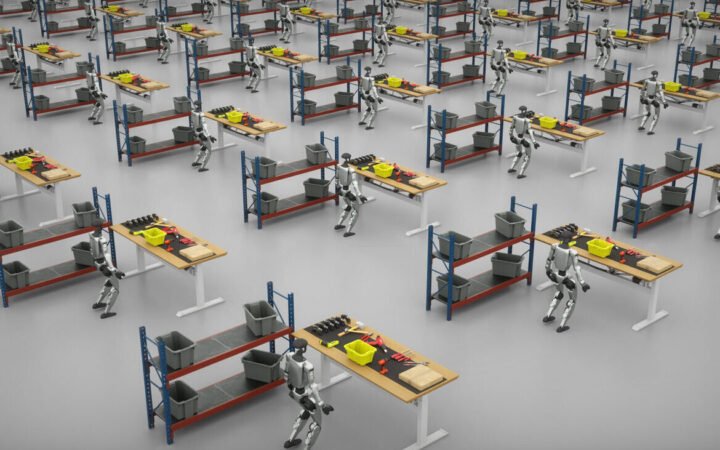
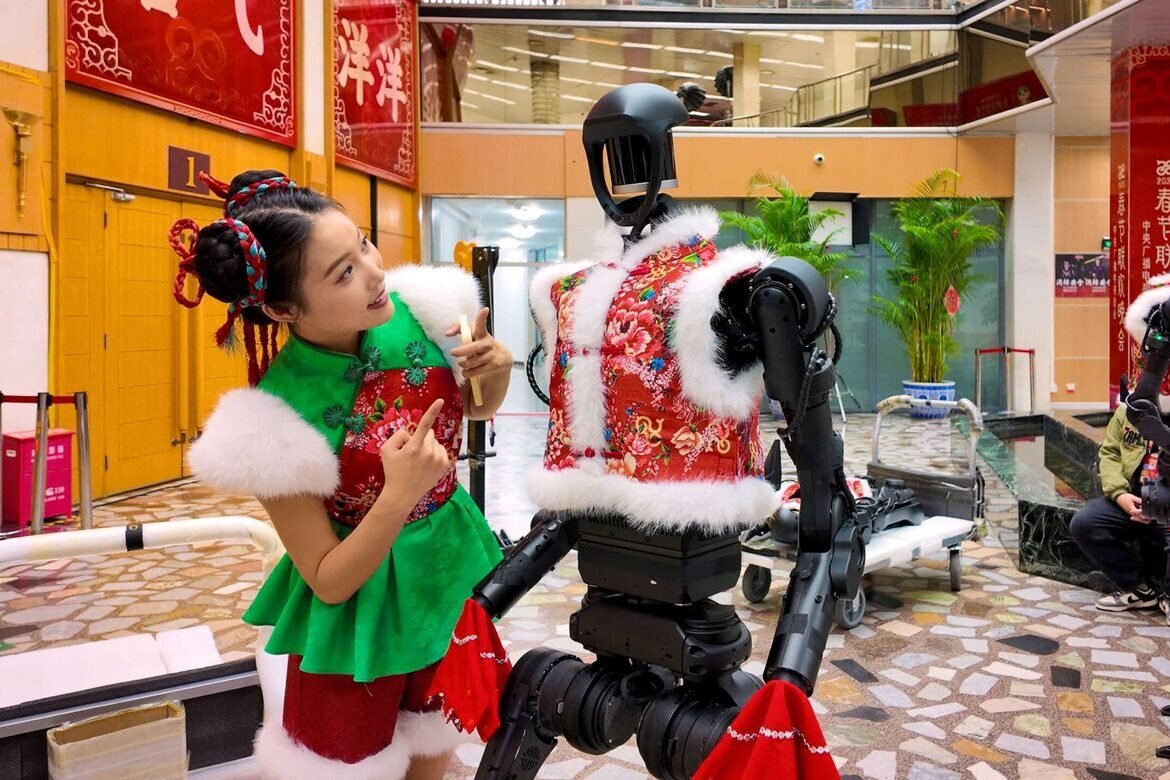
Beyond entertainment and demonstrations, Unitree’s machines are being used in a range of early commercial scenarios, including enterprise reception roles, guided tours, industrial inspection, and certain manufacturing tasks.
However, the company’s prospectus indicates that many deployments remain experimental or limited in scale.
For example, enterprise reception and tour-guide applications account for a large share of the company’s humanoid revenue.
China’s Strategic Push Into Embodied AI
Unitree’s IPO also reflects China’s broader effort to expand its robotics and AI industries.
Humanoid robots are increasingly seen by Chinese policymakers as a key future technology sector alongside fields such as quantum computing, nuclear fusion, and brain–computer interfaces.
China has encouraged domestic companies to develop embodied AI systems capable of operating in physical environments, with a long-term goal of integrating robotics into manufacturing, logistics, and service industries.
The country’s extensive manufacturing ecosystem may give local robotics companies an advantage in scaling production compared with competitors in other regions.
At the same time, widespread deployment of humanoid robots in factories remains limited, with most companies still focused on refining hardware reliability, mobility, and real-world task performance.
A Market Still Taking Shape
Unitree’s planned IPO highlights both the promise and the uncertainty surrounding humanoid robotics.
The industry has attracted enormous attention from investors, governments, and technology companies, but large-scale commercial deployment is still in its early stages.
Most humanoid robots today operate in demonstrations, research environments, or niche industrial roles rather than widespread commercial production.
Whether investors view the sector as a near-term opportunity or a long-term technological bet will likely become clearer as Unitree moves forward with its listing.
For now, the IPO signals that humanoid robotics – once considered a speculative research field – is increasingly becoming a capital market story as well.