LG Plans to Debut CLOiD Humanoid Home Robot at CES 2026

LG Electronics plans to introduce CLOiD, a humanoid-style home robot, expanding its CLOi service robot lineup beyond commercial environments. The debut highlights LG’s push into consumer robotics amid unresolved capability gaps in home AI systems.

By RB Team Published: Updated:

LG Electronics is set to debut CLOiD, a humanoid-style robot designed for home environments, at CES 2026 in Las Vegas. The robot joins LG’s existing CLOi family, previously focused on wheeled service robots used in retail and hospitality. LG describes CLOiD as humanoid in form, featuring dual seven-degree-of-freedom arms and five-fingered hands, though the company has not confirmed whether the platform uses legs or a wheeled base.

According to LG, CLOiD is built as a mobile manipulator intended for indoor household tasks. The system integrates onboard displays, speakers, cameras, and multiple sensors to support voice interaction, expressive feedback, and autonomous navigation. While detailed task capabilities have not been disclosed, the hardware configuration suggests a focus on manipulation and assisted home services rather than full autonomy.

The launch underscores LG’s broader robotics strategy combining in-house development and external investment. Despite LG’s manufacturing scale, CLOiD enters a market where many humanoid home robots face limitations in AI reliability, task generalization, and real-world deployment readiness.

News, Robots & Robotics

Cognibotics Wins $1.7M Order for Robot Calibration Technology

Cognibotics has secured a $1.7 million order for its CogniCal robot calibration system from a major industrial robot manufacturer. The deal highlights growing demand for precision calibration in large-scale automation.

By Rachel Whitman Published:

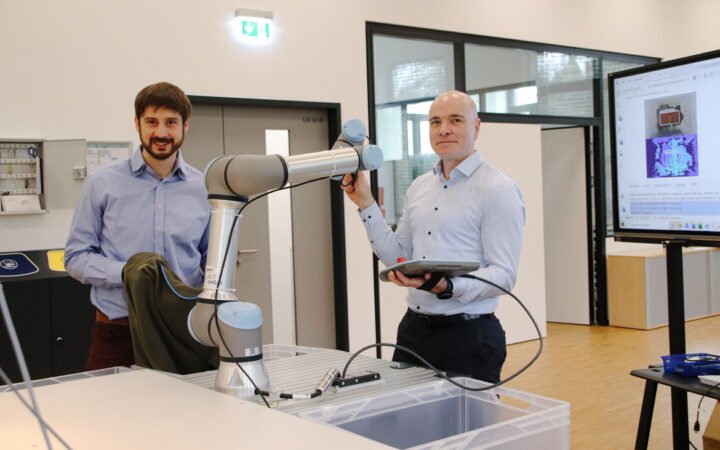
Cognibotics has received an order worth approximately $1.7 million for its CogniCal robot calibration technology from a major global industrial robot manufacturer. The order expands the customer’s use of CogniCal within robot production processes and reflects increasing emphasis on precision calibration as automation systems scale.

CogniCal improves robot accuracy by compensating for geometric deviations, structural elasticity, and payload effects that can vary between individual machines. By aligning robot motion more precisely, the system reduces performance variance across fleets and shortens commissioning time for integrators and end users deploying automation systems.

The demand for calibration technologies is rising as robotics systems incorporate perception and AI-driven workflows. Inconsistent robot geometry can introduce noise into training data and limit the transferability of learned behaviors. Calibration layers such as CogniCal are therefore emerging as core infrastructure for scalable industrial robotics and AI-enabled automation.

News, Robots & Robotics

Genrobotics Deploys G-Spider Robot for Urban Sanitation in Kerala

Genrobotics Innovations has introduced its G-Spider sanitation robot in Kerala to automate hazardous sewer and drainage cleaning tasks. The deployment aims to improve worker safety and modernize urban sanitation operations.

By Rachel Whitman Published: Updated:

Genrobotics Innovations has deployed its G-Spider robotic system in Kerala as part of a broader push to modernize urban sanitation infrastructure. The robot is designed to automate sewer and drainage maintenance tasks that traditionally require workers to enter hazardous environments.

The G-Spider platform uses robotic arms, cameras, and sensor systems to navigate underground pipelines and remove debris or blockages. Operators can control the system remotely while receiving real-time video and environmental data. This approach reduces direct human exposure to toxic gases, contaminated water, and confined spaces commonly associated with manual sewer cleaning.

The deployment reflects growing adoption of robotics in municipal infrastructure management. By introducing automation into sanitation operations, cities aim to improve worker safety, increase efficiency in drainage maintenance, and address long-standing public health risks associated with manual cleaning practices.

News, Robots & Robotics

AGIBOT Showcases Humanoid Robots Ahead of Thailand Market Entry

AGIBOT has accelerated its planned Thailand expansion with a multi-day humanoid robotics showcase focused on Smart Tourism and digital transformation. The engagement highlighted deployment-ready systems for hospitality and public services.

By Laura Bennett Published: Updated:

AGIBOT has conducted a multi-day strategic program in Bangkok as it prepares for formal entry into the Thai market later in 2026. The initiative included demonstrations of deployment-ready humanoid robots for government stakeholders, tourism authorities, and enterprise representatives, aligning with Thailand’s Smart Tourism and broader digital transformation agenda.

During meetings with the Tourism Authority of Thailand, AGIBOT presented applications such as multilingual visitor assistance, real-time guidance, and interactive engagement in hospitality and transportation hubs. The robots also appeared at public events and broadcast programs, demonstrating bilingual communication and stable mobility in live, high-traffic environments.

The showcase underscores AGIBOT’s strategy of expanding through government-aligned smart infrastructure initiatives. As tourism-driven economies modernize service delivery, humanoid robots are increasingly positioned as front-line digital interfaces capable of augmenting staff while collecting operational data for long-term ecosystem integration.

News, Robots & Robotics

UniX AI Launches Panther Series Embodied AI Robots

UniX AI has introduced its Panther series embodied AI robots featuring 8-DOF dual arms and an omnidirectional chassis. The platform targets complex real-world service and commercial applications.

By Daniel Krauss Published: Updated:

UniX AI has unveiled its Panther series, a next-generation embodied AI robot platform designed for complex service and commercial environments. The system features dual 8-degree-of-freedom bionic arms, adaptive intelligent grippers, and a four-wheel omnidirectional chassis that enables lateral movement, in-place rotation, and precise positioning in confined spaces.

The Panther platform integrates an 80-centimeter vertical lift range and a 48V power system to support stable high-speed motion and torque-intensive actions. Demonstrations showcased capabilities including coordinated kitchen tasks, liquid pouring with predictive flow modeling, fine manipulation such as card handling and embroidery, and dynamic pose-based grasp adjustments. These functions are powered by UniX AI’s Trinity architecture, combining imitation learning, visuotactile fusion, and long-horizon task planning.

UniX AI is initially targeting high-value commercial scenarios such as elderly care and hospitality, where semi-structured environments demand adaptable manipulation and mobility. The launch reflects continued efforts in embodied AI to couple hardware iteration with algorithmic generalization for scalable real-world deployment.

News, Robots & Robotics

ROBOROAD Secures Seed Funding to Develop AI Road Maintenance Robots

ROBOROAD has secured seed funding and government R&D support to develop AI-powered robots for autonomous road maintenance. The startup aims to modernize pavement inspection and repair through robotics and automation.

By RB Team Published: Updated:

South Korean startup ROBOROAD has secured seed funding to advance its AI-powered robotic systems for unmanned road pavement maintenance. The round was backed by Seoul Techno Holdings, BNK Venture Investment, and BDC Accelerator. The company has also been selected for South Korea’s TIPS program, which will provide approximately $343,000 in government R&D funding over two years.

Founded in 2025, ROBOROAD is developing an integrated system that combines AI-based road inspection, autonomous repair robots, and pavement management software. The platform is designed to reduce reliance on manual labor and visual inspections by automating pothole detection and repair. A recent proof-of-concept demonstration in Gyeonggi Province showcased an autonomous robot conducting live pavement repairs.

The funding highlights growing interest in applying robotics to public infrastructure. By targeting labor-intensive and safety-critical maintenance tasks, ROBOROAD is positioning automation as a tool to lower operational costs, reduce worker exposure to traffic risks, and improve response times in urban infrastructure management.

Automation, News, Robots & Robotics