
CynLr, a Bengaluru-based deep technology company, has introduced what it describes as a commercially ready Object Intelligence platform aimed at addressing one of robotics’ most persistent limitations: the inability to adapt quickly to unfamiliar objects.
After five years of research and development, the company unveiled its Object Intelligence, or OI, system on Wednesday, positioning it as a foundational layer that allows robots to learn new manipulation tasks within seconds rather than through months of dataset training and offline reprogramming.
The announcement comes as manufacturers globally search for more flexible automation systems capable of handling high product variability without constant retooling. While conventional industrial robots excel in structured, repetitive environments, they often struggle when confronted with new shapes, reflective surfaces, or irregular materials.
Learning Through Interaction
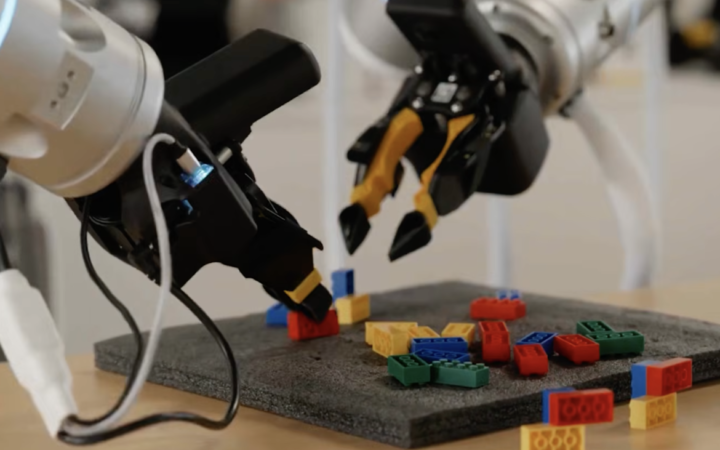
At the core of CynLr’s platform is a vision-driven perception system called CLX. Instead of relying solely on large pre-labeled datasets, the system analyzes an unfamiliar object in real time, breaking it down into geometric structure, texture, reflectance properties, and potential grasp points. That information informs an immediate trial-and-error interaction process.
According to the company, robots equipped with the platform can attempt to pick and manipulate previously unseen objects within 10 to 15 seconds. Each grasp attempt becomes a feedback event, allowing the system to recalibrate dynamically without being sent back for retraining.
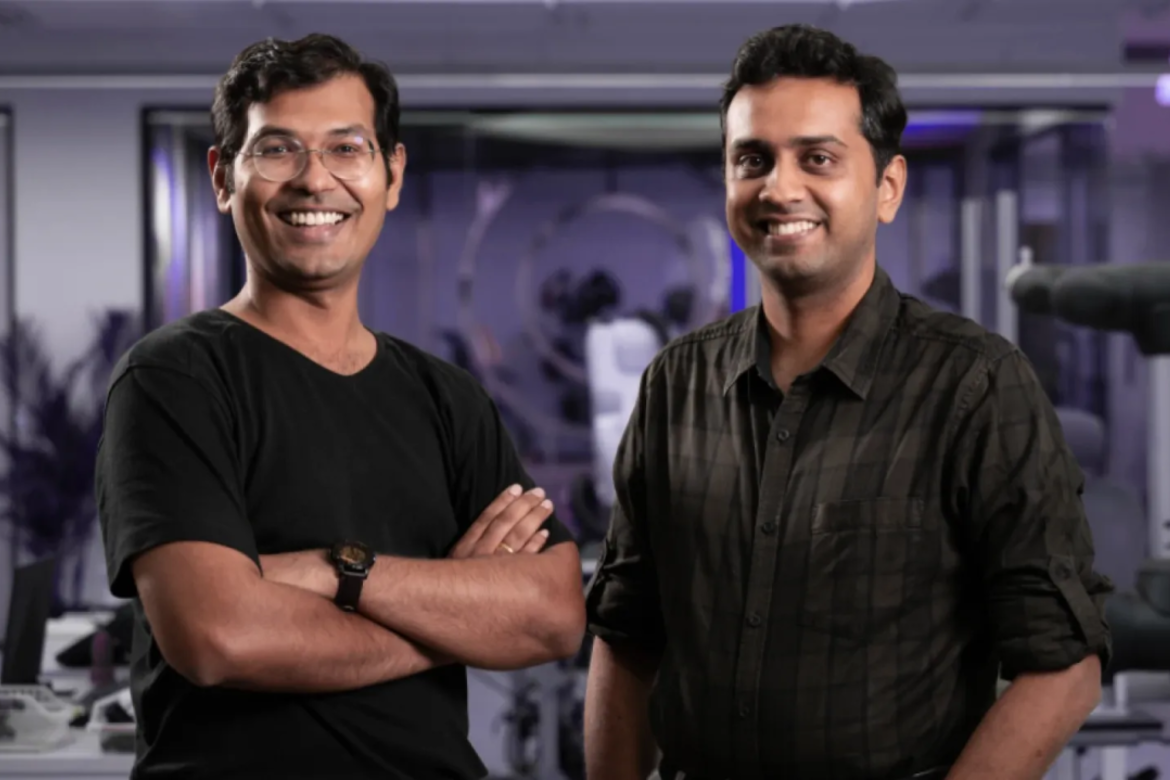
Founder Gokul NA described the shift as a transition from rigid programming to adaptive cognition. “The last fifty years of robotics were about controlled environments,” he said in a statement. “The next fifty years will be about machines that observe, reason and adapt.”
The company draws inspiration from biological sensorimotor learning, arguing that robots must actively probe their environment to build understanding rather than passively interpret static visual data.
Addressing the Limits of Physical AI
Handling transparent, reflective, or irregular objects remains a central challenge in physical AI. Items such as glass bottles, plastic-wrapped packages, or metallic components can confuse traditional vision systems that depend on predictable visual cues.
CynLr contends that its approach reduces reliance on massive training datasets and data center infrastructure by enabling closed-loop learning directly at the point of interaction. The platform is designed to be form-factor agnostic, supporting industrial robotic arms, multi-arm configurations, and humanoid systems.
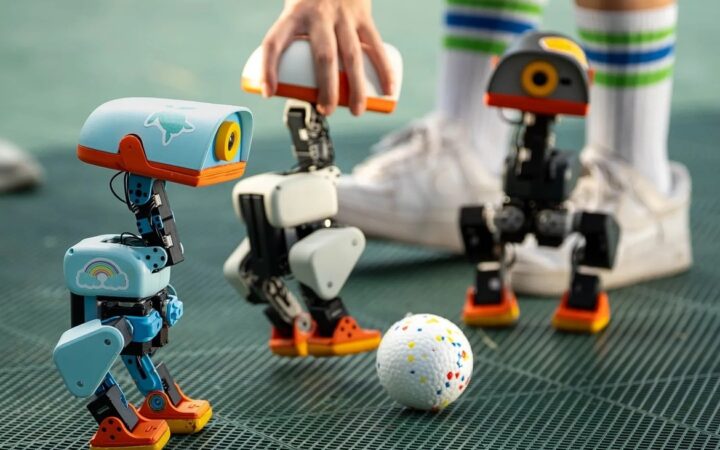
The company has developed two primary robotic products, CyRo and CyNoid, and plans to release an open hardware platform called Mantroid. The goal is to allow customers to build custom robotic configurations rather than being limited to fixed humanoid designs.
Nikhil, the company’s co-founder overseeing go-to-market strategy, argued that perception remains the bottleneck in physical intelligence. He contrasted large vision-language models with what he described as “vision force models”, systems that integrate sensing and physical feedback rather than depending primarily on text-based training paradigms.
From Lab to Factory Floor
CynLr says its technology is already being evaluated by global manufacturing firms, including luxury automotive brands and semiconductor automation companies. Potential use cases include complex assembly tasks and maintenance operations in semiconductor fabrication facilities.
In scenarios where automation has historically been infeasible due to variability, the ability to switch tasks without mechanical retooling could prove significant. The company envisions what it calls a “software-defined” factory floor, where machines transition between product lines through software updates rather than hardware changes.
For existing tasks, configuration changes can reportedly be completed within an hour, while entirely new task training may take from one week to several months depending on complexity. In many assembly processes where no traditional automation solution exists, even partial adaptation could represent a step change.
CynLr is pursuing additional funding to expand production capacity, with an ambition to reach one robot per day by 2028. The company has also established research and business operations in Switzerland and the United States as it targets international markets.
The broader question for the robotics industry is whether adaptive perception systems such as Object Intelligence can deliver consistent reliability in production environments. As manufacturers seek flexible automation capable of managing SKU proliferation and shorter product cycles, the ability to learn in situ rather than in advance could mark a meaningful shift in how physical AI systems are deployed.
Disclaimer: RobotsBeat is an independent media brand owned and operated by NuvexMedia LLC, publishing news, research, and insights on artificial intelligence, emerging technologies, automation, and related industries. NuvexMedia LLC invests in and collaborates with companies across the AI, Robotics, technology, software, and digital innovation sectors. These relationships do not influence RobotsBeat's editorial coverage, and the publication maintains full editorial independence to provide accurate, timely, and objective information. © 2026 NuvexMedia LLC. All rights reserved. This content is for informational purposes only and should not be considered legal, tax, investment, financial, or other professional advice.