Millions of people who spent years chasing virtual Pokémon through city streets unknowingly helped create one of the largest real-world datasets now being used to train robots.
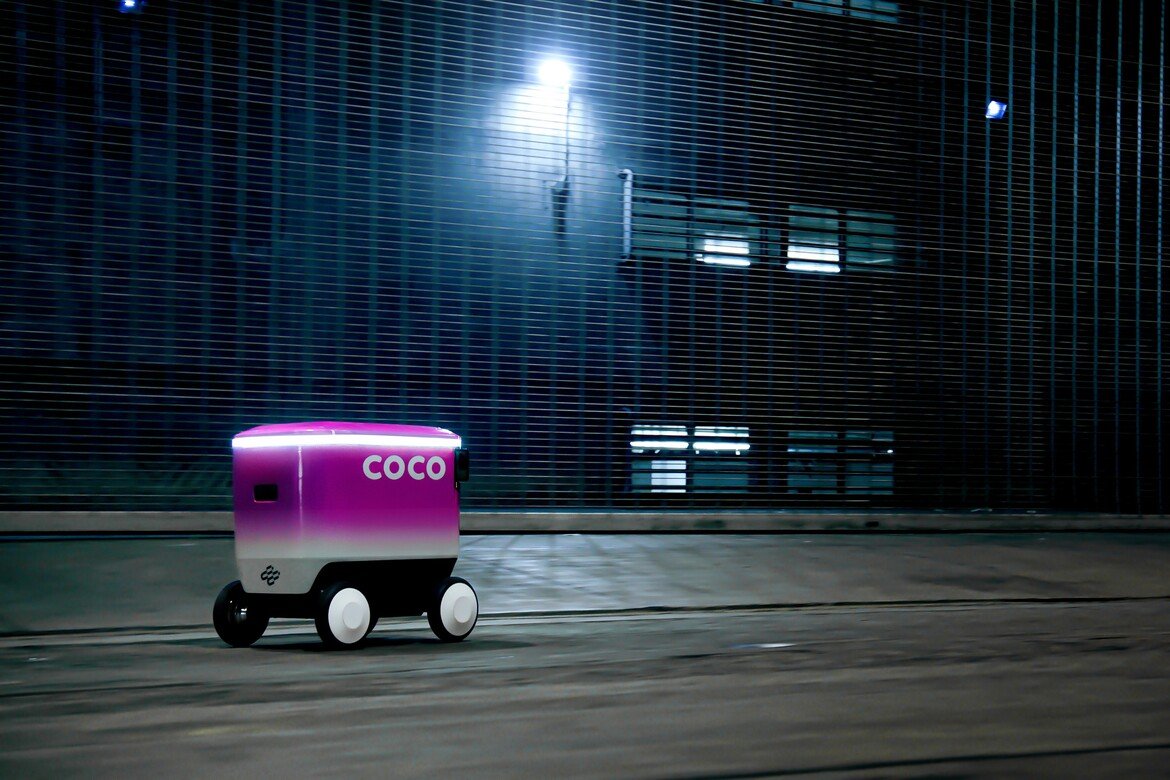
Niantic Spatial, a company spun out of the augmented reality developer behind Pokémon Go, has partnered with Coco Robotics to improve navigation for urban delivery robots. The collaboration uses spatial mapping data collected from players of Niantic’s games to help robots move through complex city environments.
The project highlights an unexpected intersection between gaming, artificial intelligence, and robotics: the same technology used to place digital creatures on a phone screen can also guide autonomous vehicles through real-world streets.
Turning AR Gameplay into Spatial Intelligence
When Pokémon Go launched in 2016, millions of players explored cities while using their smartphones to capture virtual creatures layered onto real-world environments.
Behind the scenes, the game relied on Niantic’s Visual Positioning System (VPS), a technology designed to understand a user’s location by analyzing surrounding landmarks rather than relying solely on GPS signals.
Players contributed to this system by scanning buildings, monuments, and other public spaces from different angles using their phones.
Over time, these scans created detailed three-dimensional maps of real-world locations.
The data helped Niantic improve AR accuracy in its games, but it also built a massive spatial dataset describing how cities look from ground level – exactly the type of information robots need to navigate sidewalks and intersections.
The Same Problem as Catching Pikachu
Niantic Spatial now aims to apply that dataset to robotics.
The company’s first robotics partnership is with Coco Robotics, which operates a fleet of small autonomous delivery robots designed to transport food and groceries through city streets.
Coco’s robots currently operate in several cities, including Los Angeles, Chicago, Miami, Jersey City, and Helsinki.
Navigating urban environments is one of the hardest problems in robotics. Tall buildings interfere with GPS signals, sidewalks are crowded with pedestrians, and conditions change constantly.
Niantic’s VPS technology helps solve this problem by allowing robots to identify their exact location by comparing camera images to its spatial database of landmarks.
According to Niantic Spatial CEO John Hanke, the underlying technical challenge is surprisingly similar to what players experienced in the AR game.
In both cases, software must understand how objects move through a complex physical world.
A Dataset Built by Millions of Players
Much of the data powering the system was collected indirectly by players.
Niantic introduced features that encouraged users to photograph and scan locations in exchange for rewards within the game, such as items or rare Pokémon.
These contributions helped build a detailed visual model of cities under different lighting conditions, weather, and viewing angles.
While Niantic has long acknowledged that its games collect environmental data, the revelation that these datasets are now helping train robots may surprise some players.
Still, for robotics developers, such datasets are extremely valuable.
Unlike simulation environments or small-scale robotics experiments, Niantic’s data reflects the messy complexity of real-world cities.
Gaming Data Meets Urban Robotics
The collaboration illustrates a broader trend in robotics development: companies are increasingly relying on large-scale datasets collected outside traditional robotics research.
Consumer technologies – including smartphones, cameras, and games – are generating vast amounts of real-world visual information that can help train autonomous systems.
For delivery robots attempting to navigate dense urban environments, that data may prove critical.
If the partnership succeeds, the hours players spent exploring parks, sidewalks, and landmarks in search of digital creatures may end up helping robots find their way through the same streets.
In other words, catching Pikachu may have helped teach a robot how to deliver pizza.