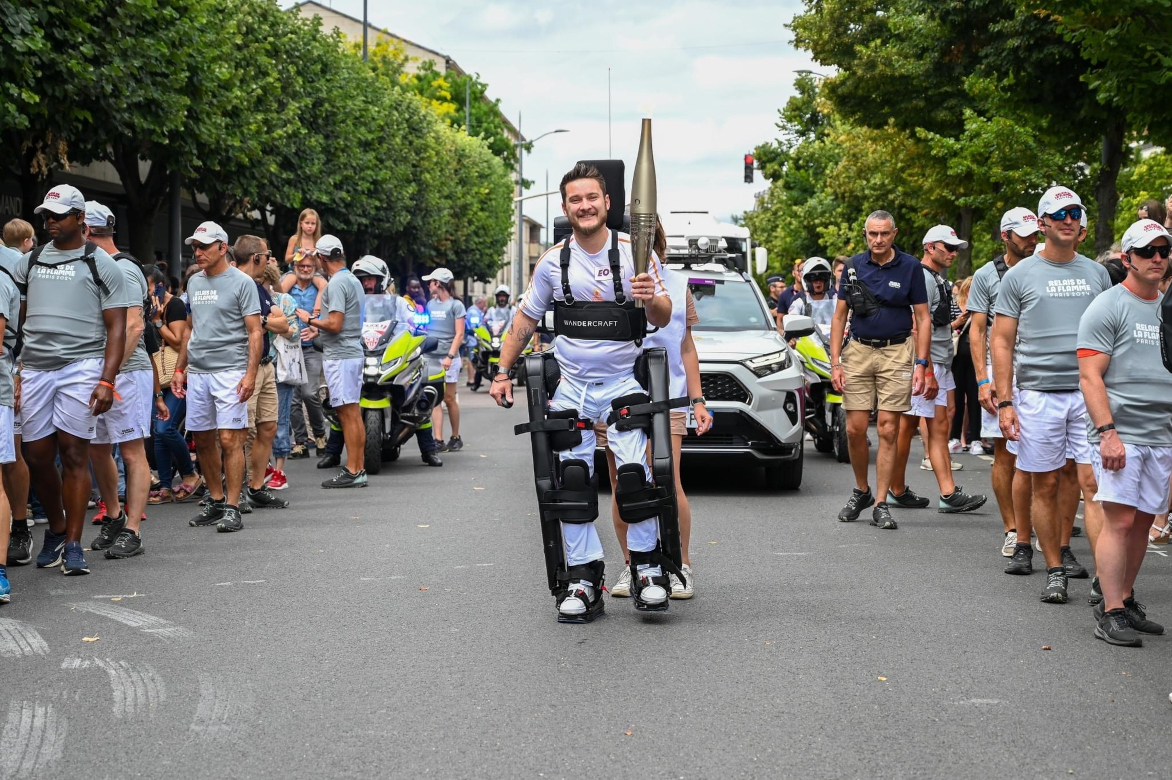

Wandercraft has enrolled the first patient in a clinical trial evaluating its Atalante X exoskeleton, a milestone that brings the company closer to expanding the use of autonomous robotic walking systems in rehabilitation settings. The trial is designed to assess safety, performance, and therapeutic outcomes for patients undergoing gait rehabilitation.
The enrollment represents a significant step for Atalante X, which is intended for use in hospitals and rehabilitation centers. Unlike many powered exoskeletons that require crutches or walkers, Atalante X is designed to operate hands-free, allowing patients to walk, turn, and stop autonomously under clinical supervision.
Wandercraft’s technology targets patients with neurological or mobility impairments who require intensive gait therapy, an area where staffing constraints and physical demands often limit treatment frequency and duration.
Autonomous Walking in Rehabilitation
Atalante X builds on Wandercraft’s earlier Atalante platform, which has been used in rehabilitation centers across Europe. The system uses a combination of onboard sensors, real-time control algorithms, and dynamic balance technology to enable stable walking without external support.
The exoskeleton is designed to adapt to each patient’s gait and posture, allowing clinicians to customize therapy sessions based on individual needs. By enabling hands-free movement, the system aims to promote more natural walking patterns and reduce the physical burden on therapists, who often must support patients manually during sessions.
In the clinical trial, researchers will evaluate how patients interact with the system over time, including measures of comfort, safety, and functional improvement. Data collected during the trial will help inform regulatory submissions and guide future product development.
From Research to Clinical Validation
Clinical validation is a critical step for robotic rehabilitation technologies, where safety standards are high and real-world performance can differ significantly from laboratory demonstrations. Wandercraft’s trial will assess Atalante X in controlled clinical environments, with close monitoring by medical professionals.
The company has emphasized that the goal is not to replace therapists, but to augment rehabilitation teams by enabling longer and more consistent therapy sessions. Autonomous exoskeletons can allow patients to practice walking repeatedly, which is often essential for neurological recovery.
Wandercraft’s approach reflects a broader trend in medical robotics toward systems that combine advanced autonomy with clinician oversight, balancing efficiency with patient safety.
Expanding the Role of Physical AI in Healthcare
The Atalante X trial comes amid growing interest in physical AI systems that can operate safely in close proximity to humans. In healthcare, robotics companies are increasingly focused on technologies that address labor shortages while improving patient outcomes.
By enrolling its first patient, Wandercraft moves Atalante X from development into a formal evaluation phase that could pave the way for wider adoption. Successful trial results could support expanded use in rehabilitation centers and potentially open the door to additional indications.
As healthcare systems face rising demand for rehabilitation services, autonomous exoskeletons like Atalante X are being positioned as tools that can help scale therapy without compromising quality. The outcome of Wandercraft’s clinical trial will be closely watched as an indicator of how quickly such systems can move from specialized use to standard care.
Disclaimer: RobotsBeat is an independent media brand owned and operated by NuvexMedia LLC, publishing news, research, and insights on artificial intelligence, emerging technologies, automation, and related industries. NuvexMedia LLC invests in and collaborates with companies across the AI, Robotics, technology, software, and digital innovation sectors. These relationships do not influence RobotsBeat's editorial coverage, and the publication maintains full editorial independence to provide accurate, timely, and objective information. © 2026 NuvexMedia LLC. All rights reserved. This content is for informational purposes only and should not be considered legal, tax, investment, financial, or other professional advice.