Ottonomy has introduced Ottumn.AI, a cloud-based orchestration platform designed to coordinate robots, drones, and smart infrastructure across logistics, healthcare, and industrial environments.
By Laura Bennett | Edited by Kseniia Klichova
Published:
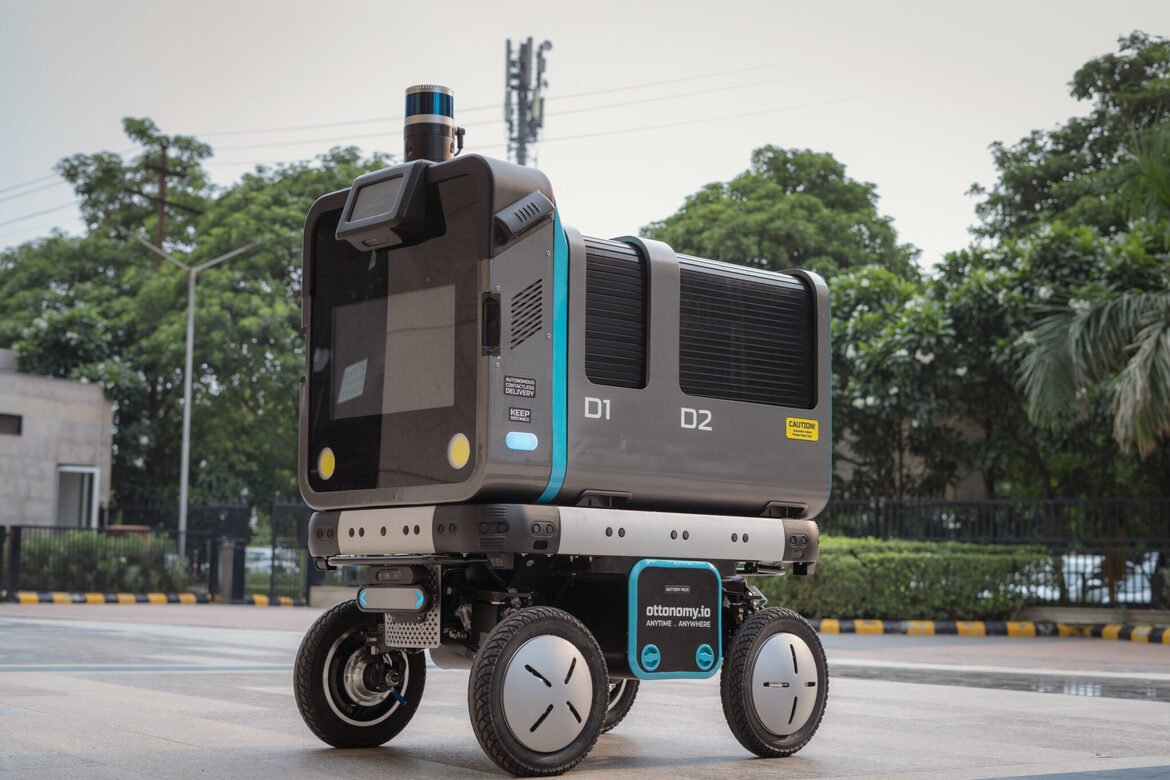
Ottonomy’s Ottumn.AI platform coordinates robots, drones, and infrastructure to enable autonomous logistics and physical AI deployment. Photo: Ottonomy.IO
Ottonomy.IO has launched Ottumn.AI, a cloud-based orchestration platform designed to coordinate robots, drones, and smart infrastructure as part of a unified physical AI ecosystem. The platform, introduced at the India AI Impact Summit 2026, reflects a shift in robotics development from isolated automation toward networked autonomy across entire operational environments.
Built on AI infrastructure from NVIDIA, Ottumn.AI connects diverse robotic systems, including delivery robots, drones, and facility-integrated devices such as elevators and secure access points. The goal is to enable robots to operate as part of coordinated workflows rather than as standalone machines.
This approach addresses a fundamental challenge in robotics deployment: scaling beyond individual robots to manage fleets operating across complex environments.
From Individual Machines to Coordinated Systems
Historically, robotics deployments have focused on individual devices performing specific tasks, such as delivery or inspection. Ottumn.AI introduces an orchestration layer that manages multiple robots and infrastructure components simultaneously.
The platform enables asynchronous operations, allowing robots and drones to hand off tasks without direct human involvement. For example, in healthcare settings, autonomous systems can transport medical samples using secure exchange points integrated with building infrastructure.
This orchestration capability depends on a multi-layer architecture combining edge computing, cloud infrastructure, and AI models. Local processing enables real-time decision-making, while cloud systems manage fleet coordination, simulation, and optimization.
The system also incorporates digital twin simulations, allowing operators to test and refine robotic workflows in virtual environments before deployment.
Combining Neural AI with Symbolic Reasoning
Ottumn.AI uses a neurosymbolic approach that integrates neural networks with symbolic logic. Neural AI models enable perception, allowing robots to interpret visual and environmental data. Symbolic reasoning ensures compliance with operational rules, safety requirements, and workflow constraints.
This hybrid architecture addresses one of the limitations of purely neural AI systems: the difficulty of ensuring predictable behavior in safety-critical environments.
The platform also supports interoperability across multiple robot vendors through compliance with the VDA 5050 standard, enabling businesses to integrate heterogeneous fleets without being locked into a single hardware provider.
By providing a unified control layer, Ottumn.AI allows organizations to deploy robots, drones, and infrastructure as part of a cohesive system rather than isolated automation tools.
Infrastructure as the Next Layer of Physical AI
The launch reflects a broader evolution in robotics, where infrastructure integration is becoming as important as individual robot capability.
Autonomous systems increasingly rely on coordinated interactions with their environment. Smart receptacles, automated access points, and building management systems enable robots to complete tasks without human intervention.
Ottonomy has partnered with logistics and infrastructure providers to enable this ecosystem. These integrations allow robots to deposit and retrieve items securely, while drones and ground robots coordinate deliveries across urban environments.
The company also plans to use emerging AI foundation models, including NVIDIA’s Cosmos platform, to improve robotic perception and planning capabilities.
Scaling Physical AI Deployment
As robotics adoption accelerates, orchestration platforms are emerging as critical infrastructure for scaling automation. Managing individual robots manually becomes impractical as deployments expand to dozens or hundreds of units.
Cloud-based orchestration systems enable centralized management, remote assistance, and continuous optimization, allowing robotic fleets to operate efficiently across large geographic areas.
The launch of Ottumn.AI highlights how robotics is evolving from hardware-centric development toward full-stack ecosystems combining hardware, software, and infrastructure.
As embodied AI moves into real-world deployment across healthcare, logistics, and manufacturing, orchestration platforms like Ottumn.AI could play a central role in enabling robots to function as coordinated systems rather than isolated machines.
This transition marks a key step toward scalable physical AI, where automation is defined not by individual robots, but by interconnected autonomous networks.
NVIDIA has unveiled Cosmos Policy, a unified AI model for robot control and planning built on its world foundation models, improving manipulation performance and real-world task execution.
By Rachel Whitman | Edited by Kseniia Klichova
Published:
NVIDIA’s Cosmos Policy integrates perception, planning, and control into a unified AI model, advancing embodied intelligence for robotic manipulation. Photo: NVIDIA
NVIDIA has introduced Cosmos Policy, a new AI model designed to improve how robots plan and execute physical actions. The system builds on the company’s Cosmos world foundation models, representing a shift toward unified AI architectures capable of directly controlling robotic systems rather than simply interpreting environments.
The announcement reflects a broader trend in robotics: the convergence of perception, reasoning, and action within a single AI model. As robots move into more complex real-world environments, fragmented software pipelines are giving way to integrated systems that can understand and respond to physical dynamics in real time.
A Unified Model for Perception and Action
At its core, Cosmos Policy addresses one of robotics’ most persistent challenges: translating perception into precise physical movement. Traditionally, robotic systems rely on separate modules for vision, planning, and motor control, each trained independently and connected through complex software pipelines.
Cosmos Policy simplifies this architecture by embedding perception, action, and planning within a single model. The system builds on Cosmos Predict, a world foundation model trained to anticipate how physical environments evolve over time.
Instead of treating robot commands as separate outputs, Cosmos Policy encodes actions and environmental changes as part of the same predictive framework used for video generation. This allows the model to generate sequences of robot actions while simultaneously predicting how those actions will affect the environment.
The result is a system that can perform multiple functions within one architecture, including generating movement commands, predicting future physical states, and evaluating potential outcomes. This integrated approach allows robots to anticipate consequences before executing actions, improving planning reliability.
Improving Manipulation and Real-World Performance
Early results suggest the unified architecture improves performance in robotic manipulation tasks. NVIDIA evaluated Cosmos Policy on established robotics benchmarks, including LIBERO and RoboCasa, which test multi-step object handling and household task scenarios.
The model demonstrated higher success rates than baseline approaches trained without world foundation model pretraining. In real-world experiments using the ALOHA robot platform, Cosmos Policy was able to complete complex manipulation tasks using visual input alone.
One key advantage lies in the model’s ability to leverage temporal understanding learned during video training. By learning how physical scenes evolve over time, the system develops a form of predictive intuition about motion and interaction.
This capability is particularly important for manipulation tasks requiring precise coordination, such as grasping, moving, and placing objects in dynamic environments.
The model can also operate in two modes. In direct control mode, it generates actions immediately. In planning mode, it evaluates multiple possible action sequences and selects the most effective path based on predicted outcomes.
A Shift Toward World Foundation Models for Robotics
Cosmos Policy reflects NVIDIA’s broader strategy to apply world foundation models to robotics and physical AI. Unlike traditional AI systems trained primarily on static images or text, world foundation models are trained on video data to understand how physical systems evolve over time.
This temporal modeling capability is essential for robotics, where actions and consequences unfold dynamically.
The approach contrasts with vision-language models commonly used in robotics research. While those models can interpret scenes and suggest actions, they often lack the detailed physical understanding required for precise motor control.
World foundation models, by contrast, are trained to predict motion and interaction directly, making them better suited for controlling physical systems.
As embodied AI continues to evolve, unified models like Cosmos Policy could simplify robotics software stacks, reduce training complexity, and improve generalization across tasks.
NVIDIA’s latest release highlights a broader shift in robotics architecture. Rather than assembling separate perception, planning, and control systems, the industry is moving toward integrated AI models capable of understanding and acting within the physical world.
If successful, this approach could accelerate the development of robots capable of operating reliably in unstructured environments, bringing physical AI closer to large-scale commercial deployment.
Toyota Motor Manufacturing Canada is deploying Agility Robotics’ Digit humanoid robots after a successful pilot, expanding their use in logistics and manufacturing tasks.
Toyota is expanding its use of humanoid robots in manufacturing, deploying Digit robots from Agility Robotics at its Canadian production facilities following a year-long pilot. The move signals growing confidence among major automakers that humanoid robots are ready to assist with real industrial tasks.
Toyota Motor Manufacturing Canada, the automaker’s largest production operation outside Japan, plans to initially deploy Digit robots to handle repetitive logistics tasks such as loading and unloading containers from automated transport systems. The company operates major assembly plants in Cambridge and Woodstock, Ontario, producing vehicles at significant scale and employing thousands of workers.
The deployment represents one of the clearest examples yet of humanoid robots moving from pilot programs into sustained manufacturing roles.
Moving Beyond Pilot Programs
Toyota’s evaluation of Digit involved multiple phases, including technical validation and onsite trials using three robots. Following the pilot’s success, the company plans to introduce at least seven additional robots, with the potential for further expansion if operational benefits continue.
The initial focus is on material handling tasks within production and logistics workflows. These activities are repetitive and physically demanding, making them ideal candidates for automation.
Humanoid robots offer a distinct advantage in such environments because they can operate within spaces designed for human workers. Unlike traditional industrial robots, which often require specialized infrastructure, humanoids can integrate into existing workflows with minimal facility modification.
Toyota executives emphasized that the deployment is intended to improve both operational efficiency and employee working conditions. Automating routine tasks allows human workers to focus on higher-value activities, while reducing physical strain associated with repetitive manual labor.
A Growing Commercial Footprint for Humanoid Robots
The partnership between Toyota and Agility Robotics reflects a broader trend across the manufacturing and logistics sectors. Major companies are increasingly testing humanoid robots as part of long-term automation strategies.
Digit has already been deployed commercially by logistics provider GXO Logistics, and pilots or deployments are underway at companies including Amazon and automotive and industrial supplier Schaeffler.
These deployments mark a shift from demonstration-driven development toward production-oriented integration. Rather than focusing on technical showcases, robotics companies are prioritizing reliability, safety, and compatibility with existing industrial systems.
Agility Robotics has also developed a cloud-based fleet management platform, allowing companies to monitor and coordinate robot operations at scale. This infrastructure enables humanoids to function as part of integrated production systems rather than isolated machines.
The Strategic Role of Humanoids in Manufacturing
Labor shortages and workforce demographics are accelerating interest in humanoid robotics. Manufacturing facilities often face challenges filling physically demanding roles, particularly in logistics and material handling.
Humanoid robots provide a flexible solution. Because they are designed with human-like form factors, they can operate in environments originally built for human workers without requiring major redesign.
This flexibility differentiates humanoids from traditional industrial automation systems, which typically require customized installations.
Agility Robotics CEO Peggy Johnson said the company is working to develop humanoids capable of safely operating alongside human workers. Cooperative safety is a critical requirement for large-scale deployment, ensuring robots can function reliably in shared workspaces.
The automotive industry has become a focal point for humanoid robot deployment. Automakers including BMW, Mercedes-Benz, and Hyundai Motor Company have also begun testing or deploying humanoid robots in manufacturing environments.
A Turning Point for Physical AI Deployment
Toyota’s decision to move from pilot testing to operational deployment reflects a key inflection point for humanoid robotics. The central question facing the industry has been whether humanoids can deliver reliable performance under real production conditions.
Deployments like this suggest that humanoid robots are beginning to meet those requirements, at least for certain classes of tasks.
The transition from experimental demonstrations to production deployment represents a fundamental shift in robotics commercialization. Rather than proving what robots can do in controlled environments, companies are now demonstrating what robots can do consistently in real-world industrial operations.
As physical AI systems continue to improve, humanoid robots may become a standard component of manufacturing infrastructure. Toyota’s deployment of Digit signals that the industry is entering a new phase – one where humanoid robots are no longer experimental technology, but emerging tools of industrial production.
Amazon has halted its Blue Jay warehouse robotics project less than six months after unveiling the prototype, redirecting its underlying technology to other automation initiatives.
By Rachel Whitman | Edited by Kseniia Klichova
Published:
Updated:
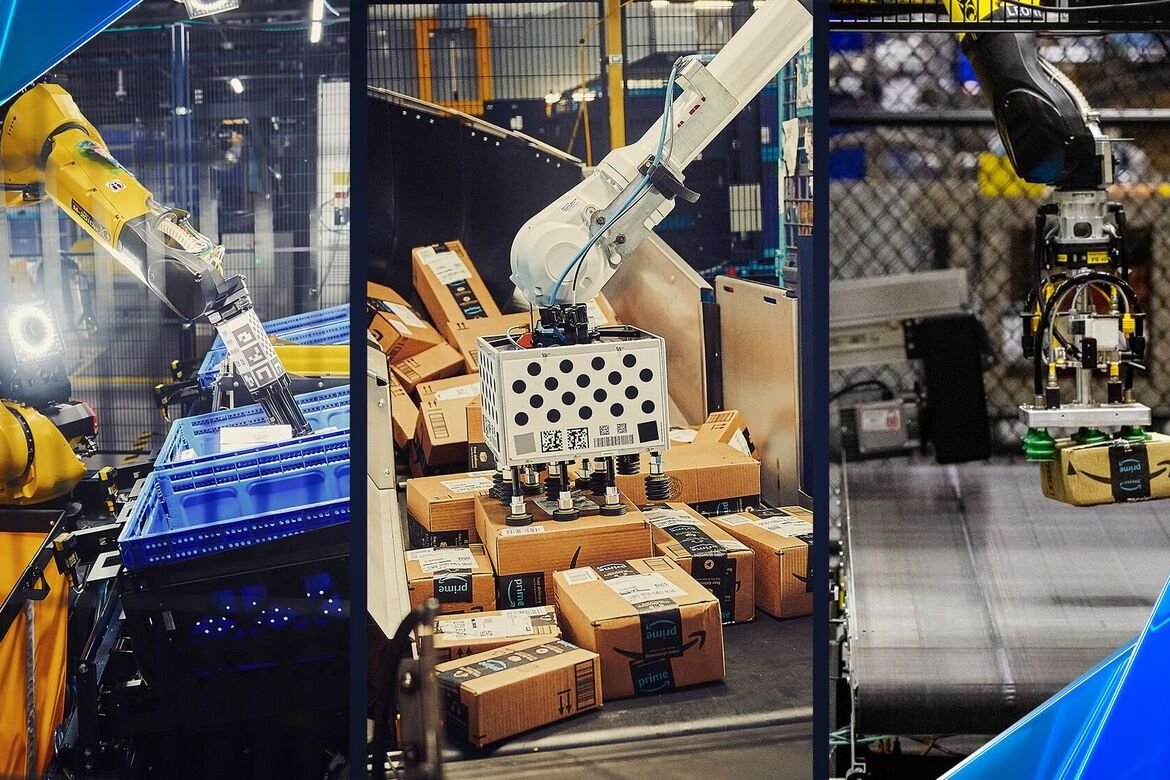
Amazon warehouse robots operate alongside human workers, reflecting the company’s continued investment in automation despite halting the Blue Jay prototype project. Photo: Amazon
Amazon has halted its Blue Jay warehouse robotics project less than six months after introducing the prototype, underscoring both the rapid pace and inherent uncertainty of robotics innovation. The company confirmed that while development of the specific robot has stopped, its core technologies will be integrated into future automation systems.
Blue Jay was unveiled in October as a multi-armed robotic system designed to sort and move packages in same-day delivery facilities. Unlike Amazon’s established fleet of mobile robots, which transport goods across warehouse floors, Blue Jay focused on manipulation – one of the most technically challenging aspects of warehouse automation.
The project’s suspension highlights the ongoing experimentation required to scale robotics beyond controlled environments and into complex real-world workflows.
Rapid Prototyping Meets Practical Constraints
Blue Jay represented a shift toward faster robotics development cycles. Amazon built the system in approximately one year, significantly shorter than the timelines required for earlier warehouse robots. The company attributed the accelerated development to advances in artificial intelligence, particularly in perception and manipulation.
The robot was designed to automate package handling tasks traditionally performed by human workers, using multiple robotic arms to sort and reposition items. Such manipulation tasks require robots to interpret varied object shapes, weights, and orientations, often under tight time constraints.
Despite promising early results, Blue Jay remained a prototype rather than a production-ready system. Amazon said it would redeploy engineers and technologies developed during the project into other robotics programs.
This reflects a broader industry reality: robotics development often involves iterative experimentation, with individual projects serving as stepping stones toward more robust systems.
Robotics Remains Central to Amazon’s Automation Strategy
The suspension of Blue Jay does not signal a retreat from robotics. Amazon continues to operate one of the largest robotic fleets in the world, with more than one million robots deployed across its fulfillment centers.
These systems perform tasks including transporting inventory, sorting packages, and assisting human workers in warehouse operations. Amazon’s robotics program traces back to its 2012 acquisition of Kiva Systems, which provided the foundation for its automated fulfillment infrastructure.
More recently, the company introduced robots with enhanced manipulation capabilities, including the Vulcan system. Unlike traditional robots limited to predefined movements, Vulcan incorporates sensors and AI models that allow it to interact with objects more dynamically.
Such developments reflect Amazon’s long-term objective: expanding automation beyond transportation into manipulation and decision-making.
The Hard Problem of Robotic Manipulation
Blue Jay’s suspension underscores one of the most difficult challenges in robotics: enabling robots to handle diverse objects reliably in unstructured environments.
Transportation robots operate in relatively predictable conditions, moving along predefined routes. Manipulation robots, by contrast, must interpret and interact with objects that vary widely in size, shape, and material properties.
Advances in AI, particularly machine learning models trained on real-world data, are helping address these challenges. However, achieving production-level reliability requires extensive testing and refinement.
The underlying technologies developed for Blue Jay are expected to contribute to future systems, suggesting that the project’s impact will extend beyond its initial prototype phase.
Iteration as a Feature of Robotics Innovation
Amazon’s decision reflects a broader pattern in robotics development. Unlike software, where new features can be deployed instantly, robotics systems require hardware validation, safety certification, and integration with physical workflows.
Prototype projects often inform future designs, even if they are not deployed directly. By rapidly testing new concepts, companies can accelerate learning cycles and refine their automation strategies.
Amazon’s continued investment in robotics indicates that automation remains a core component of its fulfillment infrastructure. The company’s approach emphasizes continuous experimentation, where individual projects contribute to incremental improvements in capability.
The suspension of Blue Jay illustrates the iterative nature of robotics progress. Even as specific projects are discontinued, the knowledge gained helps drive the evolution of future systems.
As warehouse automation advances, manipulation – not mobility – is emerging as the next frontier. Amazon’s experience with Blue Jay highlights both the promise and complexity of building robots capable of handling the full range of tasks performed in modern logistics operations.
China’s humanoid robots performed complex dance and martial arts routines at the Spring Festival Gala, showcasing advances in balance and coordination while raising questions about real-world readiness.
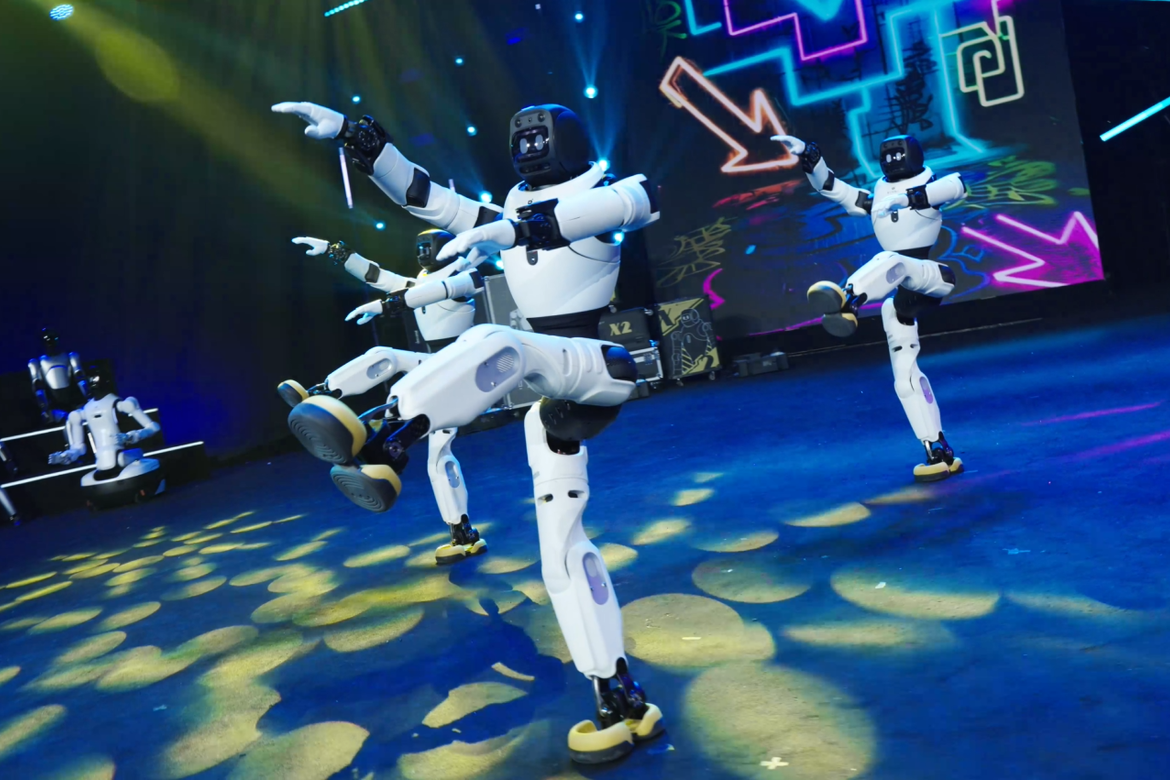
Humanoid robots performing martial arts, backflips, and synchronized dance routines captivated audiences during China’s Spring Festival Gala, the country’s most-watched annual television broadcast. The display, featuring machines developed by multiple domestic robotics companies, provided one of the clearest public demonstrations yet of how embodied AI is advancing beyond basic locomotion.
The performance was technically sophisticated. Robots executed coordinated movements with precise timing, maintained balance during jumps and spins, and operated in synchronized groups without falling. For viewers, the display represented a striking departure from earlier humanoid demonstrations, which often focused on simple walking or limited choreographed sequences.
But beyond spectacle, the performance also reflected China’s broader strategy to position humanoid robotics as a pillar of its future industrial and technological leadership.
A Public Showcase of Industrial Strategy
Public humanoid robot performances have become a recurring feature of China’s technology narrative. Experts say these demonstrations serve not only as engineering milestones but also as visible indicators of national technological progress.
Kyle Chan, a technology analyst at the Brookings Institution, noted that humanoid robots are particularly effective symbols because their capabilities are easily understood by general audiences. Unlike abstract AI systems, humanoids provide a tangible representation of technological advancement.
The scale and coordination of the gala performance offered a specific technical signal: the ability to operate multiple robots simultaneously with stable motion and consistent mechanical behavior. This requires reliable actuator control, precise synchronization, and repeatable performance across units – essential capabilities for future industrial deployment.
China’s investment in robotics reflects its broader industrial strategy. Robotics and AI have been identified as priority sectors in national development plans, aimed at transforming manufacturing from labor-intensive production toward automation-driven productivity.
Demonstration Capability vs Industrial Readiness
Despite the impressive performance, experts caution that stage demonstrations do not necessarily reflect readiness for real-world deployment.
Georg Stieler, managing director of robotics consultancy Stieler Technology and Marketing, emphasized that choreographed routines rely heavily on pre-programmed sequences and repetition. Robots performing on stage are trained extensively to execute specific motions under controlled conditions.
This differs significantly from industrial environments, where robots must respond dynamically to unpredictable conditions, handle variable objects, and recover from unexpected disruptions.
Dance routines primarily test locomotion and balance, areas where humanoid robotics has made substantial progress. However, manipulation – the ability to handle objects with precision – remains a more complex and slower-moving challenge.
Reliability is another critical factor. Industrial robots must operate continuously with minimal failure rates, a standard that humanoid robots are still working toward achieving.
A Signal of Intensifying Global Competition
China’s humanoid robot progress is occurring within a rapidly evolving global competitive landscape. The country has established a large robotics industry, supported by extensive manufacturing infrastructure and government investment.
According to industry estimates, China’s humanoid robot shipments are expected to increase significantly in the coming years. Technology leaders, including Elon Musk of Tesla, have acknowledged Chinese robotics companies as major competitors in the emerging embodied AI sector.
The rise of humanoid robotics reflects a broader shift in AI development. The first wave of AI focused on software systems, while the next phase emphasizes physical systems capable of interacting with the real world.
For China, humanoid robotics aligns with its long-term industrial transformation goals. As Marina Zhang, a professor at the University of Technology Sydney, noted, robotics could play a central role in shifting manufacturing toward higher-value, automated production.
Progress with Clear Limits
The Spring Festival Gala performance highlighted both the rapid progress and remaining challenges of humanoid robotics.
Advances in balance, coordination, and actuator control have enabled robots to perform complex physical routines that were previously impossible. These capabilities represent foundational steps toward real-world deployment.
At the same time, real-world applications require additional capabilities, including robust manipulation, environmental perception, and long-term reliability.
The gap between demonstration and deployment remains a defining challenge for the industry. But public showcases like this serve an important function: they reveal how quickly the underlying technology is advancing.
Humanoid robots may not yet be ready to replace human workers at scale. However, their growing physical capability suggests that embodied AI is moving steadily toward practical industrial and commercial roles.
As robotics companies continue to improve both hardware and AI systems, performances that once seemed futuristic are becoming technical milestones in a rapidly evolving industrial landscape.
Unitree Robotics plans to ship up to 20,000 humanoid robots in 2026, signaling rapid scaling as the company moves from demonstrations to broader commercial deployment.
By Daniel Krauss | Edited by Kseniia Klichova
Published:
Updated:
Unitree humanoid robots performing coordinated movements demonstrate the company’s push toward scaled production and real-world deployment. Photo: Unitree Robotics
Chinese robotics firm Unitree Robotics plans to ship up to 20,000 humanoid robots in 2026, marking one of the most aggressive production targets yet announced in the emerging embodied AI sector. The projection, shared by CEO Wang Xingxing, would represent nearly a fourfold increase from the roughly 5,500 humanoid units the company shipped in 2025.
The planned expansion reflects growing confidence that humanoid robots are approaching commercial viability, even as widespread deployment remains in its early stages.
From Demonstration Scale to Industrial Production
Unitree’s rapid scaling comes after a year of highly visible demonstrations. Its humanoid robots gained national attention during China’s Spring Festival Gala, where machines performed coordinated routines involving complex maneuvers such as jumps, spins, and synchronized movements.
Such demonstrations serve as technical validation, highlighting improvements in balance, actuator power, and motion planning. Some routines involved robots reaching speeds of up to four meters per second and executing airborne maneuvers requiring precise coordination.
While these performances showcase physical capability, scaling production introduces a different set of challenges. Manufacturing humanoid robots requires precise assembly, supply chain coordination, and quality control to ensure consistent performance across thousands of units.
Achieving shipment volumes in the tens of thousands would move humanoid robotics closer to the production scale already seen in industrial robot arms and autonomous mobile robots.
Scaling Hardware for a New Automation Category
Unitree’s shipment targets also highlight the importance of hardware manufacturing in embodied AI. Unlike software-only AI systems, humanoid robots require integrated mechanical, electrical, and computational components.
Scaling production involves securing reliable supply chains for actuators, sensors, processors, and structural components. These elements must operate reliably under real-world conditions, including variable temperatures, loads, and continuous operation.
The company’s progress reflects China’s broader manufacturing ecosystem, which enables rapid hardware iteration and production scaling. This ecosystem has allowed Chinese robotics companies to accelerate development timelines compared to many international competitors.
Other domestic robotics firms, including MagicLab, Galbot, and Noetix, are also advancing humanoid platforms, contributing to a rapidly evolving competitive landscape.
The Gap Between Demonstration and Deployment
Despite rising shipment numbers, large-scale humanoid deployment remains in its early phases. Many robots shipped today are used for research, development, and demonstration rather than continuous industrial work.
However, shipment volume itself is a key indicator of industry maturity. Higher production volumes enable cost reductions, improve reliability through operational feedback, and accelerate software development through real-world data collection.
Analysts note that the transition from demonstration capability to sustained operational productivity will determine the long-term trajectory of humanoid robotics.
Unitree’s production targets suggest that humanoid robots are moving beyond experimental platforms toward commercially scalable products. If the company achieves its shipment goals, it would represent one of the clearest signals yet that embodied AI is entering an industrialization phase.
The coming years will determine whether humanoid robots can translate rapid production growth into sustained economic value. For now, Unitree’s expansion reflects a broader industry shift: the race to scale physical AI is accelerating, and manufacturing capacity may become as important as algorithmic performance.
An Indian university was asked to vacate its booth at the India AI Impact Summit after presenting a Chinese-made Unitree robot dog as its own, raising questions about credibility and global competition in robotics.
By Laura Bennett | Edited by Kseniia Klichova
Published:
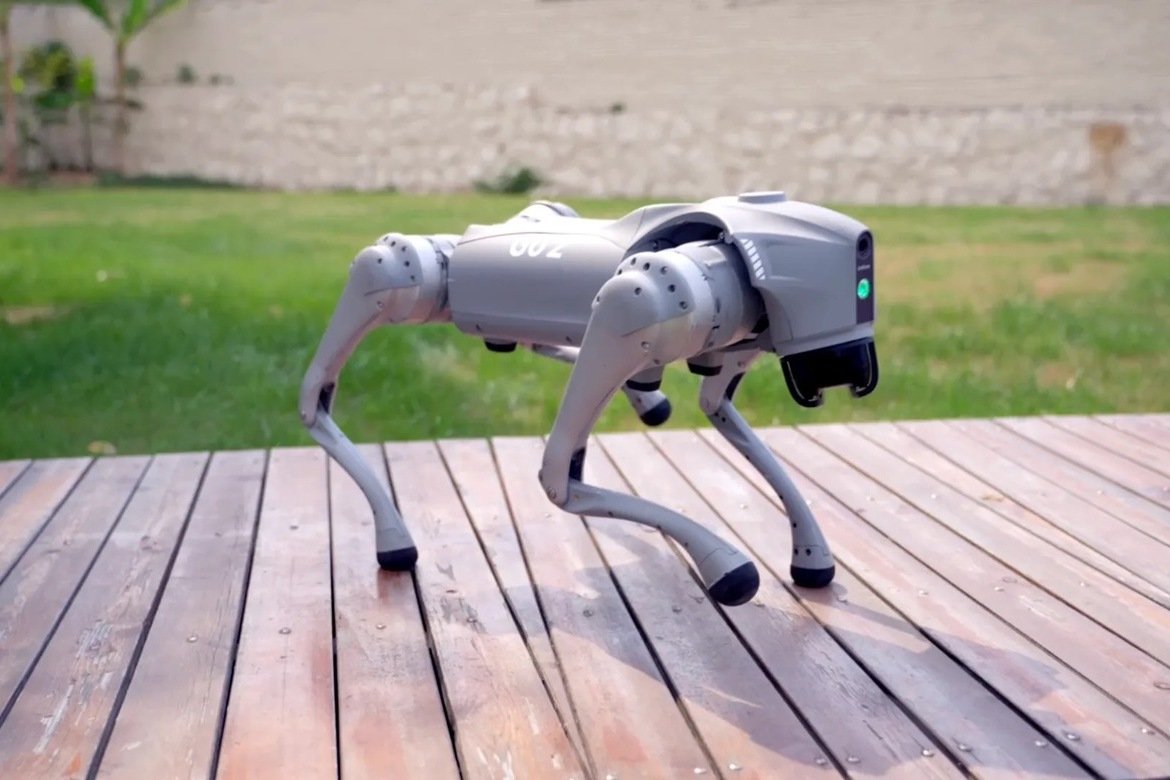
A Unitree Go2 robot dog displayed at the India AI Impact Summit became the center of controversy after being misrepresented as a local innovation. Photo: Unitree Robotics
A controversy involving a misrepresented robot at India’s flagship AI event has exposed the growing geopolitical and industrial stakes surrounding robotics development. Organizers at the India AI Impact Summit in New Delhi asked a university exhibitor to vacate its booth after a Chinese-made robot dog was presented as an indigenous creation, drawing scrutiny from government officials and industry observers.
The robot in question was identified as the Go2 quadruped robot manufactured by Unitree Robotics, a widely available platform used globally in robotics research, education, and development. The incident quickly gained attention after video of the demonstration circulated online, prompting criticism and raising questions about authenticity and technical capability.
The episode comes at a time when robotics has become a focal point of national technology strategy, with countries racing to develop domestic expertise in embodied AI and automation.
Credibility and Competition in Robotics Development
The controversy highlights a deeper structural issue facing emerging robotics ecosystems: the gap between assembling systems and developing core technology.
Quadruped robots like Unitree’s Go2 are commercially available and widely used by universities and startups as research platforms. These systems allow researchers to focus on software development, perception, and autonomy without building hardware from scratch.
However, presenting a commercially produced robot as an original development risks undermining credibility in a sector where technological independence carries strategic and economic significance.
The timing amplified the impact. The India AI Impact Summit has been positioned as a major international gathering, featuring participation from global technology leaders including Sundar Pichai, CEO of Google, Sam Altman, CEO of OpenAI, and Dario Amodei, CEO of Anthropic. The summit has also attracted significant investment commitments, reflecting India’s ambition to become a global AI hub.
Against that backdrop, the incident became symbolic of the broader challenge of building a domestic robotics ecosystem capable of competing globally.
The Strategic Importance Of Robotics Supply Chains
The episode underscores the growing importance of robotics supply chains and hardware sovereignty. Robotics platforms integrate multiple critical components, including sensors, actuators, processors, and AI software. Countries seeking leadership in robotics must develop capabilities across this entire stack.
China currently dominates large segments of robotics manufacturing, particularly in cost-effective hardware production. Companies like Unitree Robotics have scaled rapidly by vertically integrating design, manufacturing, and deployment.
Other nations, including India, are investing heavily to build their own robotics ecosystems. The India AI Impact Summit itself reflects national efforts to accelerate AI development, attract investment, and expand domestic technical capacity.
However, building robotics infrastructure takes time. Hardware development requires specialized manufacturing, precision engineering, and supply chain coordination. These challenges make robotics development fundamentally different from software-centric AI.
A Signal of Robotics’ Rising Global Stakes
The controversy highlights how robotics has moved beyond technical research into the realm of national competitiveness and geopolitical strategy.
Robotics is increasingly viewed as critical infrastructure for future manufacturing, logistics, defense, and service industries. As a result, authenticity and technical credibility carry growing importance.
At the same time, the widespread availability of commercial robotics platforms reflects a positive trend. Access to affordable hardware allows universities and startups to accelerate innovation without requiring massive upfront investment.
The incident ultimately reflects a sector in transition. As embodied AI moves toward commercialization, countries and institutions are competing not just for technological breakthroughs, but for credibility and leadership in the emerging robotics economy.
The global race to develop physical AI systems is intensifying. Incidents like this serve as reminders that technological leadership depends not only on ambition and investment, but on building genuine engineering capability across hardware, software, and manufacturing.
China has opened its first 7S humanoid robot store in Wuhan, combining sales, training, and deployment services in a new retail model aimed at accelerating real-world adoption.
By Rachel Whitman | Edited by Kseniia Klichova
Published:
Humanoid robots demonstrate service and interaction capabilities inside China’s first 7S robot store in Wuhan, reflecting efforts to commercialize embodied AI systems. Photo: Hubei Humanoid Robot Innovation Center
China has opened its first 7S humanoid robot store in Wuhan, marking a new phase in the commercialization of embodied AI. The facility, operated by the Hubei Humanoid Robot Innovation Center, functions not only as a retail showroom but also as a full-service hub integrating sales, training, maintenance, and deployment support.
Located in Wuhan’s East Lake High-Tech Development Zone, a major technology cluster, the store represents an expansion of the traditional automotive dealership model into robotics. The “7S” framework extends beyond sales and service to include solutions development, demonstrations, and technical education, covering the entire lifecycle of humanoid robot deployment.
The concept reflects China’s broader effort to move humanoid robotics from demonstration to scalable commercial infrastructure.
A Retail Model Designed for Industrial Technology
Since opening in November 2025, the Wuhan store has attracted significant public and industry interest. According to operators, it has received approximately 18,000 visitors and generated roughly 615,000 yuan ($88,600) in revenue, with robots deployed in commercial events and experiential demonstrations.
The store features 17 humanoid robot models spanning a wide price range, from entry-level educational units to advanced industrial platforms costing up to 700,000 yuan. Demonstrations include robots serving as retail assistants, playing sports, and performing entertainment functions, as well as machines designed for industrial manufacturing, healthcare support, and public services.
This physical retail presence serves a strategic purpose beyond direct sales. It allows companies to expose customers, engineers, and policymakers to humanoid robots in operational settings, reducing barriers to adoption by providing hands-on experience.
The inclusion of rental services also reflects early commercial experimentation. Short-term deployments at events and public venues allow organizations to test robots in controlled scenarios while generating operational data and market awareness.
Training The Workforce And The Machines
One of the store’s most significant functions is education. Training programs provide hands-on instruction for robot operators, engineers, and students, addressing one of the key bottlenecks in robotics adoption: workforce readiness.
More than 1,000 participants have completed courses covering robot operation, programming, and maintenance. Training initiatives target both professionals and students, building technical capacity across multiple skill levels.
The store also connects directly to a larger training ecosystem. Nearby facilities operated by the Hubei Humanoid Robot Innovation Center use simulation environments and real-world data collection to train humanoid robots themselves. These systems generate large volumes of operational data, which is used to improve control models and accelerate performance improvements.
This dual training approach – educating both humans and robots – highlights the emerging infrastructure required to scale embodied AI.
Building a Domestic Supply Chain for Physical AI
The store also serves as a showcase for China’s growing humanoid robotics supply chain. Regional manufacturers and research institutions contribute key components, including sensors, actuators, and AI systems.
For example, one humanoid robot displayed at the store was developed with significant local supply chain participation, with more than 80 percent of its hardware sourced from regional suppliers. This reflects China’s vertically integrated manufacturing ecosystem, which enables faster development cycles and lower production costs.
Government support is reinforcing this industrial strategy. National and regional policies have identified humanoid robotics as a priority sector, with initiatives aimed at expanding deployment in manufacturing, healthcare, and public services.
Industry forecasts suggest that humanoid robot adoption could expand dramatically in coming decades, with millions of units potentially deployed across industries.
From Showrooms to Deployment Infrastructure
The launch of the 7S store signals a broader shift in robotics commercialization. Early robotics development focused on research labs and isolated pilot deployments. The emergence of retail and service hubs reflects a transition toward scalable distribution and support infrastructure.
Such facilities serve as access points for customers, developers, and integrators, helping bridge the gap between technology availability and practical deployment.
The model also addresses a fundamental challenge in robotics adoption: familiarity. Exposure to operational robots, training opportunities, and deployment services reduces uncertainty and accelerates integration into real-world environments.
The Wuhan store may represent an early prototype of robotics distribution infrastructure. Just as automotive dealerships enabled the expansion of personal vehicles, dedicated robotics service centers could play a similar role in scaling humanoid adoption.
As embodied AI systems move toward mainstream deployment, the creation of physical infrastructure to support sales, training, and lifecycle management may prove as important as advances in the robots themselves.
A new report projects humanoid robotics could grow into a $200 billion market, driven by labor shortages, aging populations, and advances in physical AI deployment.
By Daniel Krauss | Edited by Kseniia Klichova
Published:
Humanoid robots deployed in industrial environments reflect the convergence of AI, hardware engineering, and automation reshaping global productivity. Photo: Agility Robotics
Humanoid robotics is transitioning from experimental technology to industrial infrastructure, according to a new report from the Future Investment Initiative Institute in collaboration with Barclays. The analysis projects the sector could grow from a $2 billion to $3 billion market today into a $200 billion industry over the coming decade, driven by structural labor shortages and advances in embodied artificial intelligence.
The shift reflects a broader evolution in AI. After years dominated by software systems such as large language models, the next phase centers on physical AI – machines capable of translating digital intelligence into physical action. This convergence of AI, hardware, and industrial engineering is reshaping how companies think about productivity, automation, and workforce scalability.
Structural Forces Driving Humanoid Adoption
Several long-term trends are accelerating humanoid robot development. Global demographics are shifting rapidly, with the proportion of people over 65 expected to rise significantly by mid-century. At the same time, urbanization and workforce preferences are reducing the availability of labor for physically demanding or repetitive roles.
These pressures are especially acute in manufacturing, logistics, agriculture, and healthcare. Humanoid robots are designed to operate in environments built for human workers, giving them an advantage over traditional automation systems that require specialized infrastructure.
The productivity implications are substantial. Even operating at partial efficiency, humanoid robots can deliver higher sustained output due to near-continuous operation. At full human parity, the report estimates productivity gains could reach up to 150 percent. This scalability transforms labor from a fixed constraint into a variable resource, allowing production capacity to expand without proportional workforce increases.
Deployment is already underway. Companies such as Agility Robotics and Figure AI have placed humanoid robots into operational environments, including logistics facilities and automotive manufacturing plants. These deployments mark a transition from proof-of-concept demonstrations to real-world industrial roles.
The Three Pillars of Physical AI
The report identifies three critical components driving humanoid robotics development: compute systems, mechanical hardware, and energy storage. Together, these elements enable machines to perceive, plan, and execute physical actions.
Compute systems provide perception, reasoning, and decision-making capabilities. Mechanical hardware – actuators, motors, sensors, and structural components – converts digital instructions into motion. Batteries supply the energy required for sustained operation.
Hardware remains the dominant cost factor, accounting for roughly half the build cost of a humanoid robot. However, rapid technological progress has significantly reduced total system costs. A decade ago, humanoid robots could cost millions of dollars per unit. Today, some platforms are approaching price points near $100,000, bringing commercial deployment within reach.
These cost reductions mirror earlier technology adoption cycles, where declining component costs enabled widespread deployment. As manufacturing scales and supply chains mature, humanoid robots could become economically viable across a wider range of industries.
A Global Industrial Realignment
The rise of physical AI is reshaping global industrial competition. China currently leads in humanoid production and deployment, benefiting from integrated manufacturing ecosystems and supply chain scale. Europe, meanwhile, is positioned to compete through its strengths in precision engineering and automotive manufacturing.
Investment activity reflects growing confidence in the sector. Venture capital funding in robotics has increased dramatically in recent years, while new humanoid platforms continue to enter development. Partnerships between robotics companies and industrial manufacturers are accelerating integration into real-world production environments.
According to Jensen Huang, CEO of NVIDIA, humanoid robots could reach widespread deployment sooner than many expect. Such statements reflect growing industry consensus that embodied AI is approaching commercial viability.
The broader implications extend beyond robotics manufacturers. Supply chains supporting motors, actuators, sensors, and energy systems stand to benefit as production scales. The transition to physical AI could reshape industrial sectors in ways comparable to earlier automation revolutions.
Humanoid robots will not replace human labor overnight. But as engineering, computing, and energy systems converge, they are emerging as a scalable solution to productivity constraints. The report suggests that the defining characteristic of the next industrial era may not be software alone, but machines capable of applying intelligence in the physical world.
Qualcomm unveiled its robotics platform and new humanoid-focused processor at the India AI Impact Summit 2026, signaling its push to become a core infrastructure provider for physical AI systems.
By Rachel Whitman | Edited by Kseniia Klichova
Published:
Qualcomm presented its robotics system and Dragonwing IQ-10 processor at the India AI Impact Summit, targeting scalable infrastructure for humanoid and autonomous robots. Photo: Qualcomm
As humanoid robotics transitions from experimental prototypes into commercial platforms, semiconductor companies are positioning themselves as foundational infrastructure providers. Qualcomm this week showcased its robotics system and introduced its Dragonwing IQ-10 processor at the India AI Impact Summit 2026, marking the company’s clearest move yet into humanoid robotics hardware.
The announcement, made at the Bharat Mandapam convention center in New Delhi, reflects a growing industry shift: robotics is becoming a computing problem as much as a mechanical one. Qualcomm’s robotics platform is designed to provide the processing, AI integration, and software foundation required to operate humanoids, autonomous mobile robots, and service machines across diverse environments.
A Processor Designed for Physical AI
At the center of Qualcomm’s robotics push is the Dragonwing IQ-10, its first processor specifically targeting full-size humanoid robots and advanced autonomous mobile robots. The chip represents Qualcomm’s entry into high-performance robotics computing, extending its presence beyond smartphones, automotive systems, and edge AI.
According to Qualcomm representatives, the robotics system integrates heterogeneous computing architecture, combining multiple types of processors optimized for different workloads such as perception, motion planning, and control. This mixed-criticality design allows robots to simultaneously handle safety-critical tasks, such as balance and obstacle avoidance, while running high-level AI models for perception and decision-making.
This architecture reflects the computational complexity of humanoid robotics. Unlike traditional industrial machines, humanoids require continuous interpretation of visual, auditory, and spatial data, along with real-time motor coordination. That workload requires tightly integrated hardware and software optimized for low latency and high reliability.
Qualcomm’s approach also incorporates an AI data flywheel model, where robots continuously generate operational data that improves future performance. This aligns with broader industry trends, where embodied AI systems improve through real-world interaction rather than static programming.
Positioning for a Fragmented Robotics Ecosystem
Qualcomm’s strategy is to provide modular infrastructure that can scale across multiple robot form factors, from domestic service robots to industrial automation systems. Rather than building complete robots, the company is targeting the computing layer that enables robotics platforms.
This approach mirrors Qualcomm’s historical role in smartphones, where it supplied core processors and connectivity technologies that enabled hardware manufacturers to build consumer devices at scale. In robotics, a similar dynamic may emerge, with semiconductor providers supplying standardized compute platforms while robotics companies focus on mechanical systems and applications.
The robotics industry remains fragmented, with dozens of humanoid startups and established manufacturers developing proprietary platforms. A standardized computing layer could accelerate development by reducing the need for each company to build custom hardware stacks from scratch.
India’s Role in the Global Robotics Landscape
Qualcomm’s announcement came at the India AI Impact Summit, a five-day event bringing together policymakers, technology firms, and global AI leaders. The summit reflects India’s growing role in shaping global AI and automation policy, particularly through initiatives aimed at expanding AI deployment across infrastructure, manufacturing, and public services.
India’s emphasis on scalable AI deployment aligns with Qualcomm’s robotics strategy. The company’s platform is designed to support deployment across environments with high automation demand, including manufacturing, logistics, and service sectors.
As robotics adoption accelerates globally, computing infrastructure is emerging as a critical competitive layer. Advances in processors, edge AI systems, and integrated software platforms will determine how quickly robots can move from development to large-scale deployment.
Qualcomm’s entry into humanoid robotics computing signals that the sector is evolving beyond mechanical engineering into a full-stack computing ecosystem. The companies that define the hardware and software infrastructure may ultimately shape how physical AI scales across industries.
Unitree Robotics has begun deploying its G1 humanoid robots on production lines to assemble motor components, marking a shift from demonstrations to real industrial use.
For years, humanoid robots have been defined by controlled demonstrations. Now, Unitree Robotics is moving its humanoids into production. The company recently released video showing its G1 humanoid robot assembling precision motor components on an active factory workbench, marking a transition from staged performance to real industrial work.
The deployment represents a milestone not just for Unitree, but for the broader humanoid robotics sector. The central question facing the industry has been whether humanoids can deliver consistent economic value in production environments. By placing its robots directly on assembly lines, Unitree is testing that proposition under real operational constraints.
Training Robots Through Production
The G1’s factory deployment is powered by Unitree’s UnifoLM-X1-0 embodied AI model, which integrates perception, motion planning, and manipulation control. Unlike systems trained primarily in simulation, Unitree is using real factory workflows as training environments.
This approach reflects a strategic shift toward what the company describes as a “data engine” model. As robots perform assembly tasks, they generate motion and interaction data that can be used to improve future performance. Each completed manipulation contributes to a growing behavioral dataset, helping refine grasping precision, force control, and error recovery.
The assembly of motor components presents a particularly relevant use case. It requires consistent accuracy, stable manipulation, and reliable repetition – core capabilities needed for manufacturing roles. Unlike dynamic demonstration routines, production tasks expose robots to sustained workloads and continuous operational cycles.
This method mirrors trends in AI development, where real-world data is increasingly viewed as essential for improving model robustness. Simulation remains important, but real physical interaction provides information that virtual environments cannot fully replicate.
From Demonstration to Industrial Utility
The G1 platform has already reached significant scale, with more than 5,500 units shipped in 2025. Until recently, most public demonstrations focused on dynamic mobility, coordinated movements, and athletic routines designed to showcase actuator performance and balance.
The shift toward factory assembly represents a more consequential milestone. Industrial environments impose strict requirements for consistency, uptime, and reliability. Success in such settings suggests humanoids are approaching practical deployment thresholds.
Unitree’s long-term objective, described by CEO Wang Xingxing as the “80/80 goal”, envisions robots capable of performing 80 percent of tasks across 80 percent of environments. Achieving that benchmark would mark a turning point where humanoid robots transition from niche applications to general industrial tools.
Strategic Timing in a Competitive Market
The timing of Unitree’s deployment is significant. The company is preparing for a potential public offering in 2026, and demonstrating factory utility strengthens the economic case for humanoid robotics.
More broadly, the robotics industry is converging around a shared realization: physical intelligence improves through real-world execution. Companies are increasingly deploying robots in controlled production roles not only to generate immediate productivity, but also to accelerate learning cycles.
Factories offer a uniquely structured training ground. Tasks are repetitive enough to generate large datasets, yet complex enough to expose robots to meaningful manipulation challenges. This environment allows embodied AI systems to refine capabilities under conditions that closely resemble future deployment scenarios.
The implications extend beyond Unitree. If humanoid robots can consistently perform assembly tasks, they could address labor shortages, improve production flexibility, and enable new manufacturing models.
The G1’s deployment suggests that humanoid robotics is entering a new phase. Rather than proving that robots can move convincingly, companies are now demonstrating that they can work reliably. That distinction may ultimately determine how quickly humanoids transition from engineering prototypes into industrial infrastructure.
Robotera has released footage of its L7 humanoid robot performing a traditional sword dance, demonstrating advanced balance, coordination, and real-time motion planning capabilities.
As humanoid robotics advances beyond basic locomotion, companies are increasingly using dynamic demonstrations to validate real-world capabilities. Chinese robotics firm Robotera recently released footage of its L7 humanoid robot performing a traditional sword dance, highlighting improvements in balance control, manipulation, and whole-body coordination.
The demonstration, released during Lunar New Year celebrations, reflects broader momentum in embodied AI development. Rather than showcasing isolated movements, the sword routine required synchronized coordination across dozens of joints, continuous feedback-driven adjustment, and precise torque control under rapidly changing physical conditions.
Dynamic Manipulation as a Technical Benchmark
The L7 humanoid platform measures approximately 171 centimeters tall and weighs around 65 kilograms. Built using titanium and carbon fiber components, the robot combines structural strength with weight efficiency, enabling faster and more stable movement.
With 55 independently controlled joints, including multiple degrees of freedom in the arms, hands, waist, and legs, the robot is designed for high-precision manipulation. These joints allow complex actions such as wrist rotation, grip adjustment, and multi-axis balance corrections.
Sword dancing presents a particularly demanding control problem. The robot must continuously account for shifting inertia caused by the swinging blade, while maintaining balance during rotational and jumping movements. This requires real-time calculation of center-of-mass position, joint torque limits, and ground contact forces.
The ability to execute such maneuvers without instability indicates highly responsive feedback loops and tightly integrated motion planning systems. Whole-body coordination at this level depends on embedded AI models that can translate perception and physical state estimation into immediate control adjustments.
From Demonstration to Deployment
While visually striking, the sword dance serves a practical purpose. Dynamic demonstrations provide measurable indicators of physical intelligence, especially in areas such as manipulation precision, balance recovery, and coordinated movement.
These capabilities directly translate to industrial and service applications. The L7 is designed to operate in logistics and factory environments, with the ability to move at speeds of up to 4 meters per second and carry payloads of approximately 20 kilograms. Its wide field of view and extended arm reach support object handling and interaction tasks.
The technical foundation enabling the performance – real-time motion planning, multi-axis balance control, and adaptive torque management – is the same infrastructure required for deployment in unpredictable real-world environments.
China’s Accelerating Humanoid Development Cycle
Robotera developed the L7 in collaboration with Tsinghua University, reflecting the close integration between academic research and commercial robotics development in China.
The demonstration highlights a broader industry pattern. Chinese robotics firms are rapidly iterating humanoid platforms, emphasizing dynamic mobility, manipulation capability, and embodied AI integration. These advances are narrowing the gap between research demonstrations and practical automation systems.
Public demonstrations increasingly serve as proxies for engineering maturity. Executing coordinated, high-speed movements under load requires robust actuator design, precise sensing, and reliable AI control systems. These are foundational elements for real-world deployment in manufacturing, logistics, and service sectors.
While sword dancing itself is not an industrial task, the underlying technical achievement represents a meaningful step forward. It demonstrates that humanoid robots are developing the physical coordination necessary to operate beyond structured environments and into complex, real-world settings.
As embodied AI systems become more capable, the distinction between demonstration and deployment continues to narrow. The L7’s performance signals that humanoid robotics is progressing from controlled motion toward adaptive, physically expressive automation platforms.
China’s most-watched television event is featuring humanoid robots from leading startups, turning the Spring Festival Gala into a national showcase for embodied AI and industrial automation ambitions.
China’s annual Spring Festival Gala has long been a cultural event, but it is increasingly becoming a technology signal. This year’s broadcast, watched by hundreds of millions of viewers, is showcasing humanoid robots from leading domestic startups, turning prime-time television into a stage for the country’s robotics ambitions.
The event, aired by state broadcaster CCTV and often compared to the Super Bowl in reach and cultural influence, is featuring machines developed by companies including Unitree Robotics, AgiBot, Galbot, Noetix, and MagicLab. The visibility reflects how humanoid robotics has moved from experimental development into a strategic national priority aligned with China’s manufacturing and artificial intelligence agenda.
From Demonstration to Strategic Signaling
The gala has historically served as a platform to highlight China’s technological progress, from space missions to drones. Humanoid robots now occupy that role, reflecting their importance within Beijing’s industrial roadmap.
Last year’s broadcast featured coordinated performances by multiple full-size humanoid robots, demonstrating synchronized movement alongside human dancers. This year’s event builds on that precedent, with analysts watching closely for advances in coordination, manipulation, and fault tolerance.
Public demonstrations at this scale serve multiple purposes. They validate engineering progress while signaling political and economic priorities. According to industry observers, companies featured in the gala often gain increased investor attention, commercial partnerships, and government support following their appearance.
The prominence of humanoid robotics also reflects high-level political interest. Chinese leadership has engaged directly with robotics startup founders in recent months, placing the sector alongside electric vehicles and semiconductors as strategic technologies.
China’s Manufacturing Strategy Meets Embodied AI
Behind the spectacle lies a broader industrial objective. China is positioning robotics and embodied AI as foundational technologies to sustain productivity growth, particularly as demographic trends reduce labor availability.
Humanoid robots offer a compelling convergence of China’s strengths: vertically integrated hardware supply chains, rapid iteration cycles, and increasingly capable AI models trained on large-scale real-world data.
According to industry estimates, China accounted for roughly 90 percent of global humanoid robot shipments last year. Analysts expect deployment volumes to grow significantly as companies transition from demonstrations to practical use cases in logistics, manufacturing, and service sectors.
Several Chinese robotics firms are already testing early deployments. Robots are being evaluated in controlled industrial environments such as battery factories and logistics hubs, where they assist with repetitive handling and operational support tasks.
Competition is intensifying globally. Tesla CEO Elon Musk has acknowledged Chinese robotics companies as key competitors as Tesla develops its Optimus humanoid platform. The rivalry reflects a broader shift, with humanoid robots emerging as a focal point of next-generation automation strategies.
The Attention Economy of Robotics
The gala highlights a critical dynamic in emerging technology markets: attention itself is a resource. Public demonstrations shape perception among policymakers, investors, and customers, accelerating momentum for companies and technologies that capture visibility.
However, the technical gap between performance and practical deployment remains substantial. While dynamic motions such as dancing or martial arts demonstrate balance and actuator capability, industrial applications depend more on precise manipulation, reliability, and safety under continuous operation.
Even so, the presence of humanoid robots at China’s most-watched television event signals a shift in how embodied AI is being introduced to the public. Instead of remaining confined to laboratories and engineering conferences, humanoid robots are entering mainstream visibility as symbols of national industrial capability.
As embodied AI matures, such public showcases may serve as early indicators of which companies and countries are positioned to lead the transition from experimental robotics to operational infrastructure.
AGIBOT has opened registration for its $530,000 World Challenge at ICRA 2026, inviting global teams to compete across simulation-to-real and world model tracks using its full-stack embodied AI platform.
By Laura Bennett | Edited by Kseniia Klichova
Published:
The AGIBOT G2 humanoid robot will serve as the hardware platform for the AGIBOT World Challenge at ICRA 2026, linking simulation benchmarks with real-world embodied AI testing. Photo: AGIBOT
As embodied AI shifts from research prototypes toward deployable systems, robotics competitions are becoming structured testbeds for full-stack validation. AGIBOT this week announced the launch of its AGIBOT World Challenge at IEEE International Conference on Robotics and Automation 2026, opening registration for a $530,000 global competition designed to benchmark progress across simulation, world modeling, and real-robot deployment.
By anchoring the challenge to ICRA, the world’s largest annual robotics conference organized by the IEEE Robotics and Automation Society, AGIBOT is positioning the event not as a marketing showcase, but as a structured evaluation layer for embodied intelligence research.
From Simulation to Physical Validation
The competition is divided into two tracks, each targeting a central bottleneck in robotics.
The Reasoning to Action track focuses on sim-to-real transfer. Teams will first develop and validate models in simulation before advancing to offline testing on physical hardware. The objective is to move from open-vocabulary perception to stable, real-world interaction in complex environments. Closing this gap remains one of the most persistent technical challenges in robotics, as models trained in controlled simulations often degrade when exposed to real-world variability.
The World Model track remains fully online and centers on predictive modeling. Participants must build systems capable of forecasting a robot’s future sensory state given an initial observation and a sequence of actions. Accurate forward prediction is foundational for planning, error correction, and adaptive control in dynamic settings.
Taken together, the tracks reflect a broader shift in evaluation methodology. Rather than testing isolated capabilities such as grasping or locomotion, the competition measures integrated pipelines from perception to action and from virtual environments to physical robots.
A Unified Development Stack
At the core of the challenge is AGIBOT World, the company’s full-stack development ecosystem integrating hardware, datasets, foundation models, and simulation tools.
Teams will develop directly on the AGIBOT G2 humanoid platform, which includes high-performance joint actuators, multi-modal sensors, and an onboard domain controller. The robot is supported by the Genius Development Kit, enabling customization and secondary development.
The simulation layer relies on Genie Sim 3.0, AGIBOT’s open-source platform designed to synchronize task scenarios, assets, and evaluation protocols with centralized competition servers. The goal is to provide closed-loop development: models trained locally in simulation can be evaluated under identical conditions online, reducing discrepancies between development and scoring environments.
The company is also providing access to large-scale real-world and simulated datasets, along with its GO-1 foundation model, creating a standardized baseline for participants. This infrastructure signals an industry trend toward vertically integrated robotics ecosystems, where hardware and AI stacks are co-developed rather than loosely coupled.
Incentives and Industry Signaling
The $530,000 prize pool combines cash awards and hardware research vouchers ranging from $10,000 to $100,000, aimed at extending development beyond the competition itself. Key milestones include server launch on February 28, 2026, announcement of offline finalists on April 30, and in-person finals beginning June 1.
While the top cash prizes are relatively modest compared to global AI competitions, the hardware vouchers and potential career pathways within AGIBOT indicate a longer-term ecosystem strategy. Competitions increasingly serve dual roles as benchmarking platforms and talent pipelines.
The launch also underscores intensifying competition in embodied AI. Companies are racing to define standardized benchmarks that reflect real-world deployment challenges rather than narrow academic metrics. By coupling simulation fidelity, predictive modeling, and physical hardware validation within a single event, AGIBOT is attempting to formalize what a full embodied intelligence stack should demonstrate.
As robotics transitions from laboratory research toward industrial and service deployment, such competitions may become early indicators of which architectures can generalize beyond controlled environments. The AGIBOT World Challenge at ICRA 2026 is structured not merely as a contest, but as a signal of how the next generation of humanoid and embodied systems will be evaluated.
Trener Robotics has raised $32 million in Series A funding to expand Acteris, its robot-agnostic AI skills platform. The company aims to replace traditional robot programming with conversational, production-ready automation across industrial environments.
By Daniel Krauss | Edited by Kseniia Klichova
Published:
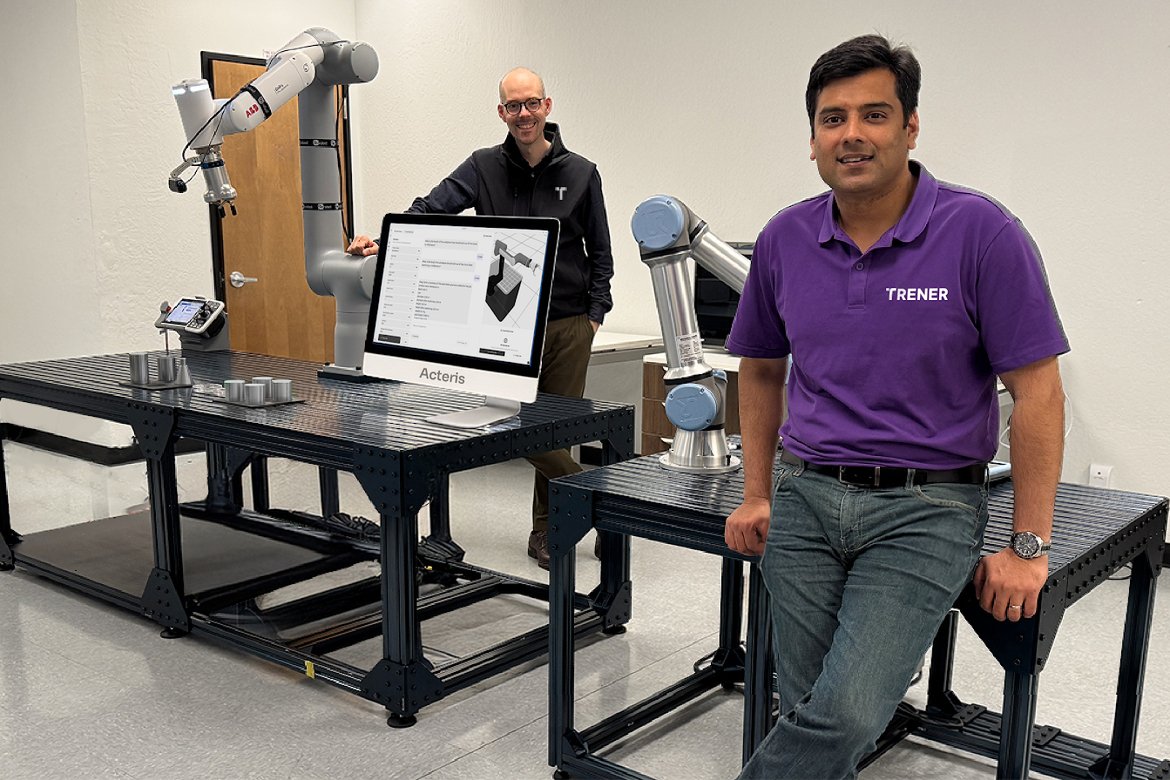
Trener Robotics’ Acteris platform enables industrial robots from multiple brands to be programmed through natural language, signaling a shift from procedural coding to AI-driven skills deployment. Photo: Trener Robotics
Industrial robotics has long been constrained by rigid programming models that limit machines to narrowly defined, repetitive tasks. Last week, Trener Robotics announced a $32 million Series A round aimed at changing that equation with a robot-agnostic AI skills platform designed to make industrial automation more adaptable and accessible.
The funding, co-led by Engine Ventures and IAG Capital Partners, brings the company’s total capital raised to more than $38 million. Strategic investors including Cadence and Geodesic Capital, through Nikon’s NFocus Fund, also participated.
Replacing Procedural Code with Skills
Founded in 2024 and headquartered in San Francisco and Trondheim, Norway, Trener Robotics is building Acteris, a control layer that abstracts away vendor-specific robot programming. Instead of writing custom code for each robotic arm, operators can describe tasks in natural language. The platform translates conversational input into executable automation sequences.
“For decades, industrial robotics has been limited by dynamic complexity, confining millions of robotic arms to repetitive, single-purpose tasks in highly controlled environments,” said Dr. Asad Tirmizi, co-founder and CEO of Trener Robotics. He argues that replacing procedural programming with a reusable skills library enables robots to operate more like adaptable teammates than fixed-function tools.
Acteris is trained on visual, haptic, language, and action data, allowing it to adapt to variable parts and semi-structured production settings. The company says the system supports part identification through machine vision, motion optimization that responds to environmental changes, collision avoidance, and real-time production monitoring dashboards.
Crucially, the platform integrates with existing hardware. In 2025, Trener worked with more than 15 systems integrators across Europe and the U.S., integrating robot brands including ABB, Universal Robots, and FANUC.
A Control Layer for Physical AI
The broader significance lies in where automation is heading. Industrial robotics adoption is expanding beyond high-volume, low-variability production into high-mix environments that demand flexibility. According to Mordor Intelligence, the market for flexible automation is growing at a 14.3 percent compound annual growth rate, driven by labor shortages and cost pressures.
Historically, reprogramming a robot cell for a new product run required specialized engineers and downtime that eroded return on investment. By abstracting control into a generalized AI skills layer, Trener is positioning Acteris as infrastructure rather than an application.
Investors describe the company as building an intelligence layer for physical automation. Reed Sturtevant, general partner at Engine Ventures, said the firm saw an opportunity to address one of automation’s structural bottlenecks. Dennis Sacha, partner at IAG Capital Partners, characterized industrial automation as being at an inflection point, particularly for small and mid-sized manufacturers seeking scalable AI capabilities.
The Competitive Context
Trener is entering a crowded but evolving landscape. Traditional robot manufacturers have introduced proprietary low-code interfaces, while research-focused generalist AI robotics platforms promise broad adaptability but often lack production validation.
Acteris attempts to bridge that gap. The company emphasizes that its system runs on equipment manufacturers already own, differentiating itself from research-first generalist systems that may not yet be shop-floor proven.
The central question for the sector is whether AI-driven abstraction layers can meaningfully reduce integration complexity while maintaining safety, reliability, and deterministic performance. If successful, such platforms could lower the barrier to entry for automation and expand robotics deployment beyond specialized factories into mainstream manufacturing.
With fresh capital earmarked for research and development, talent acquisition, and partner expansion, Trener Robotics is betting that the future of industrial automation will not be defined by individual robot brands, but by the intelligence layer that orchestrates them.
Join our list to receive latest Blockchain, Crypto & Fintech news:
WordPress database error: [Table 'u752143311_u5t1U.wp_coingecko_coins' doesn't exist]
            SELECT coins.*, meta.post_id as post_id
            FROM `wp_coingecko_coins` coins
            INNER JOIN wp_postmeta meta ON (meta.meta_key = 'wpcf-coin-main-tag' AND meta.meta_value = coins.slug )
            ORDER BY market_cap_usd
            DESC LIMIT 9