Elon Musk has once again pushed Tesla’s ambitions beyond cars, predicting that the company’s humanoid robots could ultimately outgrow its electric vehicle business. Speaking in recent public remarks and investor discussions, Musk framed robotics not as a side project, but as a future pillar that could redefine Tesla’s identity over the coming decade.
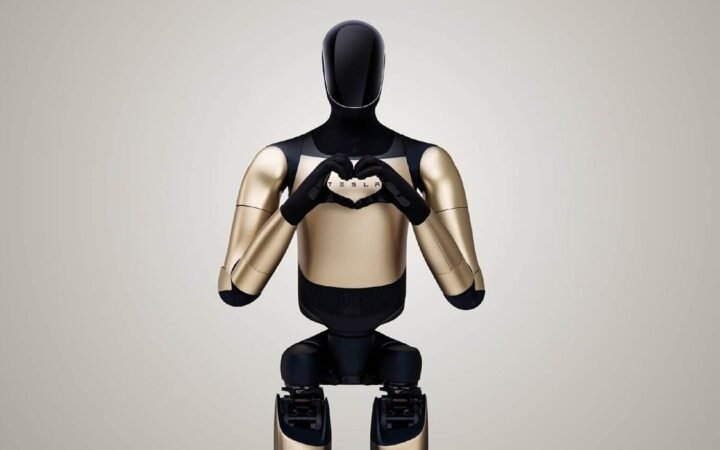
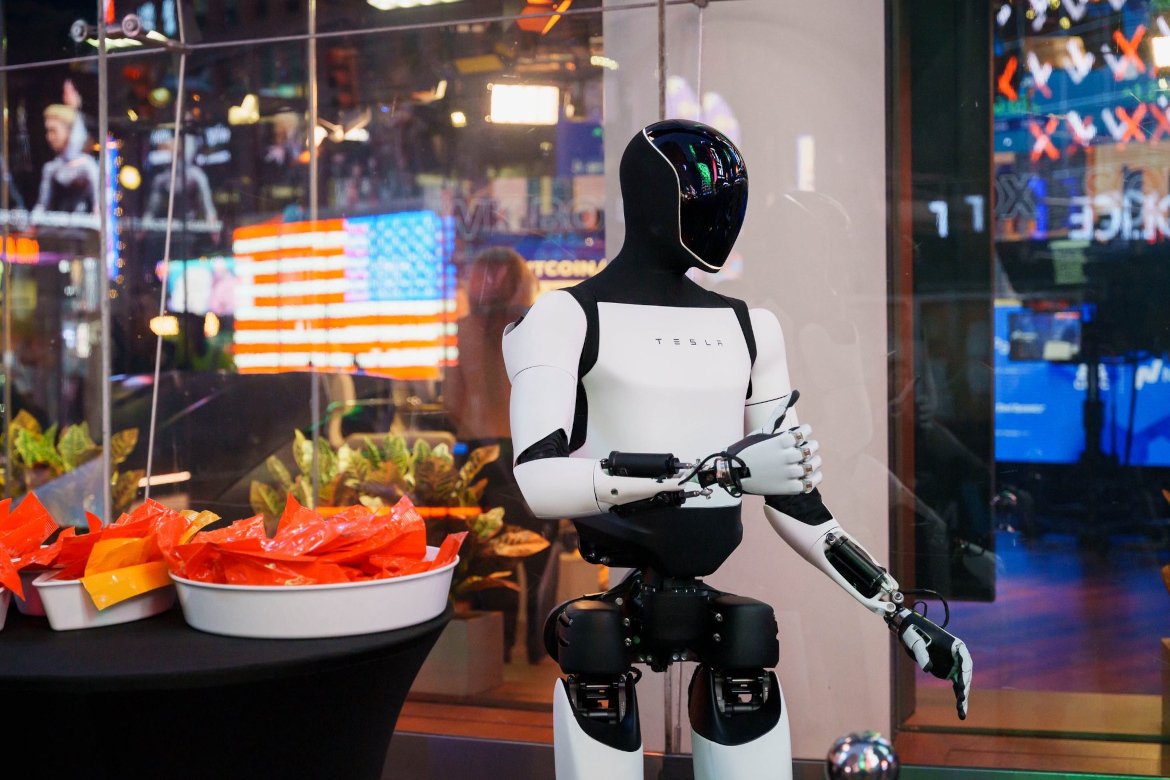
Tesla’s humanoid robot, known as Optimus, is designed to perform repetitive and physically demanding tasks in factories, warehouses, and eventually homes. Musk has repeatedly argued that the long-term economic value of autonomous labor far exceeds that of vehicle manufacturing, particularly as global labor shortages intensify and wages rise across industrial economies.
While Tesla remains one of the world’s most valuable automakers, Musk suggested that robots could unlock an entirely new market measured in trillions of dollars. Unlike cars, which are constrained by consumer purchasing power and replacement cycles, general-purpose robots could be deployed continuously across manufacturing, logistics, healthcare, and domestic services.
Robots as Tesla’s Next Growth Engine
Tesla’s robotics program draws heavily from the same core technologies that power its vehicles. The Optimus platform uses Tesla’s full self-driving neural networks, computer vision systems, and custom AI chips, allowing the company to reuse years of autonomy research. Musk has emphasized that this software-first approach gives Tesla a structural advantage over robotics startups that must build perception, planning, and control systems from scratch.
Optimus is expected to operate initially inside Tesla’s own factories, handling material transport and basic assembly tasks. These controlled environments allow the company to train robots at scale while generating real operational value. Musk has indicated that internal deployments could begin ramping before broader commercial availability.
Over time, Tesla envisions Optimus evolving into a general-purpose worker capable of understanding instructions, navigating complex spaces, and manipulating objects with human-like dexterity. If successful, this would place Tesla among a small group of companies attempting to commercialize humanoid robots at scale.
Physical AI Beyond Autonomous Vehicles
Musk’s comments reflect a broader industry shift toward what many executives now call physical AI — systems that can perceive, reason, and act in the real world. Unlike digital AI products, physical AI must meet far higher safety, reliability, and cost constraints, especially when operating alongside humans.
Tesla’s strategy mirrors developments across the robotics sector, where companies are racing to combine large-scale AI models with real-world embodiment. Musk argues that once robots reach sufficient intelligence and reliability, manufacturing capacity becomes the primary constraint, not demand.
He has suggested that a mature robotics business could eventually dwarf Tesla’s vehicle revenues, even if EV sales continue to grow. In Musk’s framing, cars may become just one application of a much larger AI and robotics platform.
Skepticism and Execution Risk
Despite the bold vision, significant challenges remain. Humanoid robots must operate safely in unpredictable environments, manipulate a vast range of objects, and perform tasks reliably over long periods. Battery life, actuator durability, and cost-efficient manufacturing all remain open questions.
Analysts also note that Tesla has a history of ambitious timelines that often slip. While Optimus prototypes have demonstrated walking, object handling, and basic autonomy, large-scale commercial deployment is still unproven.
Nevertheless, Musk’s prediction underscores Tesla’s long-term direction. Rather than viewing robotics as experimental, Tesla is positioning humanoid robots as a central business line that could redefine how work is performed across the global economy.
If Tesla succeeds, the company best known for electric cars could ultimately be remembered for something far more transformative: machines that replace human labor at scale.