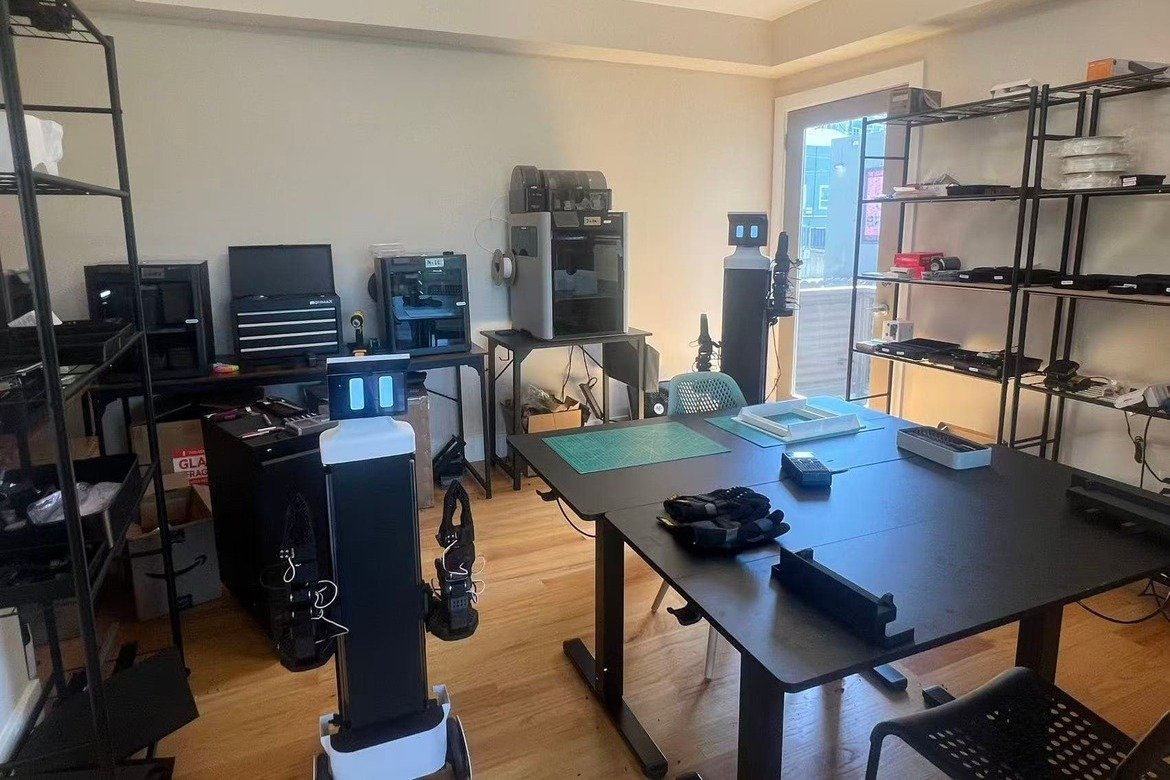

NORI Robotics has unveiled the L2, a bimanual wheeled home robot priced at $1,288, with shipping scheduled for summer 2026 from the company’s San Francisco manufacturing facility. The robot comes in two sizes – the L2 at 100 centimeters with a 650mm dual Z-axis lift range, and the L2 Grande at 130 centimeters with a 950mm lift range, priced at $1,322. Both are manufactured in the United States.
At its price point, the L2 positions itself significantly below the consumer humanoid robots announced by Chinese manufacturers such as UBTECH’s U1 and GigaAI’s SeeLight S1, targeting a segment of the consumer market that has not previously been served by bimanual robotic home assistants.
What the L2 Can Do
The L2 handles household tasks autonomously including loading dishes, making coffee, pouring drinks, laundry cleanup, and floor sweeping. Its bimanual design – two arms coordinating simultaneously – allows it to handle tasks that require two-handed manipulation, such as folding laundry and organizing items. Multiple L2 units can coordinate on tasks that require more than two hands: the company demonstrates two robots working together to make a bed, a task that benefits from simultaneous coordination across both sides.
The robot also supports remote teleoperation, allowing users to operate it from a distance – a feature positioned for care applications where a family member might assist a relative remotely, or simply check in.
The Skill Hub Marketplace
The most distinctive feature of the NORI platform is the Skill Hub, a marketplace where task capabilities trained by one user can be shared and downloaded by other NORI owners anywhere in the world. If a user in Oregon trains their L2 to pour beer with a specific grip and pour angle, other users can download that skill and apply it to their own robot with a single click – analogous to downloading an app rather than programming a new behavior from scratch.
The model mirrors Unitree’s UniStore robot app store, launched in May, which introduced a similar skill-sharing concept for its G1 and H1 platforms. For NORI, the marketplace addresses a key limitation of home robots: the long tail of household tasks is too diverse for any single company to pre-program comprehensively, but a distributed user community can collectively build a library covering far more variation than any centralized development team.
The company has not disclosed its funding history, team size, or AI model architecture in detail. Shipping this summer from San Francisco will be the first test of whether the L2’s price point, skill marketplace, and bimanual capability translate into the kind of consumer adoption that justifies the manufacturing investment.
Disclaimer: RobotsBeat is an independent media brand owned and operated by NuvexMedia LLC, publishing news, research, and insights on artificial intelligence, emerging technologies, automation, and related industries. NuvexMedia LLC invests in and collaborates with companies across the AI, Robotics, technology, software, and digital innovation sectors. These relationships do not influence RobotsBeat's editorial coverage, and the publication maintains full editorial independence to provide accurate, timely, and objective information. © 2026 NuvexMedia LLC. All rights reserved. This content is for informational purposes only and should not be considered legal, tax, investment, financial, or other professional advice.